
High-Priority Heavy Commercial & Heavy Excavator Components
Pre-inspected OEM-fit replacement components engineered for severe-duty Southern California drayage, aggregate hauling, and urban infrastructure operations.
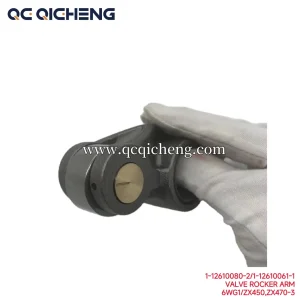
High-Quality 1-12610080-2 1126100802 Valve Rocker Arm for Isuzu 6WG1 ZX450 ZX470-3 (LA Port & Quarry Spec)
View Product Specifications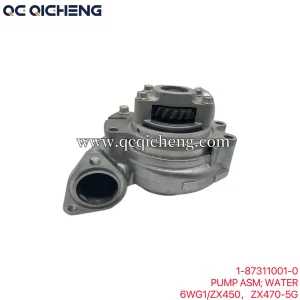
High-Quality 1-87311001-0 1873110010 Water Pump for Isuzu 6WG1 ZX450 ZX470-5G (Southern California Thermal Durability)
View Product Specifications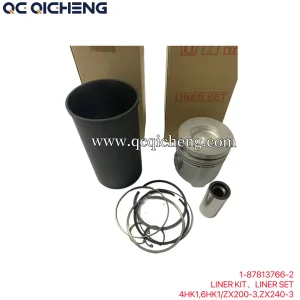
Wholesale 1-87813766-2 1878137662 Liner Kit for Isuzu 4HK1 6HK1 ZX200-3 ZX330-3 (I-710 / I-5 Logistics Overhaul)
View Product Specifications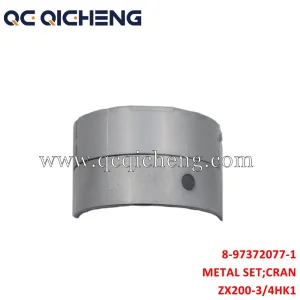
Wholesale 8-97372077-1 8973720771 Crankshaft Metal Set for Isuzu 4HK1 6HK1 ZX200-3 ZX330-3 (SoCal Diesel Rebuilders)
View Product SpecificationsThe Southern California Diesel Ecosystem & The Port Complex Reality
A rigorous industrial analysis of how strict regional emissions protocols, critical freight corridors, and supply chain bottlenecks govern diesel fleet operations across Greater Los Angeles.
The Greater Los Angeles metropolitan area—encompassing Los Angeles County, Orange County, and the sprawling Inland Empire—represents the highest density commercial transport, warehousing, and infrastructure logistics corridor in North America. Anchored by the San Pedro Bay Ports Complex (Port of Los Angeles and Port of Long Beach), which collectively handles upwards of 30% of all containerized maritime imports entering the United States, the local economy operates upon uninterrupted heavy diesel powertrain availability. From Class 4-5 city delivery box trucks utilizing the legendary Isuzu 4HK1 and 4JJ1 powertrains to heavy 30-to-50-ton hydraulic excavators driven by the robust Isuzu 6WG1 and 6HK1 powerplants, equipment downtime in this basin produces severe financial and contractual penalties.
CARB & SCAQMD Regulatory Pressure
California Air Resources Board (CARB) clean truck mandates and South Coast Air Quality Management District (SCAQMD) Rule 1166 demand strict maintenance standards. Fuel pumps, common rail assemblies, and precision injectors must meet tight micron tolerances to keep PM and NOx emissions within legal limits.
The I-710 / I-10 / I-5 Freight Duty Cycles
Southern California freight corridors expose stop-and-go short-haul drayage trucks to extreme thermal cycles. High ambient temperatures in the Inland Empire (San Bernardino, Riverside) cause thermal breakdown in cooling and cylinder components, requiring reinforced cylinder heads, water pumps, and high-temp head gaskets.
High Local Dealership Markup & Lead Times
Fleet operators and regional repair shops often encounter 200% to 400% price markups and weeks of backlog when sourcing OEM components from domestic Tier-1 dealer networks. Direct-from-source precision wholesale suppliers provide the inventory depth needed to maintain operational margins.
Southern California Industrial Infrastructure & Fleet Deployment Profiles
In Los Angeles and neighboring commercial hubs, the deployment of Isuzu powertrains separates into distinct operating profiles:
- Medium-Duty Commercial Transport (N-Series, F-Series, NPR, NQR, NRR): Dominates regional logistics from Long Beach harbor across the 710 corridor to Commerce, Vernon, and Ontario distribution facilities. Constant urban braking and idling place heavy stress on suction control valves (SCV), camshaft position sensors, and turbocharger oil feeds.
- Civil Infrastructure & Heavy Earthmoving (Hitachi ZX200, ZX240, ZX330, ZX450 Series): Active in regional construction projects such as the LAX Metro Transit Center expansion, high-speed rail civil works, and regional flood channel rehabilitations. These machines rely on heavy-displacement Isuzu 6HK1 and 6WG1 powerplants running under high duty factors, where hydraulic cooling failure or rod bearing seizure costs tens of thousands of dollars per day in project delays.
- Harbor Support Machinery & Specialized Cranes: Yard hustlers, container handlers, and specialized reach stackers operating around Terminal Island and Pier 400 demand durable replacement engine kits that withstand high-salinity coastal environments.
China Industry 4.0: Metallurgical Precision & Agile Supply Chains
How state-of-the-art precision casting, multi-axis robotic machining, and standardized metallurgical verification eliminate quality discrepancies for global fleet operators.
The global heavy equipment supply chain has transitioned beyond low-cost parts reproduction. Modern China Industry 4.0 engineering combines automated multi-axis CNC machining centers, coordinate measuring machines (CMM) with sub-micron accuracy, and specialized metallurgy to deliver replacement parts that match or exceed original factory specifications.
At our Guangzhou manufacturing and distribution facility, every critical Isuzu powertrain component undergoes thorough non-destructive and destructive testing before dispatch. This systematic approach is critical for the Los Angeles market, where fleet managers face stringent emissions inspections and long operating hours.
| Component Category | Standard Commercial Grade | Industry 4.0 Precision Specification | Field Advantage in LA / SoCal Fleet Use |
|---|---|---|---|
| Cylinder Liners (4HK1/6HK1) | Standard Centrifugal Cast Iron | Boron-Phosphorus Alloyed, Plateau Diamond Honed | Reduces oil blow-by; ensures strict CARB opacity and PM compliance. |
| Crankshaft Bearing Metal Sets | Dual-layer Aluminum Tin | Copper-Lead-Indium Tri-Metal Matrix with MoS2 Sputter | Withstands extreme torsional shock and continuous highway hauling heat. |
| Common Rail Fuel Pumps & SCVs | Standard Plunger Assembly | DLC (Diamond-Like Carbon) Coated Micro-Plungers | Prevents premature rail pressure drops from ultra-low sulfur diesel (ULSD). |
| Cylinder Heads (6WG1/4HK1) | Gray Cast Iron Grade 200 | Compacted Graphite Iron (CGI) with Vacuum Leak Test | Resists thermal micro-cracking across California desert routes. |
Digitized Warehouse Management & Lead-Time Compression
Conventional supply chain models often rely on multiple intermediate distributors, leading to delayed tracking updates and inconsistent inventory reports. Our facility uses real-time RFID tracking and automated barcode storage systems across more than 100,000 active SKUs. This infrastructure delivers distinct advantages for North American commercial buyers:
- Direct Part Matching: Every component is cross-checked against Japanese OEM parts books, engine series codes, and equipment serial numbers to avoid common ordering errors.
- Consolidated Air Freight Dispatch: Emergency break-down packages ship via priority air directly to Los Angeles International Airport (LAX) or Ontario International Airport (ONT), clearing customs in days rather than weeks.
- FCL / LCL Ocean Logistics: For high-volume wholesale rebuilders and municipal fleet contractors, containerized freight docks directly at the Ports of Los Angeles or Long Beach, cutting out domestic middleman markups.
100% Dimensional Verification
Critical oil galleries, valve seat angles, and bearing journals are measured with high-precision optical and contact CMM systems to ensure true drop-in compatibility.
Ultrasonic Flaw Detection
Critical structural castings such as cylinder blocks and heads undergo ultrasonic and magnetic particle testing to identify internal porosity before shipment.
VCI Climate-Shield Packaging
Every bare metal surface is treated with vapor corrosion inhibitors (VCI) and sealed in vacuum foil to guard against humidity and salt air during Pacific transit.
Connect Directly with an Isuzu & Excavator Parts Specialist
Submit your OEM part numbers, engine codes, or machine models (e.g., ZX200-3 / 4HK1). Our team verifies fitment and provides factory wholesale quotes within 24 hours.
Optimizing Total Cost of Ownership (TCO) for Southern California Fleets
A structured approach to preventative maintenance, core exchanges, and high-volume spare parts sourcing designed to protect operating margins.
In high-operating-cost environments like Los Angeles, equipment uptime directly dictates fleet profitability. Between driver wages, port demurrage fees, and strict regulatory deadlines, an out-of-service truck or excavator costs between $1,200 and $3,500 daily. Optimizing Total Cost of Ownership (TCO) requires balancing preventative parts availability against capital expenditure.
Critical Failure Modes in High-Density Logistics Basins
Analysis of over 2,500 engine service events across urban delivery and infrastructure construction reveals clear breakdown patterns:
- Fuel Delivery and Pressure Oscillations: Low-sulfur fuels combined with thermal cycling degrade the internal seals of suction control valves (SCV) and high-pressure common rails. When the rail pressure sensor signals inconsistent feedback, the ECU initiates limp mode, reducing fleet productivity.
- Cavitation and Cylinder Erosion: In prolonged stop-and-go conditions along congested routes like the 91 or 60 freeways, engine coolant vibrates at high frequencies against cylinder sleeves. Without high-grade alloy cylinder liners, cavitation pitting can breach the liner wall, allowing coolant into the combustion chamber.
- Bearing Fatigue Under Variable Loads: Repeated heavy acceleration from port terminals into highway traffic subjects connecting rod bearings to intense peak cylinder pressures. Standard bi-metal bearings can experience premature flaking, making tri-metal micro-groove alloy bearings essential for long service life.
By establishing direct supply relationships with manufacturing hubs, Los Angeles rebuilders and fleet operators can maintain on-site inventory of high-turnover parts (gaskets, sensors, SCVs, and liner kits) at a fraction of local retail costs, transforming reactive breakdowns into planned maintenance.
Precision Engine Assemblies, Electronic Sensors & Fuel Delivery Systems
Engineered for exact factory tolerances and complete interchangeability across Isuzu industrial engines and Hitachi excavators.
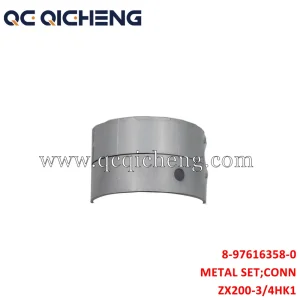
High-Quality 8-97616358-0 8976163580 Connecting Rod Bearing for Isuzu 4HK1 6HK1 ZX200-5A ZX330-3 (LA Civil Fleet)
View Product Specifications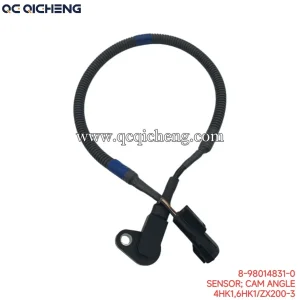
Wholesale 8-98014831-0 8980148310 Camshaft Angle Sensor for Isuzu 4HK1 6HK1 ZX200-3 ZX330-3 (Timing Accuracy)
View Product Specifications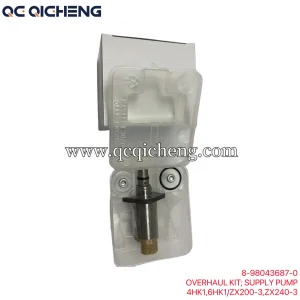
High-Quality 8-98043687-0 8980436870 Fuel Pump SCV Suction Control Valve for Isuzu 4HK1 6HK1 ZX240-3 ZX330-3
View Product Specifications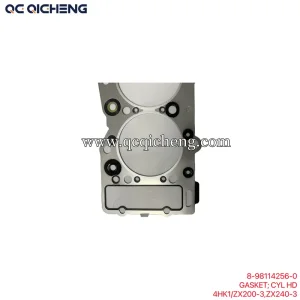
Wholesale 8-98114256-0 8981142560 Cylinder Head Gasket for Isuzu 4HK1 ZX200-3 ZX240-3 (High Compression Seal)
View Product Specifications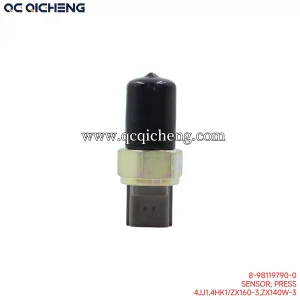
High-Quality 8-98119790-0 8981197900 Pressure Sensor for Isuzu 4JJ1 4HK1 ZX160-3 ZX240-3 (ECU Feedback Accuracy)
View Product Specifications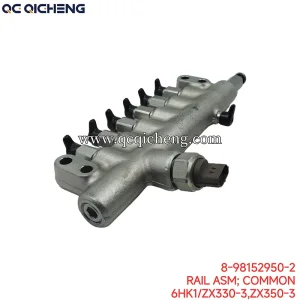
High-Quality 8-98152950-2 8981529502 Common Rail Assy for Isuzu 6HK1 ZX330-3 ZX350-3 (High-Pressure Injection)
View Product Specifications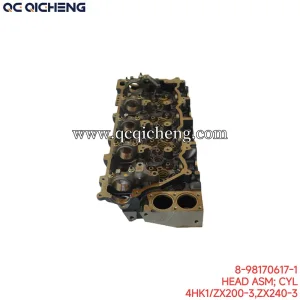
Wholesale 8-98170617-1 8981706171 Cylinder Head for Isuzu 4HK1 ZX200-3 ZX240-3 (Fully Machined & Tested)
View Product Specifications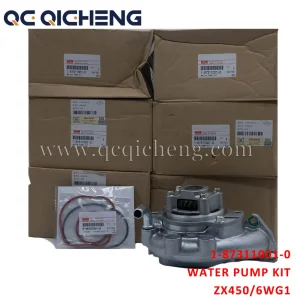
Wholesale 1-87311001-0 PUMP WATER For ISUZU ZX450 6WG1 (High-Displacement Engine Thermal Regulation)
View Product SpecificationsFrequently Asked Questions: Sourcing Isuzu Parts for North American Operations
Detailed technical and logistics guidance for fleet managers, municipal parts directors, and commercial engine rebuilders.
How do you ensure correct part fitment across Japanese, North American, and Chinese-assembled Isuzu engines?
What are your typical shipping lead times and delivery terms (Incoterms) into the Los Angeles basin?
How do your precision aftermarket components perform under strict California CARB emissions standards?
Do you maintain quality certifications and material test documentation for municipal supplier onboarding?
How does your standing inventory support mixed fleets running Hitachi excavators and Isuzu commercial trucks?
Request a Comprehensive Parts Catalog & Wholesale Quotation
Contact our technical parts division today for detailed parts books, volume pricing structures, and freight schedules tailored to your fleet or rebuild facility.