
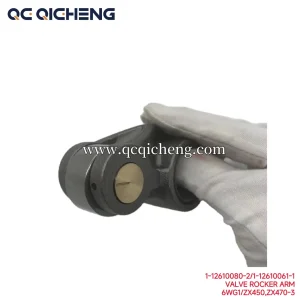
High-Quality Valve Rocker Arm for Isuzu 6WG1 (Chile Mining Fleet)
Ultra-dense forged alloy resisting valvetrain inertia under continuous high-load excavation in Antofagasta copper pits.
Engineered to mitigate extreme high-altitude thermal expansion and severe dust loading across Northern Chile's open-pit copper mines and highway transport arteries.
Ultra-dense forged alloy resisting valvetrain inertia under continuous high-load excavation in Antofagasta copper pits.
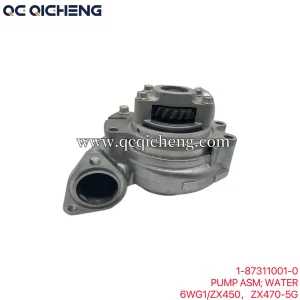
Cavitation-resistant ceramic-carbon mechanical seal engineered for hypersaline Andean water supplies and glycol mixtures.
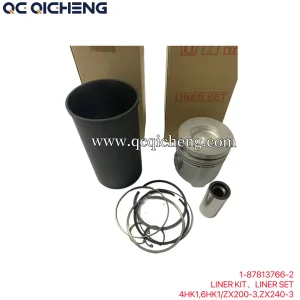
Chromed moly cross-hatch hone maximizing oil retention under thin atmospheric oxygen conditions common in Andean altitudes.
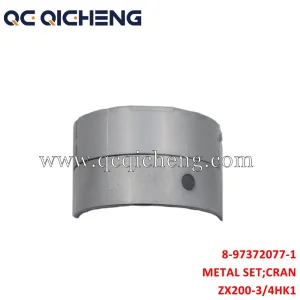
Precision tri-metal composition preventing localized friction seizures under severe harmonic vibration on non-paved routes.
From the arid hyper-elevation of the Atacama Basin to the maritime cold corridors of Magallanes, Chile’s physical geography demands an uncompromising technical standard for commercial vehicles and heavy excavation machinery.
The Republic of Chile extracts more than 28% of the world's copper. Operations centered in Antofagasta, Calama, and the Atacama Desert rely on heavy excavators—predominantly Hitachi ZX330, ZX450, and ZX470 platforms—driven by the legendary Isuzu 6WG1 and 6HK1 diesel power units. Operating altitudes regularly exceed 3,500 to 4,800 meters above sea level (MASL).
At these altitudes, atmospheric pressure drops by up to 40%. The decreased air density directly challenges combustion efficiency, elevating exhaust gas temperatures (EGT) and straining turbocharging intercooler loops. Concurrently, high-pressure common rail (HPCR) injection pumps, such as the Denso HP0 and HP4 systems integrated into Isuzu architectures, must sustain 1,800 to 2,200 bar pressures while compensating for fuel cavitation caused by low atmospheric boiling points.
Chile's commercial backbone depends on the continuous flow of cargo along the 3,300-kilometer longitudinal spine of Route 5 (Ruta 5 Panamericana). In urban hubs like Santiago, Valparaíso, and Concepción, the Isuzu N-Series (ELF / Reward) and F-Series (Forward) medium-duty trucks dominate intercity logistics, refrigerated food supply chains, and municipal infrastructure maintenance.
In the Biobío and Araucanía regions, the forestry sector places severe cyclical stress on the Isuzu 6HK1 and 6UZ1 powertrains. Logging haulers operating on steep, unpaved terrain with 10% to 15% gradients require absolute structural integrity in crankshaft bearings, connecting rods, and valve train mechanisms. Furthermore, Chile’s aggressive implementation of Euro VI (Decreto Supremo 40) emissions frameworks necessitates pristine SCR (Selective Catalytic Reduction) and DPF (Diesel Particulate Filter) pressure sensors that prevent unauthorized engine derating.
Procuring specialized spare parts from a dedicated supplier that understands direct cross-referencing between Japanese OEM codes and South American chassis codes is vital to eliminating catastrophic equipment downtime.
Isuzu Motors Ltd. has engineered and built over 26 million diesel engines worldwide, establishing an unparalleled standard for industrial durability and fuel conversion efficiency.
Beyond Isuzu's commercial truck line, the company’s industrial diesel engines (4JJ1, 4HK1, 6HK1, 6UZ1, 6WG1) provide standard primary power for global off-highway heavy equipment brands including Hitachi Construction Machinery, Sumitomo, Case New Holland, JCB, and Kobelco.
Isuzu’s design architecture features interchangeable internal components across vehicle and industrial platforms. For instance, the 4HK1 cylinder head, rocker assembly, and connecting rod bearings share metallurgical blueprints between an Isuzu NQR medium truck and a Hitachi ZX200 crawler excavator.
While primary engine assembly occurs in Japan and regional hub facilities, replacement wear components (liners, bearings, water pumps, common rail assemblies) move through centralized global distribution hubs. Our Guangzhou logistics terminal aggregates Tier-1 and genuine Isuzu components with verified OEM part numbers.
Deploying heavy machinery in Chile involves extreme climate variations. Equipment operators must adapt maintenance strategies for specific regional duty cycles.
Environment: Relative humidity < 5%, abrasive silica airborne particles, hypersaline water sources at lithium and copper extraction deposits.
Failure Mode: Water pump seal scoring, premature erosion of injector nozzle needles, and rapid wear of cylinder head intake valve seats.
Engineering Remedy: High-purity silicon carbide water pump mechanical seals (OEM 1-87311001-0) paired with multi-layer steel (MLS) cylinder head gaskets featuring reinforced fluoroelastomer combustion combustion chamber eyelets.
Environment: Rarefied oxygen, rapid day-to-night thermal swings of 30°C, extreme barometric pressure variance.
Failure Mode: Incomplete fuel burn creating excessive soot formation, oil carbon buildup in piston ring grooves, and micro-cracking across cylinder heads.
Engineering Remedy: Ultra-precise manifold absolute pressure (MAP) sensors (8-97664441-0) and high-tolerance cylinder heads (8-98170617-1) maintaining uniform cooling jacket thermal distribution.
Environment: Constant rainfall, mud saturated logging tracks, extreme continuous torque demand on hydraulic winches and tracks.
Failure Mode: Crankshaft torsional vibration fatigue, connecting rod bearing wipeout, and rail pressure drop during peak lugging.
Engineering Remedy: Tri-metal crankshaft bearing shells (8-97372077-1) and high-pressure common rail fuel assemblies (8-98152950-2) capable of instantaneous response across fluctuating torque curves.
Operational profitability in mining and infrastructure hinges upon Mean Time Between Failures (MTBF) and rapid Mean Time to Repair (MTTR). We structure component delivery to reduce logistical drag.
A strategic overview of evolving emissions legislation, alternative fuels, and electronic engine governance across South America’s Pacific seaboard.
Chile leads Latin America in adopting stringent vehicle emissions requirements. New fleets entering the market must meet Euro VI standards. Heavy industrial equipment relies on Tier 4 Final/Stage V architectures requiring closed-loop particulate monitoring, DEF (AdBlue) quality sensors, and high-frequency camshaft/crankshaft position timing to keep soot levels within strict national parameters.
Standardization of J1939 CAN-bus protocols transmitting real-time sensor data from remote operations (e.g., Collahuasi, Escondida) directly to fleet maintenance centers. Real-time monitoring of common rail fuel pressure deltas, turbo boost saturation, and oil pan spacer temperature profiles detects micro-failures hundreds of engine hours before mechanical seizure.
Isuzu's global investments in carbon-neutral powertrains, including hydrogen ICE and synthetic biofuel compatibility, will begin deployment across Chile's Green Hydrogen production corridors in Antofagasta and Magallanes. Internal engine metallurgy, valve materials, and piston ring coatings are actively evolving to handle higher dry combustion temperatures without compromising service life.
Every component is cross-referenced by OEM part number, engine configuration, and machine chassis model to ensure absolute fitment reliability before export packing.
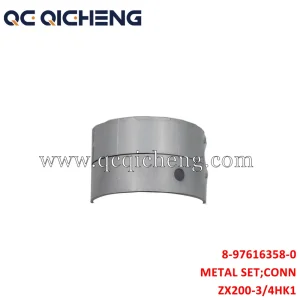
Hardened tri-layer alloy reducing rod journal friction under peak torque mining cycles.
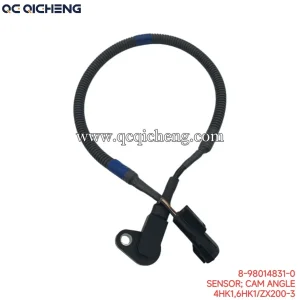
Hall-effect magnetic pulse sensor ensuring millisecond-level valve timing accuracy.
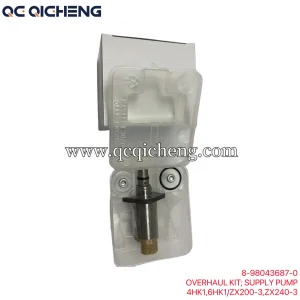
Solves high-altitude rail pressure surge and hunting idle in mining excavators.
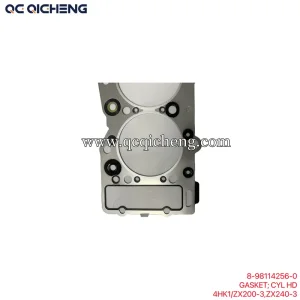
Multi-layered spring steel gasket rated for extreme combustion chamber cylinder pressure.
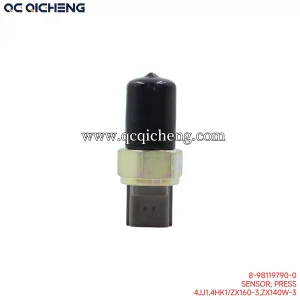
Calibrated up to 2,000 bar pressure reading with low-noise signal filtering for ECM.
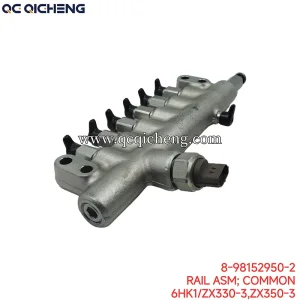
Complete assembly featuring factory integrated pressure limiter and return valve.
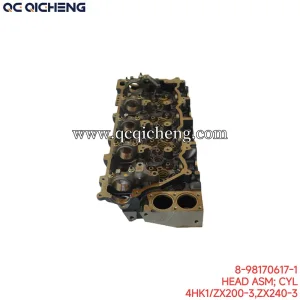
Reinforced port bridges designed to prevent thermal cracking during continuous operation.
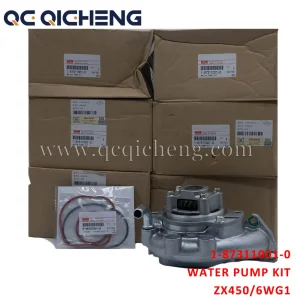
High-volume coolant displacement protecting against thermal derate in copper pits.
Send us your chassis serial number (VIN) or engine nameplate photo. Our engineering team validates cross-references and stocks components to supply your Santiago, Antofagasta, or Iquique operations.
Authoritative insights regarding import logistics, cross-compatibility, altitude tuning, and parts authentication.
We do not rely solely on generic model names like "ZX330-3" or "ZX450." We cross-reference the 10-digit Isuzu OEM part number directly against the specific engine nameplate serial number and the excavator chassis plate (VIN). Japanese domestic market (JDM) variants, European-spec emissions imports, and South American-delivered excavators often feature differing wiring harness layouts, injection timing gears, or starter pinion teeth (e.g., 9-tooth vs. 11-tooth). Our technical database ensures 100% fitment before shipment.
For priority machine-down situations, we coordinate direct international air express (DHL Express, FedEx International Priority) originating from our Guangzhou consolidation hub directly into Santiago Arturo Merino Benítez International Airport (SCL). Transit times typically average 72 to 96 hours. For inland transfer to Antofagasta, Calama, or Puerto Montt, regional air connectors or local courier services deliver components directly to the job site or mine gate within an additional 24 to 48 hours.
At elevations above 3,500m in the Andes, lower air density decreases the mass of oxygen entering each cylinder. This can cause incomplete combustion, elevated particulate matter, and turbo overspeed conditions. Genuine Isuzu Common Rail systems utilize precision Suction Control Valves (SCV 8-98043687-0) and Manifold Absolute Pressure sensors to dynamically trim injection pulse width. Using precision-calibrated OEM fuel system components avoids persistent ECU error codes (e.g., P0087 low rail pressure) and prevents washdown of cylinder wall lubrication.
Every export dispatch includes complete documentation: a commercial invoice detailing 8-digit international Harmonized System (HS) codes, packing lists specifying gross and net weights, and Certificate of Origin (Form F for China-Chile FTA where applicable, granting reduced or zero tariff treatment under bilateral trade protocols). Fumigation certificates for solid wood packaging comply with ISPM 15 standards, preventing quarantine holds at Valparaíso or San Antonio.
Genuine Isuzu components ship in factory-sealed Isuzu packaging with proprietary holographic security labels, offering direct traceability to Japanese manufacturing lines. High-grade OEM aftermarket components are manufactured by certified Tier-1 suppliers using identical metallurgical specifications and micro-finished tolerances (e.g., cylinder liner cross-hatch hone angles, bearing bimetal ratios), but without the brand markup. We supply both tiers transparently so Chilean fleet controllers can align procurement with their machinery life cycle goals.