
High-Demand ISUZU Heavy Machinery Components for Swiss Fleets
Engineered for high-altitude thermal resistance, stringent FOEN particulate standards, and maximum operational uptime across Gotthard tunnel shafts, Alpine rail corridors, and civil quarries.
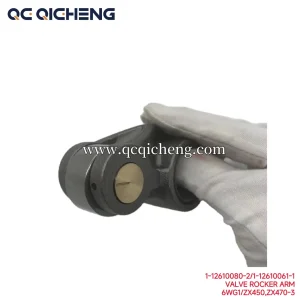
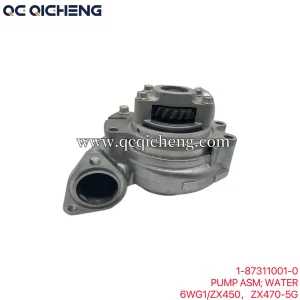
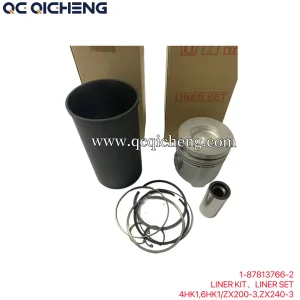
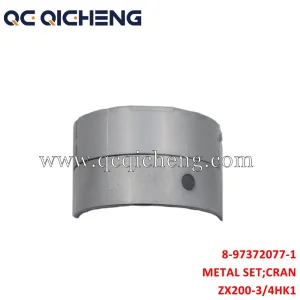
The Swiss Commercial & Heavy Industrial Machinery Ecosystem
A rigorous examination of operating parameters, environmental compliance under FOEN/BAFU directives, and cross-border supply chain integration for ISUZU diesel powertrains.
Operating heavy commercial machinery and industrial diesel equipment in Switzerland represents one of the most demanding engineering environments on the European continent. Swiss construction contractors, fleet managers, and civil engineering conglomerates—ranging from Zurich and Geneva municipal utilities to deep Alpine rock tunneling operations along the Gotthard and Ceneri transport corridors—operate under a dual mandate: unyielding mechanical reliability under severe topographic and climatic stress, paired with some of the strictest environmental and particulate emissions standards in the world.
Industrial diesel engines engineered by ISUZU—powering an extensive global fleet of medium and heavy excavators (notably the Hitachi ZX series from ZX130 through ZX870), mobile cranes, generators, and specialized commercial carrier trucks (such as the ISUZU Forward and N-Series/Elf platforms utilized in cantonal winter road clearance and logistics)—form the operational backbone of this infrastructure. However, sourcing authentic OEM-specification replacement components within Switzerland faces distinct supply chain challenges: prohibitive local distributor markups, localized dealer stock depletion, and lengthy lead times that inflate the already elevated cost of equipment downtime (exceeding CHF 2,800 to CHF 5,000 per working day on critical infrastructure sites).
Alpine Topographic Stress
High-altitude operation (up to 2,500m above sea level) reduces air density, increasing turbocharger shaft speeds and requiring precision-metered common rail fuel injection to avoid unburnt hydrocarbon accumulation and particulate filter clogging.
FOEN / BAFU Air Quality Directives
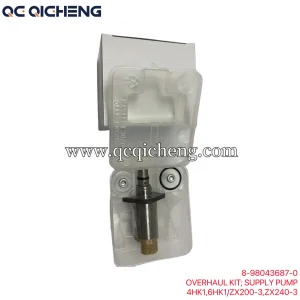
Switzerland's Federal Office for the Environment mandates strict Particulate Number (PN) thresholds and VERT compliance. High-precision suction control valves (SCV) and precision-machined combustion chambers are vital to maintain Stage V compliance.
Thermal Cycling Durability
Thermal excursions between sub-zero Alpine winters (-25°C cold starts) and relentless hydraulic duty cycles during summer earthworks place intense cyclic fatigue on cylinder heads, multi-layer steel (MLS) gaskets, and main bearings.
1. Regulatory and Topographic Pressures on Powertrain Integrity
In accordance with the Swiss Federal Clean Air Act (OPAIR / Luftreinhalte-Verordnung - LRV), non-road mobile machinery (NRMM) operated across Swiss territory must maintain uncompromising combustion calibration. The reduction of atmospheric pressure at alpine elevations directly impacts the stoichiometric ratio of diesel combustion. In standard mechanical systems, this results in incomplete combustion, accelerated soot formation, and rapid saturation of Diesel Particulate Filters (DPF) and Selective Catalytic Reduction (SCR) systems.
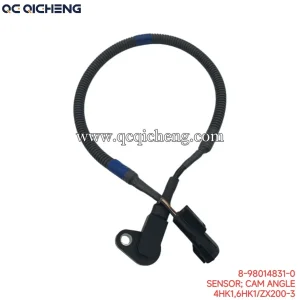
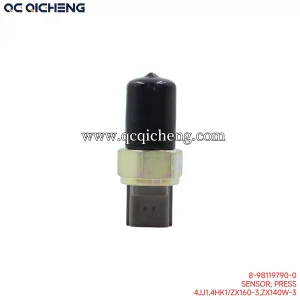
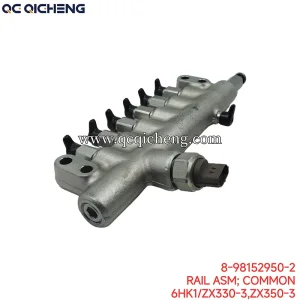
Modern electronic ISUZU common rail engines—specifically the 4JJ1 (3.0L), 4HK1 (5.2L), 6HK1 (7.8L), and 6WG1 (15.7L)—counteract these atmospheric shifts through microsecond adjustments in fuel rail pressure (up to 1,800 to 2,200 bar) managed by electronic high-pressure sensors and high-response Suction Control Valves (SCV). If an inferior aftermarket sensor or out-of-tolerance valve rocker assembly is installed, valve timing drifts and fuel atomization degrades, leading to immediate fault code generation, engine de-rate (limp mode), and non-compliance fines from cantonal environmental inspectors.
Engineering Insight: High-Altitude Compression Integrity
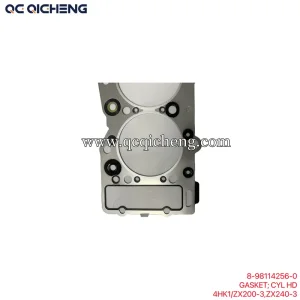
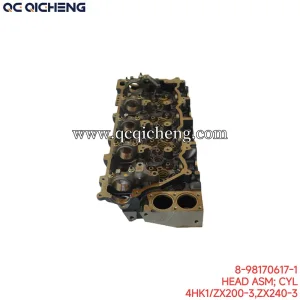
On civil contracts spanning Graubünden, Valais, and Bernese Oberland, cylinder head gasket integrity cannot rely on standard composite materials. Premium rebuilds require multi-layer steel (MLS) gaskets paired with plateau-honed cylinder liners engineered to maintain oil film stability under high mean effective cylinder pressures (BMEP), preventing blow-by and crankcase over-pressurization.
| ISUZU Engine Family | Displacement / Cylinders | Primary Machinery Applications | Swiss Operating Challenge | Critical Replacement Tolerances |
|---|---|---|---|---|
| 4JJ1X | 2.999 L / 4 Cylinders | Hitachi ZX130-5B / ZX160LC-6, Compact Mini Cranes | Rapid cyclic cold-start wear; frequent urban short-cycling | Piston pin clearance: 0.008–0.015 mm; Rail sensor accuracy: ±1.2% |
| 4HK1X | 5.193 L / 4 Cylinders | Hitachi ZX200-3/5G, ZX210LC-7, Road Graders, Elf Trucks | High continuous torque at 1,500–1,800 rpm; thermal cycling | Crank journal runout < 0.03 mm; MLS head gasket thickness: ±0.02 mm |
| 6HK1X | 7.790 L / 6 Cylinders | Hitachi ZX330-3/5G, ZX350LC-6, Heavy Municipal Snow Blowers | Heavy torque spikes in quarry extraction; extreme oil shearing | Con-rod bearing crush height: precise OEM fit; Liner protrusion: 0.05–0.10 mm |
| 6WG1X | 15.681 L / 6 Cylinders | Hitachi ZX450-3, ZX470-5G, ZX870LC, Deep Shaft Boring Rigs | Massive mechanical load; 24/7 subterranean tunneling cycles | Rocker arm roller hardness > 58 HRC; Water pump mechanical seal: 3.5 bar rated |
China Factory 4.0: Metallurgical Precision & Supply Chain Resilience
Bridging the gap between exorbitant European dealer price premiums and mission-critical mechanical durability through automated manufacturing and certified metallurgical verification.
Historically, European purchasing officers and Swiss technical directors relied exclusively on domestic or tier-one European regional distribution networks for industrial engine overhauls. However, structural shifts across global manufacturing and digital inventory management have transformed this landscape. The modern Chinese precision-manufacturing ecosystem—characterized by Industry 4.0 smart casting facilities, robotic 5-axis CNC machining centers, and cleanroom sensor assembly facilities—now supplies high-tier mechanical components directly to international contractors, engine rebuilders, and fleet workshops.
For Swiss enterprises managing complex machinery portfolios, the value proposition extends beyond standard unit cost optimization. Sourcing components through direct, ISO 9001:2015 and IATF 16949-certified Chinese export manufacturing hubs eliminates secondary and tertiary dealer distribution markups that frequently inflate component costs by 300% to 500% in Western Europe. More crucially, it provides guaranteed inventory availability for legacy machine models (such as Dash-3 and Dash-5 series excavators) where regional European depots have retired their physical stocks in favor of pushing brand-new machinery acquisitions.
2. Advanced Manufacturing Processes Behind Critical ISUZU Parts
Reliability in high-load industrial applications begins at the molecular level. When producing heavy rotating assemblies such as crankshafts, connecting rods, and valve rocker arms for the 6WG1 or 4HK1 engines, our partner production lines utilize forged micro-alloyed structural steel (such as 42CrMo4) coupled with computerized induction hardening. This guarantees superior fatigue limit properties and eliminates microscopic internal voids that cause catastrophic engine failure during sudden hydraulic stalling.
Similarly, precision common rail assemblies and fuel-metering SCV valves are calibrated within class 10,000 cleanrooms using computerized test benches measuring delivery rates, magnetic coil induction curves, and seat leakage at operating pressures exceeding 2,000 bar. This rigorous qualification ensures seamless integration with original Denso/Isuzu engine control modules (ECM), preventing injector coding rejections and eliminating hunting or idle instability in cold Swiss mornings.
3. Supply Chain Agility: Air Freight & Multimodal Freight to Basel / Zurich
Supply chain efficiency is meaningless if delivery takes weeks while an excavator sits idle in a cantonal pit. We operate a dual-speed logistics model tailored specifically for the Swiss and wider Central European market:
- Emergency Critical Air Express (AOG/MOG Protocol): High-priority engine control relays, rail sensors, SCV valves, and gasket kits dispatched via DHL Express, FedEx, or air freight cargo departing direct from Guangzhou (CAN) or Hong Kong (HKG) to Zurich Airport (ZRH) or Geneva (GVA). Door-to-door transit times typically average 3 to 5 business days, including customs presentation under Swiss Tares regulations.
- Consolidated Maritime/Rail Freight: Complete cylinder blocks, crankshaft batches, water pump crates, and full engine rebuild kits shipped via multimodal maritime routes to Rotterdam or Antwerp, feeding the Rhine river barges direct to Port of Switzerland (Schweizerische Rheinhäfen in Basel), or via trans-Eurasian rail freight to European distribution hubs for bulk fleet replenishment programs.
Swiss-Specific Application Scenarios & Field Engineering
Real-world integration points where ISUZU powertrains maintain civil infrastructure, municipal safety, and transport arterial flow under demanding conditions.
Deep Rock Tunneling & Rail Extension
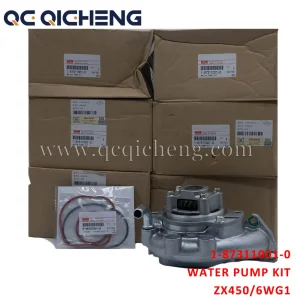
Underground drill rigs, rock breakers, and excavators (Isuzu 6WG1 / 6HK1) working on secondary Gotthard road tubes and SBB alpine tunnels require flawless water pump cooling to counter ambient rock temperatures exceeding 40°C.
High-Altitude Ski Resort Earthworks
During the short summer construction window in cantons like Valais and Graubünden, 4HK1-powered machines build avalanche defenses and snowmaking reservoirs where engine stalling leaves equipment stranded on 35-degree slopes.
All-Season Cantonal Road Fleets
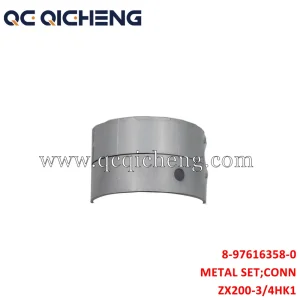
Municipal ISUZU commercial trucks equipped with snow plows, salt spreaders, and municipal street sweepers in Bern and St. Gallen depend on high-durability connecting rod bearings and leak-proof cylinder head assemblies for 24/7 reliability.
Precision Sourcing Protocols: How Swiss Purchasing Officers Eliminate Fitment Risk
A primary friction point in cross-border equipment procurement is the risk of superseded part numbers, regional specification variances, and mismatched machine configurations. ISUZU industrial diesels have evolved through multiple revisions (Common Rail Denso HP0, HP3, and HP4 systems; EGR vs. Non-EGR; mechanical vs. electronic variable geometry turbochargers).
To eliminate fitment discrepancies, our quotation process adheres to a rigid verification protocol:
- Dual Parameter Matching: Every inquiry is cross-referenced using both the manufacturer OEM Part Number (e.g., 8-98043687-0) and the primary machine identification plate (e.g., Hitachi ZX240-3 serial prefix with 4HK1-XYSA01 engine serial code).
- Casting & Geometry Cross-Check: For structural castings (such as cylinder heads and crankshafts), our engineering team verifies water port configurations, sensor tapping thread pitches (Metric vs. BSP), and valve seat angles prior to palletization.
- Digital QA Dossier: High-resolution dimensional inspection reports, CMM surface profilometry data, and packaging verification photographs are delivered to the customer prior to export dispatch, assuring Swiss fleet quality inspectors of total material integrity.
Precision ISUZU Replacement Solutions for Swiss Operations
Explore verified OEM and heavy-duty aftermarket components stocked for rapid fulfillment and international shipping to Swiss transport and civil hubs.
Frequently Asked Questions for Swiss Engineering Buyers
Comprehensive responses detailing technical compatibility, customs protocols under the Swiss Federal Customs Administration (FCA), and quality control verifications.