Pre-inspected OEM valve trains, thermal regulation water pumps, cylinder kits, and balanced crankshaft metal sets for Hitachi excavators & heavy haulage operating under severe West African dust and tropical heat loads.
Ghana stands as the premier gold producer in sub-Saharan Africa and a vital transit corridor for landlocked ECOWAS economies. Operating ISUZU commercial haulage trucks and ISUZU-powered heavy civil earthmoving fleets in Ghana demands an uncompromising supply chain strategy built on verified metallurgy, high ambient resistance, and rapid spare-part replenishment.
In heavy open-pit and hard-rock operations spanning Tarkwa, Obuasi, Ahafo, and Prestea, Hitachi mining excavators (ZX450, ZX470, ZX870) driven by ISUZU 6WG1 and 6UZ1 common-rail power units operate round-the-clock. These machines confront immense aggregate impact, corrosive sulfur groundwater, and severe vibration. Unplanned downtime on an excavation face can bleed upwards of $12,000 per hour, rendering prompt availability of valvetrain sets, precision rocker arms, and hydraulic auxiliary pumps mission-critical.
Ghana’s arterial highways link the deepwater Meridian Port at Tema and Takoradi to transit gateways heading north into Burkina Faso, Mali, and Niger. Fleet logistics companies deploy thousands of ISUZU Forward (F-Series) and Giga heavy long-haul combinations carrying cocoa beans, timber, containerized freight, and heavy plant equipment. The grueling 1,000-kilometer cross-border transit across unpaved terrain tests cooling capacities, injector calibrations, and chassis stability under heavy axle overloading.
Major civil works programs—such as the Tema Motorway expansion, coastal erosion defenses in Volta and Takoradi, and the Boankra Inland Logistics Port—rely extensively on mid-tier excavators powered by ISUZU 4HK1 and 6HK1 engines (notably Hitachi ZX200-3, ZX240-3, and ZX330-3). These operations require high hydraulic efficiency, constant idling cycling, and rapid filter/sensor turnaround to navigate stop-start operation in dust-heavy urban environments.
Purchasing managers and plant engineers representing international joint ventures, EPC contractors, and multinational mining houses cannot afford the catastrophic costs of sub-standard engine components masquerading as OEM equivalents. Sourcing from our centralized Guangzhou inventory bridges precision Japanese engineering tolerances with direct manufacturing cost structures.
The greatest financial hazard in cross-border equipment procurement is catalog ambiguity. Minor revisions in engine build dates or target markets (Tier 2/3 mechanical vs. Tier 4 Common Rail) alter injector seat heights, sensor impedance, and cylinder head combustion bowl volumes. Our engineering technical desk cross-references engine serial numbers against machine VIN configurations before a single crate is packed.
Zero Return Rate Protocol: Verification includes OEM blueprint validation, bore dimensional micrometer testing, and casting code matching.
An unbranded or counterfeit cylinder head gasket priced $40 below genuine benchmark value typically fails within 350 operational hours under tropical ambient conditions. The resulting coolant migration causes catastrophic liner hydro-lock, scored crankshaft journals, and structural block deformation, accumulating in thousands of dollars in mechanical rebuilds plus lost contract production.
Lifecycle Optimization: Genuine metallurgical formulations guarantee up to 10,000 to 14,000 mean hours between engine overhauls when serviced with rated lubricants.
Qicheng maintains a strategic $15,000,000 inventory across 10 specialized branches in China, linked directly to major maritime container lines out of Guangzhou and Shenzhen with direct routes to the Port of Tema and Takoradi Harbour. Air freight courier corridors guarantee 72-to-96-hour emergency delivery for vital electronics, injector assemblies, and common rails to Kotoka International Airport (Accra).
Predictable Lead Times: Complete maritime consolidation handling, export crating, phytosanitary treatment, and ICUMS-aligned commercial invoicing.
Deploying internal combustion diesels in West Africa introduces thermodynamic and chemical challenges rarely encountered in temperate European or East Asian operational theaters. Below are our tailored engineering adaptations for ISUZU powertrains serving in Ghana.
| Engine Family | Target Ghanaian Platform | Environmental Challenge | Engineered Solution & Component Focus |
|---|---|---|---|
| ISUZU 4HK1-TC (5.2L 4-Cylinder Turbo) |
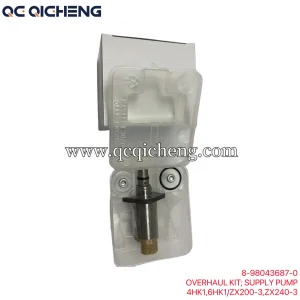
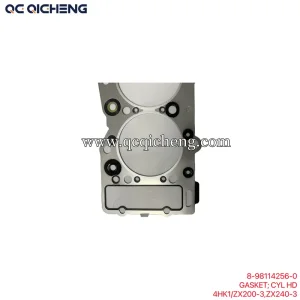
Hitachi ZX200-3, ZX210LC, Isuzu N-Series / Forward Trucks | Fuel sulfur variance, high particulate ingress in mining haul roads. | Diamond-Like Carbon (DLC) coated Suction Control Valves (SCV 8-98043687-0), multi-layer steel cylinder head gaskets (8-98114256-0), and micron-mesh fuel pre-filters. |
| ISUZU 6HK1-XQB (7.8L 6-Cylinder Turbo) |
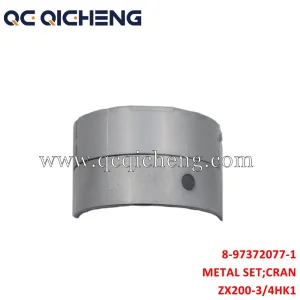
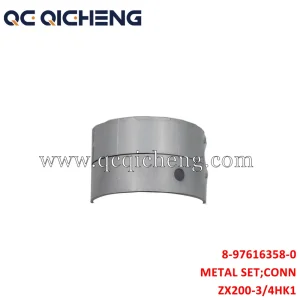
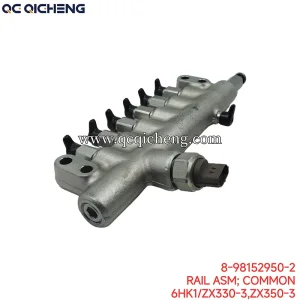
Hitachi ZX330-3, ZX350-3, Isuzu F-Series Heavy Haulers | Heavy torsional oscillation and cyclic overheating in low-speed rock excavation. | Reinforced crankshaft metal sets (8-97372077-1), hardened connecting rod bearings (8-97616358-0), and precision forged common rail assemblies (8-98152950-2). |
| ISUZU 6WG1-TQA (15.6L Heavy Mining Engine) |
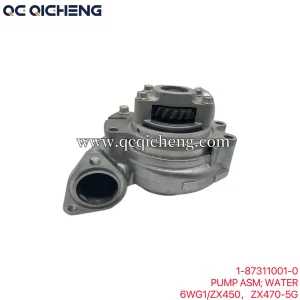
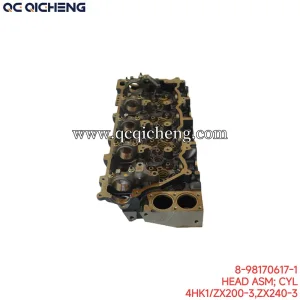
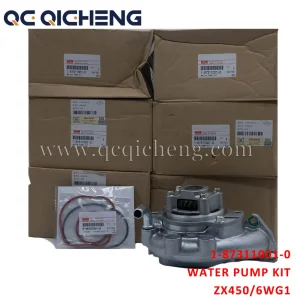
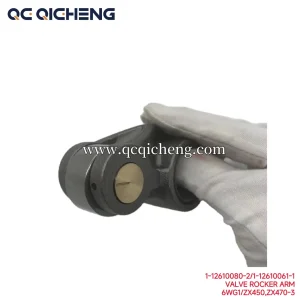
Hitachi ZX450, ZX470-3/5G, ZX520, ZX670 Massive Mining Shovels | Continuous thermal soak in deep open pits with elevated ambient heat up to 42°C. | High-displacement anti-cavitation water pumps (1-87311001-0), precision balance valve rocker arms (1-12610080-2), and heat-treated alloy cylinder heads. |
| ISUZU 4JJ1-TCS (3.0L Intercooled DOHC) |
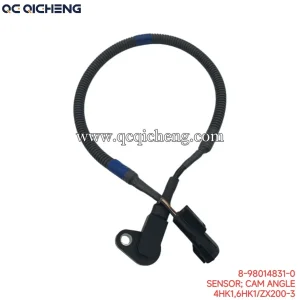
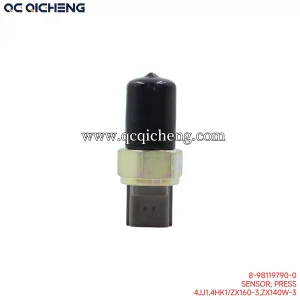
Hitachi ZX160LC, D-Max utility mining pickups, generator sets | Rapid sensor drift caused by lateral engine vibrations and coastal humidity. | Solid-state piezoresistive common rail pressure sensors (8-98119790-0) and hermetically sealed Hall-effect camshaft angle sensors (8-98014831-0). |
The industrial powertrain landscape in West Africa is navigating a strategic generational shift. From the historical dominance of mechanical Euro II diesel systems to sophisticated Euro IV and Euro V Common Rail electronic architectures, fleet managers must prepare for modernized maintenance, predictive diagnostic methodologies, and circular component rebuilding.
As Ghanaian mining safety regulations and international lender ESG standards (e.g., IFC Performance Standards) enforce lower carbon and particulate emissions on concession boundaries, operators are migrating from basic mechanical inline-pump engines (like the legacy 6BG1) to electronically controlled common-rail powerplants (4HK1 and 6HK1).
This transition brings exceptional power density and up to 18% fuel savings, but demands hyper-clean fuel storage, precise electrical grounds, and exact sensor telemetry to avoid limp-mode lockouts during peak shifts.
Modern mining infrastructure contractors in Ghana are outfitting their ISUZU-powered Hitachi fleets with CAN-bus telematics. Real-time parameters—including common-rail pressure deltas, intake manifold temperature spikes, coolant pressure variations, and oil lubricity degradation—are transmitted via satellite and cellular relays directly to central maintenance headquarters in Accra or Kumasi.
By pinpointing sensor or pressure degradation 100 hours prior to component seizure, plant managers order exact replacement sensors (MAP, Crank Angle, Rail Pressure) proactively, transforming unplanned shutdowns into routine scheduled turnarounds.
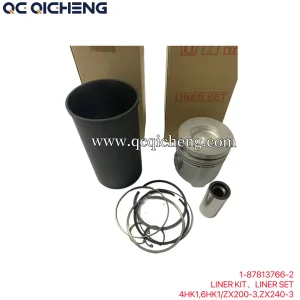
In alignment with global circular economy goals, major fleet operations in Ghana are establishing component rebuilding programs. High-capital structural blocks, crankshafts, and cylinder heads undergo magnetic particle inspection (MPI), ultrasonic flaw detection, and precision micro-honing before being restored with zero-hour liner kits and matched bearing pairs.
This remanufacturing methodology slashes capital equipment costs by up to 55% while reducing the logistical carbon footprint associated with manufacturing and transporting entire replacement engine blocks from overseas.
Importing and operating commercial transport and industrial engine spare parts in Ghana involves navigating a rigorous framework of national testing bodies, revenue systems, environmental authorities, and local-content directives. Qicheng partners with Ghanaian engineering importers to assure flawless statutory compliance.
Automotive and industrial replacement parts imported into Ghana must adhere to mandatory quality conformity under the Ghana Standards Authority (GSA) EasyPASS program. Non-compliant, uncertified components are subject to quarantine, punitive fines, or re-export at the importer's expense.
Every containerized shipment from Qicheng is backed by comprehensive material testing reports, factory conformity documentation, and ISO 9001 quality certificates to facilitate frictionless clearance.
The Ghana Revenue Authority’s Integrated Customs Management System (ICUMS) demands precision HS-Code classification and verifiable transactional invoicing. Mismatched part numbers or generic descriptions ("auto parts") trigger customs audits, administrative penalties, and catastrophic demurrage costs at port terminals.
Our logistics desk produces fully granular packing lists detailing exact OEM references, individual net/gross weights, and accurate Harmonized System tariff codes for instantaneous ICUMS clearance.
Ghana’s Minerals and Mining (Local Content and Local Participation) Regulations, 2020 (L.I. 2431) mandates that mining leaseholders and Tier 1 contractors procure consumables, replacement parts, and maintenance services through registered Ghanaian entities where local capacity exists.
Qicheng collaborates strategically with Ghanaian-owned mining supply distributors, mechanical engineering houses, and logistics firms in Takoradi, Tarkwa, and Accra, empowering indigenous enterprises with direct factory-pricing backing.
Authoritative answers compiled by our mechanical engineering staff and cross-border logistics directors regarding ISUZU machinery parts sourcing, compatibility, and transit into Ghana.
Explore our inventory of rod bearings, camshaft angle sensors, common-rail injection assemblies, and complete cylinder heads designed for high-stress industrial applications in Ghana.