
Direct Inventory: Mission-Critical Powertrain Components
Factory-verified tolerances designed to endure Ontario's extreme thermal cycles and rigorous earthmoving load cycles.
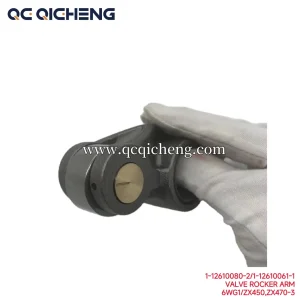
Valve Rocker Arm for Isuzu 6WG1 (Toronto Mining & Excavation Series)
View Technical Quote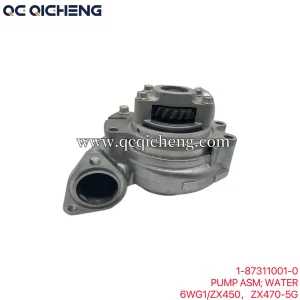
Water Pump Assy for Isuzu 6WG1 ZX450/ZX470-5G (Ontario Spec)
View Technical Quote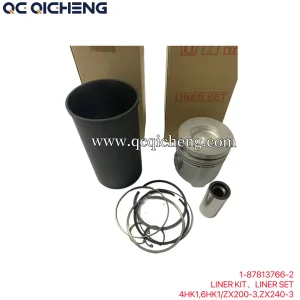
Complete Cylinder Liner Kit for Isuzu 4HK1/6HK1 (GTA Heavy Plant)
View Technical Quote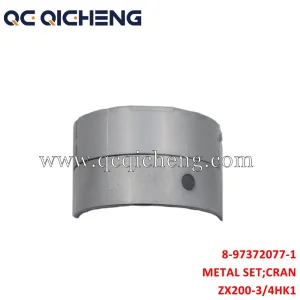
Main Crankshaft Bearing Metal Set for Isuzu 4HK1/6HK1 Powertrains
View Technical QuoteThe Greater Toronto Area: Infrastructure Pressure & Duty-Cycle Rigor
The Greater Toronto Area (GTA) functions as the uncontested logistics and construction epicenter of Canada. Encompassing major transit frameworks such as the Metrolinx Ontario Line, Hazel McCallion LRT, and extensive rehabilitation of Highway 401—the busiest transportation artery in North America—the region demands unparalleled mechanical uptime from commercial vehicles and construction plant machinery.
Fleets powered by Isuzu industrial engines (specifically the 4JJ1, 4HK1, 6HK1, and high-displacement 6WG1 platforms integrated into Hitachi excavators and Isuzu commercial trucks) face operational environments defined by extreme dualities. Sub-zero Laurentian winters generate brutal thermal shock during initial engine cranking, leading to oil starvation, accelerated cylinder wall scuffing, and cooling circuit cavitation. Conversely, dense urban stop-and-go congestion across the 400-series highways subjects common rail fuel systems to unprecedented soot build-up, EGR fouling, and extreme thermal soak.
Municipal fleet operations across Toronto, Peel Region (Mississauga, Brampton), and York Region are concurrently pressured by Ontario's environmental compliance mandates. Sourcing precision engine components that preserve factory-rated fuel atomization profiles and combustion chamber thermodynamics is essential to avoid non-compliance infractions under municipal diesel emission testing.
Technological Shifts in Heavy Diesel Powertrains (2025–2030)
Navigating the intersection of stringent Tier 4 Final / Stage V emission limits, ultra-high-pressure injection chemistry, and predictive maintenance telematics.
HPCR Injection Dynamics
Modern Isuzu 4HK1 and 6HK1 platforms utilize High-Pressure Common Rail (HPCR) injection architectures operating above 2,000 bar. Minute particle contamination or sub-standard suction control valves (SCVs) trigger instant injection balance disruption, causing thermal runaway on piston crowns in heavy-torque excavation cycles.
Micro-Alloy Metallurgy
To satisfy weight reduction and thermal efficiency thresholds, cylinder liners and crankshafts now integrate spheroidal graphite cast iron and boron-treated micro-alloys. Sourcing components that fail to match OEM carbon-silicon balance leads to rapid cylinder ovalization under extreme GTA gravel pit loads.
Telematics-Driven Overhauls
Enterprise fleets in Ontario increasingly rely on CAN-bus sensor metrics to schedule component replacements. Oil pressure sensors, camshaft position sensors, and fuel rail pressure transducers are no longer peripheral parts; their precision calibrates continuous ECU fuel-trim calculations.
Total Cost of Ownership (TCO) & Enterprise Procurement Economics
Why the upfront purchase price constitutes less than 18% of long-term commercial engine life-cycle costs in the North American heavy equipment sector.
| Evaluation Parameter | Tier-1 Factory Direct (Qicheng) | Local Canadian Dealer Network | Unverified Aftermarket Channels |
|---|---|---|---|
| Direct Component Acquisition Cost | Optimized Factory Direct (40-60% Savings) | Maximum Premium (High Regional Margin) | Lowest Initial Price (High Risk) |
| Metallurgical Verification | 100% CMM Inspected & Spectrograph Certified | OEM Verified Standard | Variable / Inconsistent Hardness |
| Mean Time Between Failures (MTBF) | 12,000 – 16,000 Heavy Operating Hours | 12,000 – 16,000 Heavy Operating Hours | Unpredictable (High Infant Mortality) |
| Ontario Downtime Risk Index | Minimal (Validated Part Number Compatibility) | Minimal (Subject to Local Stocking Gaps) | Severe ($1,500 - $3,200/day Idle Loss) |
| Logistics Architecture | Dedicated Air-Express to YYZ / Ocean to Montreal | Domestic Hub Delivery (When in Stock) | Standard Freight without Clearance Support |
In a metropolitan construction theater like Toronto, unexpected equipment downtime rapidly spirals into severe contractual penalties. On critical earthwork phases for condominium developments along the Gardiner Expressway or transit corridors, a single stalled Hitachi ZX330 excavator incurs catastrophic project chain reactions: idle dump trucks, non-productive unionized operating crews, and liquidated damages exceeding thousands of dollars daily.
Strategic procurement executives bypass local distribution markups without sacrificing engineering pedigree by executing volume supply agreements directly with qualified industrial manufacturers. By securing structural engine components—crankshafts, head assemblies, liner kits, and precision injection systems—manufactured under certified ISO/TS 16949 parameters, enterprise buyers reduce annual capital expenditure budgets while preserving operational reliability metrics.
China Industry 4.0: Resilient Powertrain Engineering at Global Scale
The production of industrial diesel engine components has transitioned into a highly automated, data-driven domain. Our manufacturing operations deploy state-of-the-art German 5-axis CNC machining centers, high-vacuum horizontal die-casting, and multi-stage automated coordinate measuring machines (CMM) that maintain dimensional repeatability down to ±2 microns.
This level of manufacturing automation delivers profound benefits to North American fleets:
- Laser-Interferometer Balanced Rotating Assemblies: Crankshafts, water pumps, and valve gear systems engineered to cancel out secondary rotational harmonics that lead to premature main bearing fatigue.
- Automated Cleanroom Assembly: Fuel delivery systems and common rail manifolds assembled under class 10,000 cleanroom environments, preventing sub-micron grit contamination.
- Real-Time Metallurgical Testing: Constant eddy-current and ultrasonic non-destructive testing (NDT) eliminates internal porosity in cylinder head castings and connecting rods.
Combined with a synchronized export corridor through the Pearl River Delta logistics ecosystem, high-precision orders are consolidated, custom-packaged for maritime or air transit, and dispatched seamlessly to Toronto Pearson International Airport (YYZ) or the Port of Montreal with full customs declarations.
Tailored Performance: Operational Environments Across Ontario
From municipal aggregate quarries in Caledon to severe winter cold-starts on urban snow clearing routes.
Aggregate Mining & Earthmoving
Excavator fleets deployed in Caledon, Halton Hills, and Milton aggregate operations push Isuzu 6WG1 and 6HK1 engines to sustained maximum continuous power ratings. High silica dust concentration requires absolute cylinder head gasket integrity and resilient liner seals to prevent combustion blow-by and oil dilution.
Highway 401 Urban Freight Logistics
Distribution centers along Brampton and Mississauga run thousands of Isuzu NPR/NQR commercial trucks powered by 4JJ1 and 4HK1 engines. Extended idle periods during warehouse intake lanes accelerate injector nozzle carbon accumulation, requiring precision fuel pressure sensors and high-response SCV valves to maintain DEF dosing balance.
Winter Sub-Zero Civil Works
With winter ambient temperatures reaching -25°C in northern GTA pockets, engine cooling circuits experience violent temperature gradients. Reinforced water pumps featuring carbon-ceramic mechanical face seals and corrosion-inhibiting impellers eliminate early impeller cavitation caused by heavy 60/40 glycol antifreeze mixes.
Factory-Certified Isuzu Precision Engine Assemblies & Sensors
Complete technical specification components ready for expedited pallet or container shipment to Toronto distribution points.
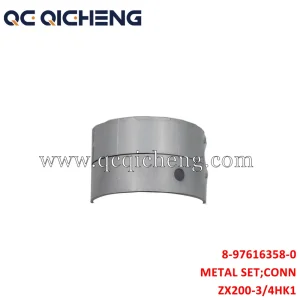
Connecting Rod Bearing Set for Isuzu 4HK1/6HK1 (Toronto Fleet Spec)
View Technical Quote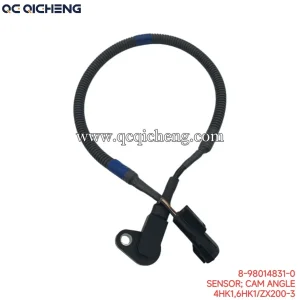
Camshaft Timing Angle Sensor for Isuzu 4HK1/6HK1 Common Rail Engines
View Technical Quote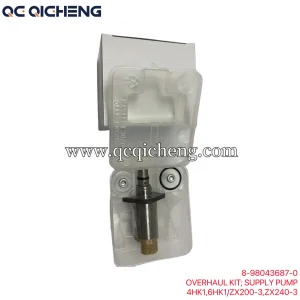
High-Pressure Fuel Pump SCV Suction Control Valve (4HK1/6HK1 Series)
View Technical Quote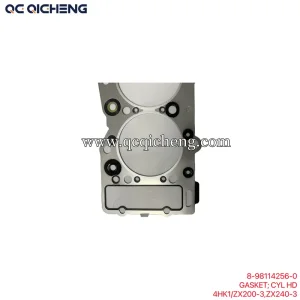
High-Tenacity Cylinder Head Gasket for Isuzu 4HK1 (ZX200/ZX240)
View Technical Quote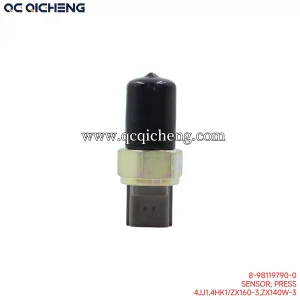
Common Rail Fuel Line Pressure Sensor for Isuzu 4JJ1/4HK1 Platforms
View Technical Quote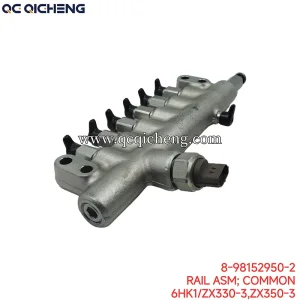
Heavy Duty Common Rail Assembly for Isuzu 6HK1 ZX330/ZX350-3
View Technical Quote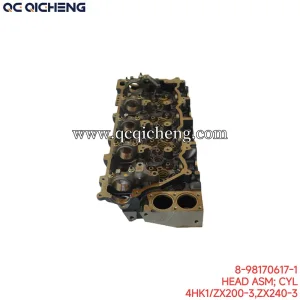
Bare / Complete Cylinder Head Assembly for Isuzu 4HK1 Turbodiesel
View Technical Quote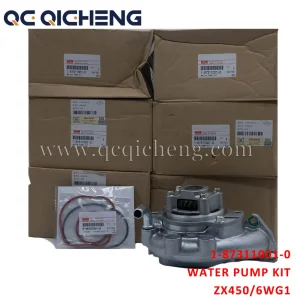
Heavy Duty Coolant Water Pump for Isuzu ZX450 6WG1 Mining Engines
View Technical QuoteEnterprise Inquiry Protocols & Import Engineering FAQs
Precise answers addressing cross-border shipping, CBSA compliance, parts interchangeability, and sub-zero durability.
What documentation is required to clear heavy diesel powertrain components through the Canada Border Services Agency (CBSA) into Toronto?
How do Qicheng components prevent premature failure in Ontario's harsh sub-zero winter temperatures?
Can your technical desk cross-verify superseded or region-specific Isuzu part numbers?
What are the lead times and shipping modes available for delivery to corporate yards in the GTA?
What quality assurances accompany high-pressure fuel rail and common rail assemblies?
Are wholesale volume pricing tiers and recurring procurement contracts supported?
Request a Formal Technical Quotation for Toronto Delivery
Equip your enterprise fleet with verified powertrain components engineered to withstand extreme Canadian operating environments. Connect with our engineering and procurement team for verified drawings, volume pricelists, and guaranteed delivery timelines.
Send Inquiry Now