
Mission-Critical ISUZU Powertrain Components for Doha Fleets
Essential powertrain and cylinder head assemblies optimized for Qatar’s high-ambient construction environments, supporting Hitachi ZX and heavy excavator configurations.
-
Doha Spec 6WG1
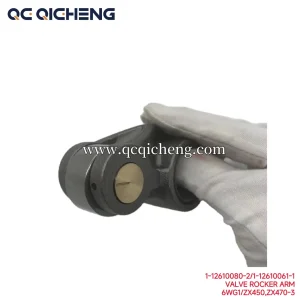 Doha Heavy Duty: High-Quality 1-12610080-2 1126100802 Valve Rocker Arm for Isuzu 6WG1 ZX450 ZX470-3 Suppliers, Supplier
 -
Cooling System
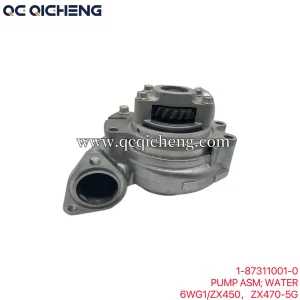 Thermal Defense: High-Quality 1-87311001-0 1873110010 Water Pump for Isuzu 6WG1 ZX450 ZX470-5G Suppliers, Quotes
 -
Overhaul Core
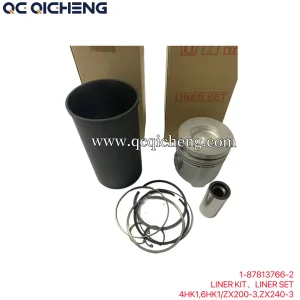 Cylinder Assembly: Wholesale 1-87813766-2 1878137662 Liner Kit for Isuzu 4HK1 6HK1 ZX200-3 ZX330-3 Pricelist, Quotes
 -
Precision Metallics
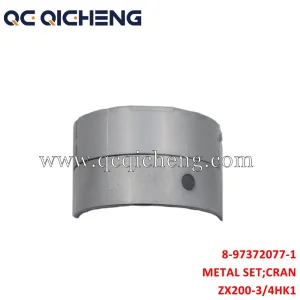 Anti-Friction: Wholesale 8-97372077-1 8973720771 Crankshaft Metal Set for Isuzu 4HK1 6HK1 ZX200-3 ZX330-3 Suppliers, Quotes
The Industrial & Heavy Machinery Landscape in Doha, Qatar
Analyzing operating stress parameters, Qatar National Vision 2030 megaproject procurement cycles, and thermal durability requirements for commercial diesel propulsion.
1. Strategic Infrastructure Dynamics: Lusail, Hamad Port, and the North Field Expansion
The State of Qatar represents one of the world's most concentrated capital investment zones for heavy infrastructure, civil engineering, and petrochemical processing. Under the overarching framework of the Qatar National Vision (QNV) 2030, the metropolitan area of Doha—stretching outward toward the Lusail smart city continuum, the New Orbital Highway corridors, Hamad International Airport logistics rings, and the massive North Field East/South liquefaction developments—maintains an exceptionally dense operating inventory of heavy earthmoving machinery, medium-duty logistics carriers, and specialized industrial gensets.
Within this rigorous industrial landscape, ISUZU diesel powertrains serve as the critical kinetic backbone. From the legendary 4HK1 and 6HK1 engine platforms embedded in Hitachi ZX-series hydraulic excavators to the heavy-displacement 6WG1 engines deployed in deep-excavation quarrying, coastal land reclamation, and municipal foundation work, equipment readiness is directly tied to national project timelines. The Public Works Authority (Ashghal) enforces uncompromising project schedules with severe liquidated damages for contractor delay. Consequently, Tier-1 civil engineering contractors and Doha-based fleet managers cannot tolerate secondary supply disruptions, counterfeiting, or suboptimal aftermarket metallurgical degradation.
2. Severe Environmental Operating Conditions: The "Doha Duty Cycle"
Operating internal combustion machinery in the eastern Arabian Peninsula requires engineering mitigations vastly different from temperate European or East Asian operational baselines. The atmospheric envelope in Doha is characterized by extreme tri-factor stress:
- Hyper-Thermal Stress: Summer ground-level surface temperatures frequently exceed 55°C, with ambient atmospheric readings regularly hovering above 48°C. This forces cooling systems to operate on razor-thin thermal headroom, accelerating oil viscosity breakdown, gasket embrittlement, and dynamic seal wear.
- Micro-Abrasive Silica Infiltration: Fine desert silica particles (10 to 50 micrometers) penetrate standard filtration systems. Ingested dust acts as an industrial lapping compound against cylinder liner walls, piston skirts, and rocker arm bushings, necessitating specialized induction hardening and micro-tolerance matching.
- Corrosive Airborne Chlorides: Proximity to the Arabian Gulf infuses Doha's atmospheric moisture with hyper-saline maritime aerosols. When coupled with high relative humidity during late summer months, external sensors, water pump impellers, and electrical injection harnesses suffer aggressive galvanic corrosion and accelerated oxidation.
Mission-Critical ISUZU Applications Across the Qatar Peninsula
From the industrial zones of Ras Laffan to municipal utility fleets, precision component performance underpins every sector of Qatar's thriving economy.
Civil Earthmoving & Metro Infrastructure
Continuous hydraulic cycling on Hitachi ZX200-3, ZX240-3, and ZX330-3 excavators handling limestone trenching across the New Doha Urban Area. Cylinder liner and crankshaft metal longevity dictate continuous uptime.
Hamad Port Logistics & Distribution
Heavy port-side drayage and distribution fleets powered by ISUZU 4JJ1 and 4HK1 commercial platforms operating round-the-clock schedules between Umm Sa'id, Hamad Port, and the Industrial Area logistics parks.
Petrochemical & LNG Field Support
Auxiliary power generators, boom trucks, and specialized mobile service units operating within Ras Laffan and Mesaieed industrial cities requiring non-spark, high-pressure common rail precision and zero fuel leaks.
Industry Trends: The Shift to Closed-Loop Telematics and Low-Emission Calibrations
Across the GCC, environmental compliance standards are tightening. Qatari state contracts increasingly mandate Euro-III to Euro-IV compliant diesel architectures with strict particulate monitoring. As a direct result, older mechanical fuel injection systems are being rapidly replaced by High-Pressure Common Rail (HPCR) technology operating at fuel injection pressures exceeding 1,800 to 2,000 bar. This transition fundamentally changes spare parts procurement:
In high-pressure common rail engines, a micro-deviation of 2 microns in Suction Control Valve (SCV) seating or fuel rail pressure sensors will trigger electronic control unit (ECU) limp-mode shutdowns. Procurement professionals can no longer source generic aftermarket components from unverified regional traders. The technical requirement demands verifiable OEM-level tolerances, surface finishes Ra ≤ 0.1 µm on hydraulic interfaces, and calibrated electromagnetic sensor responses that integrate flawlessly with Denso/Isuzu engine computers.
China Industry 4.0: Reshaping GCC Heavy Equipment Procurement
Bridging tier-one manufacturing precision with agile export corridors to eliminate multi-tier distributor markups in the Arabian Gulf.
Direct-from-Source Precision: The Advanced Manufacturing Standard
For decades, Qatari machinery operations relied on layered distributor networks that passed components through multiple Gulf redistribution centers, inflating unit costs by 35% to 65% and introducing significant supply chain lag. Qicheng Machinery & Equipment (China) Co., Ltd., founded in 2006, disrupts this inefficient model by connecting large fleet operators and engineering contractors directly to world-class Chinese advanced manufacturing centers.
Modern Chinese Industry 4.0 facilities utilize Japanese multi-axis CNC machining centers, automated robotic coordinate measuring machines (CMM), and digital spectral metallurgy testers. Every cylinder head, crankshaft, and water pump assembly undergoes computerized non-destructive testing (NDT), ultrasonic flaw detection, and dynamic balancing prior to packaging. This ensures that when an ISUZU 6WG1 water pump or 4HK1 cylinder head arrives on-site in Doha, it matches or exceeds original Japanese OEM service life specifications under high ambient desert conditions.
| Engineering Parameter | Generic Middle East Aftermarket | OEM Japanese Standard | Qicheng Industry 4.0 Doha Spec |
|---|---|---|---|
| Cylinder Liner Metallurgy | Standard Grey Cast Iron (HT200) | Centrifugal Alloy Cast Iron | Boron-Chromium Centrifugal Alloy (Phosphated) |
| Surface Roughness (Ra) | Ra 0.40 – 0.60 µm | Ra 0.15 – 0.25 µm | Ra ≤ 0.18 µm Plateau Honed |
| High-Temp Gasket Tensile Yield | < 85 MPa (Delaminates at 115°C) | > 120 MPa Multi-Layer Steel | > 135 MPa Nitrile-Coated Multi-Layer Spring Steel |
| Sensor Magnetic Response Time | > 35 milliseconds | < 15 milliseconds | < 12 milliseconds (Gold-Plated Pins) |
| Lead Time to Doha Port / DOH | Variable (Dependent on Gulf Stocks) | 6 – 10 Weeks (Factory Backorder) | 3 – 5 Days Air Cargo / 14 Days Direct Sea Freight |
Mitigating Supply Disruption: Standing Inventory & Multimodal Air/Sea Logistics
When an earthmoving contractor in Al Khor or a heavy crane rental operator in Salwa Industrial Area experiences engine failure, machine downtime costs thousands of Qatari Riyals per shift. Qicheng maintains an expansive USD $15 million standing inventory covering more than 100,000 verified SKUs across our core Guangzhou central logistics hub and domestic branch depots.
Through established logistics partnerships with Qatar Airways Cargo (operating high-frequency widebody flights directly between Guangzhou Baiyun International Airport [CAN] and Hamad International Airport [DOH]), urgent replacement components—such as common rail assemblies, SCV valves, and crankshaft bearing sets—reach Doha maintenance facilities within 72 to 96 hours of order sign-off. For periodic scheduled fleet overhauls, direct container shipments routed into Hamad Port provide maximum freight economics.
Strategic Purchasing & Verification Protocol for Qatar EPCs
A systematic framework for fleet maintenance directors, equipment superintendents, and supply chain managers.
To eliminate procurement errors, eliminate customs clearance delays at Hamad Port, and prevent catastrophic premature component failure, Qicheng enforces a 4-tier verification protocol on every Doha-bound shipment:
- Step 1: Machine Serial & Engine Block Cross-Referencing: Due to continuous mid-cycle revisions in Hitachi excavators (ZX200-3 vs. ZX200-5G) and Isuzu industrial engines (such as variations between Tier 3 common rail and mechanical Tier 2 blocks), our technical engineers verify the exact engine serial number (ESN) and machine chassis plate before dispatch.
- Step 2: Desert-Duty Metallurgy & Heat Treatment Certification: Components destined for the GCC are checked for high-temperature alloy integrity. Piston crowns feature reinforced thermal barriers, while valve train components receive advanced nitriding to eliminate galling under extreme heat.
- Step 3: Export Documentation & Qatar Chamber Compliance: All shipments are accompanied by detailed commercial invoices, itemized packing lists, Certificate of Origin (COO), and factory test certificates compliant with Qatar Customs and General Authority of Standards and Metrology (QS) guidelines.
- Step 4: Protective Marine & Desiccant Packaging: Considering maritime humidity during sea transit and desert silica upon arrival, precision components are hermetically sealed in anti-corrosion VCI (Vapor Corrosion Inhibitor) packaging with high-density desiccants and wooden crating compliant with ISPM-15 heat-treatment standards.
Frequently Asked Questions: ISUZU Sourcing in Doha
Detailed technical answers for Qatari machinery superintendents and parts procurement teams.
How do you guarantee that ISUZU engine components fit machines operating in Qatar?
What are the typical shipping lead times to Doha (Hamad Port and Hamad International Airport)?
How do Qicheng components withstand Doha’s 50°C+ summer ambient temperatures?
Can you supply complete engine overhaul kits for ISUZU 4HK1 and 6HK1 engines?
What documentation is provided to ensure smooth customs clearance in Qatar?
What is your minimum order quantity (MOQ) for Qatari construction contractors?
High-Performance ISUZU Replacement Solutions for Doha Operations
Explore our comprehensive range of bearings, electronic sensors, common rail units, and cylinder heads ready for immediate export to Qatar.
-
Bearing Set
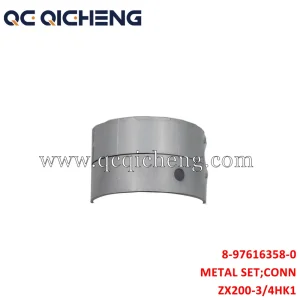 High-Quality 8-97616358-0 8976163580 Connecting Rod Bearing for Isuzu 4HK1 6HK1 ZX200-5A ZX330-3 Pricelist, Quotes
 -
Timing Sensor
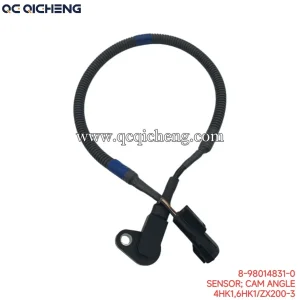 Wholesale 8-98014831-0 8980148310 Camshaft Angle Sensor for Isuzu 4HK1 6HK1 ZX200-3 ZX330-3 Suppliers, Quotes
 -
Fuel Control
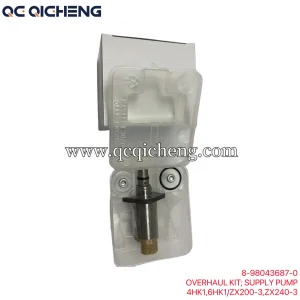 High-Quality 8-98043687-0 8980436870 Fuel Pump SCV Suction Control Valve for Isuzu 4HK1 6HK1 ZX240-3 ZX330-3 Supplier, Quotes
 -
Combustion Seal
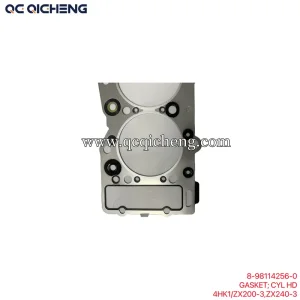 Wholesale 8-98114256-0 8981142560 Cylinder Head Gasket for Isuzu 4HK1 ZX200-3 ZX240-3 Pricelist, Quotes
 -
Pressure Sensor
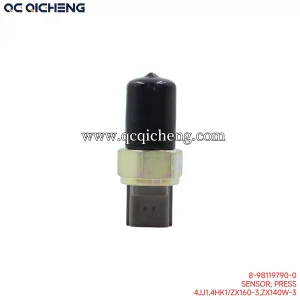 High-Quality 8-98119790-0 8981197900 Pressure Sensor for Isuzu 4JJ1 4HK1 ZX160-3 ZX240-3 Suppliers, Supplier
 -
Fuel Common Rail
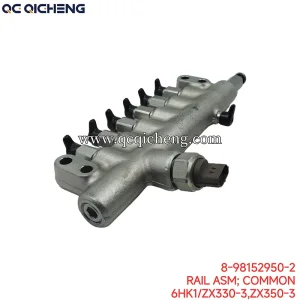 High-Quality 8-98152950-2 8981529502 Common Rail Assy for Isuzu 6HK1 ZX330-3 ZX350-3 Pricelist, Quotes
 -
Cylinder Head
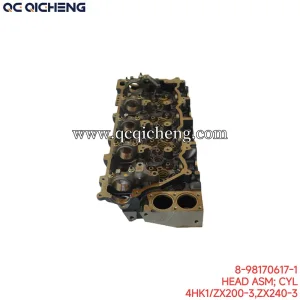 Wholesale 8-98170617-1 8981706171 Cylinder Head for Isuzu 4HK1 ZX200-3 ZX240-3 Suppliers, Pricelist
 -
Water Pump
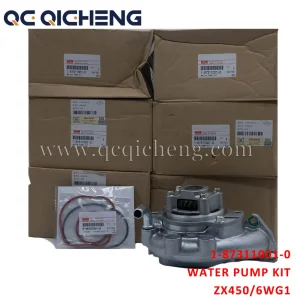 Wholesale 1-87311001-0 PUMP WATER For ISUZU ZX450 6WG1 Suppliers, Supplier
Strengthen Your Fleet Supply Chain in Doha Today
Send your OEM part numbers, equipment model designations, and engine serial numbers to our engineering sales team. Receive cross-verified technical confirmation, stock availability, and expedited CIF Doha or CPT Hamad Airport quotes within 24 business hours.
Send Inquiry Now