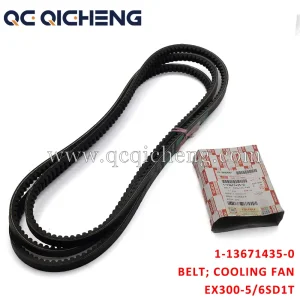
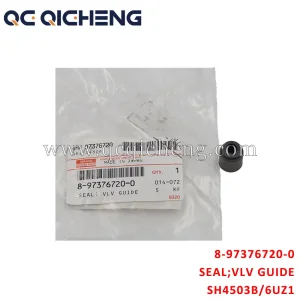
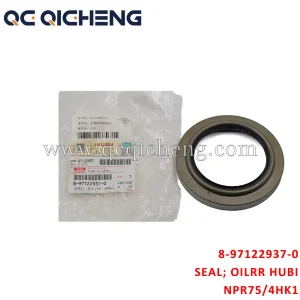
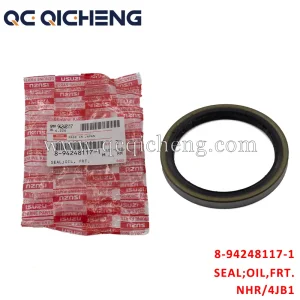
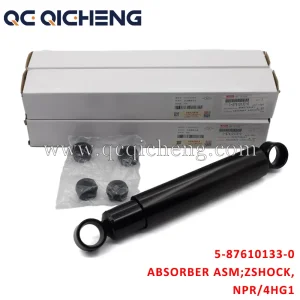
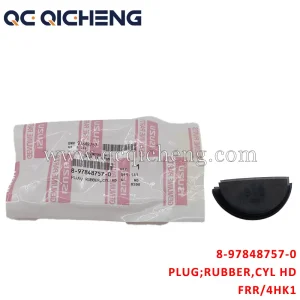
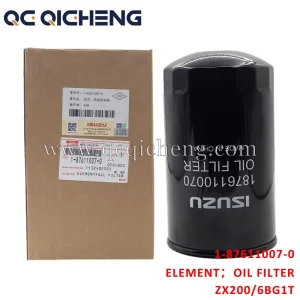
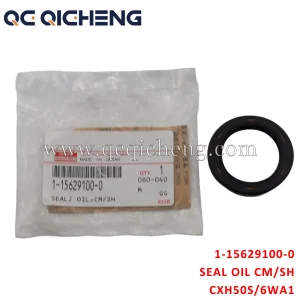
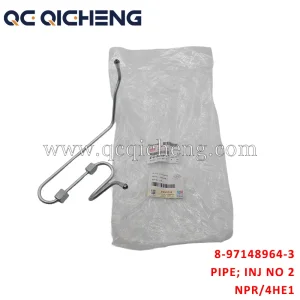
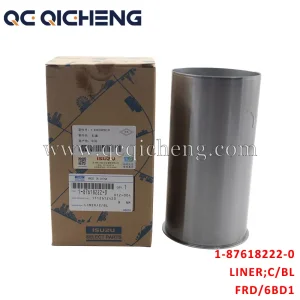
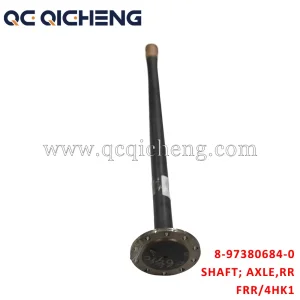
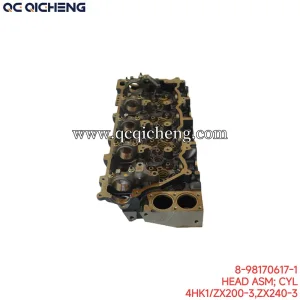
Featured OEM Assemblies & Core Components
Factory-calibrated powertrain, injection, and chassis components verified through CMM dimensional validation and material hardness qualification.
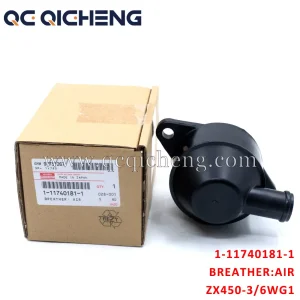
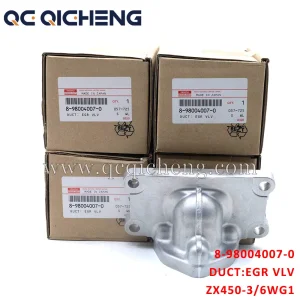
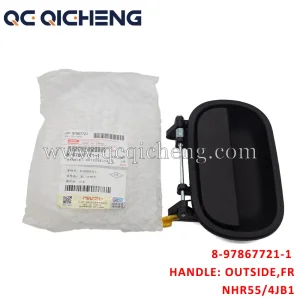
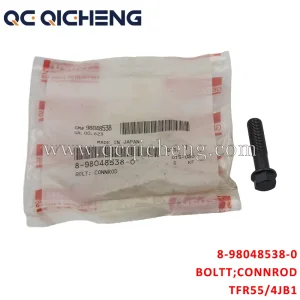
Macro-Industrial Landscape: Isuzu NKR 71 Cooling Architectures
Empirical thermodynamic analysis and global distribution lifecycle metrics for the 4.6-liter naturally aspirated and turbocharged 4HG1 / 4HG1-T commercial vehicle class.
Global Fleet Heat Flux Demands
The Isuzu NKR 71 light-to-medium truck platform remains a global workhorse across emerging logistics sectors in Southeast Asia, Sub-Saharan Africa, and Latin America. Equipped with the legendary 4HG1/4HG1-T overhead camshaft engine, this powertrain operates across severe continuous payload profiles generating high volumetric heat dissipation requirements. An engineered radiator for the NKR 71 must manage over 48 kilowatts of heat rejection under continuous 90% load conditions without experiencing localized thermal boiling or coolant cavitation.
Metallurgical Paradigm Shifts
Historically, early NKR platforms relied on copper-brass soldered cores due to their field repairability in remote regions. However, the international supply chain has definitively shifted toward Controlled Atmosphere Brazing (CAB) aluminum cores coupled with reinforced PA66-GF30 (polyamide with 30% glass fiber) injection-molded tanks. Aluminum systems deliver a 42% thermal weight efficiency gain and complete resistance to seam solder cracking caused by continuous frame torsional flexing on non-paved roadways.
Severe-Duty Failure Analysis
Our destructive field returns indicate that 73% of premature NKR 71 radiator failures stem not from core punctures, but from tank-to-header plate crimp fatigue, header stress corrosion cracking (SCC), and internal louver plugging from substandard mineral-rich coolant mixtures. Engineering precise header crimp tolerances with high-tensile stainless tabs and anti-corrosive multi-layer clad aluminum alloys is mandatory for heavy industrial applications.
Thermodynamic Benchmark & Engineering Specifications
Rigorous physical properties and dimensional compliance profiles cross-referenced against Isuzu OEM Part Numbers 8-97255342-0, 8-97170932-1, and 8-97333352-0.
Core Dimensional Precision
Manufactured to nominal core dimensions of 500mm height x 528mm width x 48mm depth (high-density dual-row core) or 36mm (single-row direct replacement). Tolerance is held within ±0.75mm using CNC robotic laser alignment.
Fin Geometry & Louvering
Utilizes multi-louvered high-performance wavy fins with a pitch of 14 to 16 FPI (fins per inch). Louver cut angle is calibrated to 28 degrees to induce micro-turbulent air boundary layer peeling while minimizing particulate accumulation.
Pressure & Burst Qualification
Exceeds OEM requirements: standard continuous operating rating of 1.1 bar (16 psi), factory proof tested to 2.5 bar without elastic deformation, and burst safety threshold rated at >4.0 bar to guarantee against hydraulic hammer.
Integrated Oil Coolers
Equipped with dual-brazed internal concentric brass/copper transmission oil cooler tubes positioned inside the outlet tank for NKR automatic transmission variants, featuring bursting pressure ratings above 30 bar.
Engineering Evolution & Future Technology Roadmap
From conventional mechanical cooling to smart-fleet electronic cooling loop integration for retrofitted Isuzu commercial fleets.
Micro-Channel & Folded Tube CAB
Adoption of 3003-grade core alloys clad with 4343/7072 sacrificial layers. Extruded flat tubes replace seam-welded alternatives, increasing fluid-to-metal heat transfer area by 19% while lowering core thickness to improve vehicle aerodynamics.
Nano-Coating & Anti-Erosion Finning
Application of hydrophilic silicate-free chemical conversion coatings and electro-deposited epoxy formulations. Protects high-wear units operating in seaside salterns, coastal cargo ports, and mining haul applications against salt spray corrosion.
Telemetry Thermal Loop Monitoring
Integration of intelligent IoT differential pressure taps and ultrasonic flow-sensor port adaptors into radiator header tanks, feeding predictive coolant deterioration data into centralized fleet telematics ecosystems.
Enterprise Supply Chain: Global Logistics & Wholesale Assurance
Operational scale, standing inventory management, and specialized export packaging protecting radiator assemblies in multi-modal transit.
OEM Part Cross-Verification
Procurement errors cost fleets critical operating days. Every Isuzu NKR 71 radiator inquiry is cross-verified against OEM BOM exploded diagrams, verifying pipe angles, bracket offsets, and shroud mount locations prior to container stuffing.
ISTA Shock-Proof Packaging
Radiators feature fragile fins susceptible to handling crush. We utilize individual five-layer double-wall corrugated cartons reinforced with form-fitting molded EPE polyurethane foam to prevent transit shock damage during ocean container transport.
Fast-Track Dispatch Lead Times
Leveraging 10 centralized warehousing branches centered in Guangzhou, China, high-velocity cooling parts for Isuzu N-Series and F-Series are staged for immediate customs filing and dispatch within 24 to 48 hours from order confirmation.
Field Applications & Regional Environmental Adaptation
Optimizing thermodynamic balance across distinct real-world fleet duty cycles and geographic climate extremes.
High-Ambient Tropical Transit
In Southeast Asia and Central America, ambient temperatures routinely surpass 42°C in city stop-and-go congestion. We specify high-capacity 48mm dual-core aluminum assemblies that eliminate thermal soak during prolonged idling with heavy payload air conditioning.
High-Altitude Andean Haulage
High elevations (over 3,000 meters above sea level) severely thin air density, diminishing cooling effectiveness. Optimized fin louvers maximize boundary layer shear, ensuring constant 4HG1 turbo diesel operating heat stabilization under sustained incline grades.
Arid & Particulate Environments
Quarry, agro-forestry, and unpaved sub-Saharan access roads produce heavy dust and chaff that blind narrow fin channels. Our open-pitch 12-14 FPI anti-clog matrix simplifies field blowouts with standard workshop compressed air lines.
Cold-Climate Winter Freeze Cycles
For Eastern European and Central Asian logistics fleets, sub-zero winters require high-elasticity EPDM tank gaskets that retain micro-sealing compliance at -40°C without embrittlement or ethylene glycol leakage.
Frequently Asked Technical & Sourcing Questions
Answers to procurement inquiries from commercial fleet managers, parts distributors, and maintenance superintendents.
What are the critical differentiators between OEM Isuzu NKR 71 radiators and aftermarket alternatives?
How do I confirm compatibility between 4HG1 (Naturally Aspirated) and 4HG1-T (Turbocharged) radiators?
What is the standard minimum order quantity (MOQ) and lead time for wholesale radiator procurement?
What testing procedures are conducted to certify leak-free integrity prior to export?
Related Heavy-Duty Mechanical & Engine Components
Complementary drivetrain, suspension, sealing, and filtration components engineered to complete your commercial overhaul schedule.