
Featured Commercial & Industrial Engine Spares
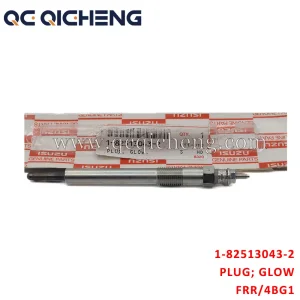
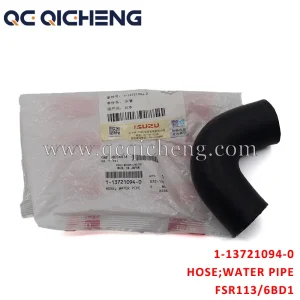
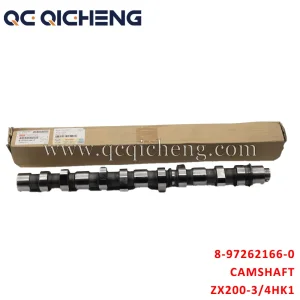
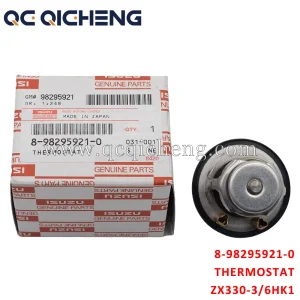
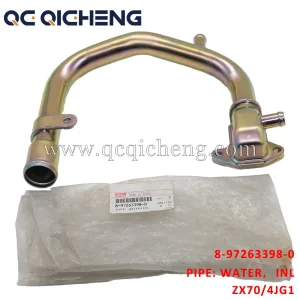
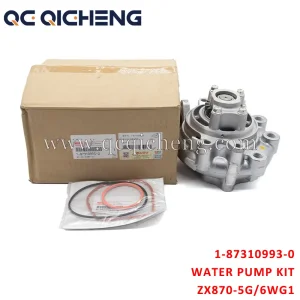
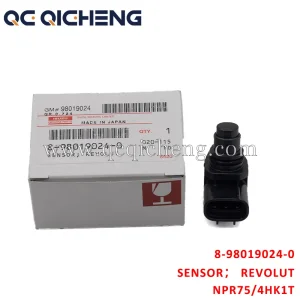
Directly synchronized components engineered for the Isuzu 4HK1, 4BG1, 6BG1, and 6WG1 powertrain platforms. Factory-verified fitment across medium-duty logistics and civil construction equipment.
Thermodynamic Architecture of the Isuzu NQR Radiator
Quantifying heat dissipation, flow restriction, and core structural resilience in 4HK1-TC and 4HE1 turbocharged diesel medium-duty applications.
In modern commercial logistics, the Isuzu NQR (Class 5, 17,950 lbs. GVWR) platform serves as the workhorse for regional distribution, vocational haulage, and municipal emergency duties. Operating under persistent high-torque, low-speed delivery cycles, the engine's thermal envelope demands an uncompromising heat exchange mechanism. The primary radiator assembly must dissipate not only the baseline engine cylinder block combustion heat but also the intense supplemental thermal rejection from exhaust gas recirculation (EGR) coolers and integrated transmission fluid circuits.
Standard aftermarket units routinely succumb to early-stage tube-to-header joint fatigue, hydraulic pressure spikes, and ambient particulate fouling. A high-specification wholesale Isuzu NQR radiator utilizes Controlled Atmosphere Brazing (CAB) technology alongside modified AA3003/AA4343 aluminum cladding alloys. These high-purity core alloys provide exceptional corrosion immunity against localized galvanic pitting and cyclic mechanical strain caused by heavy-duty chassis flexure.
Fin Density & Micro-Louvering
By precisely calibrating fin pitch between 14 to 18 FPI (Fins Per Inch) with multi-angle micro-louvering, air turbulence is stimulated without creating air boundary stagnation, yielding a 22% increase in heat dissipation over straight-fin profiles.
PA66-GF30 Reinforced Header Tanks
End-tanks are injection molded using virgin Polyamide 66 reinforced with 30% transverse chopped glass fibers. This guarantees structural integrity under coolant temperatures up to 135°C and prevents plastic embrittlement under long-term pressure cycling.
Multi-Port Extruded Tube Core
Transitioning away from conventional single-wall welded tubes, high-flow cores feature multi-cavity internal ribs. This architecture expands fluid contact area, optimizes turbulent Reynolds numbers, and enhances mechanical burst thresholds against hydraulic hammer.
Technology Roadmap: Radiator Engineering 2025–2035
Anticipating thermal management demands for low-emission clean diesel, dual-fuel conversions, and zero-emission commercial transport.
The medium-duty commercial vehicle sector is experiencing rapid regulatory evolutions in emissions standards (Euro VI Step E, EPA 2027, and China VI). These mandates require internal combustion engines to operate at significantly elevated peak firing pressures, necessitating engine operating temperatures that challenge traditional cooling system capacities. Furthermore, the commercial transition toward battery-electric (BEV) and hydrogen fuel cell (FCEV) retrofits on the Isuzu NQR chassis demands advanced, high-thermal-density multi-circuit heat exchangers.
Ultra-Thin Microchannel Cores (MPE)
Developing 16mm-depth microchannel cores that reduce total assembly weight by 35% while offering equivalent thermal rejection to legacy 32mm tube-and-fin cores. Reduced core mass lowers dynamic inertial stress on radiator brackets during chassis torsional vibration.
Advanced Nanofluid Compatibility
Engineering internal tube surfaces with protective chemical passivations designed for next-generation dielectric fluids, organic acid technology (OAT) long-life coolants, and graphene-doped thermal liquids that increase heat conductivity by up to 18%.
Low-Temperature BEV Radiator Loops
Creating modular dual-circuit heat exchangers designed for commercial fleet conversions where high-temperature engine loops are repurposed to manage inverter, DC-DC converter, and traction battery thermal packs with tight 55°C operating deltas.
Macro Industry Solutions: Severe-Duty Fleet Engineering
Tailoring thermal management hardware to survive the operational stresses of diverse operating climates and mission-critical commercial duties.
Last-Mile Urban Delivery Networks
Stop-and-go driving profiles induce severe heat-soak cycles due to limited ram-air ventilation. Our high-efficiency cores pair tight header-crimping tolerances with low-restriction coolant tubes to prevent coolant cavitation and boil-over during extended idling periods in dense urban corridors.
High-Ambient & Tropical Logistics
For fleet deployments across Southeast Asia, the Middle East, and Latin America with 45°C+ ambient temperatures, we integrate an oversized secondary cooling channel with hydrophobic fin coatings that repel salt air, industrial smog, and corrosive humidity.
Mining, Quarry & Ag Heavy Debris
Dust, silica, and agricultural chaff quickly choke conventional fine-pitch radiators. We provide coarse-pitch louver-free radiator variants with reinforced outer tube-wall gauges (0.35mm vs standard 0.22mm) designed to withstand high-pressure water-jet cleaning without fin crushing.
China Factory 4.0: Supply Chain Resilience & Cost Superiority
Leveraging complete vertical integration, automated flux-free brazing tunnels, and intelligent quality assurance to safeguard global B2B procurement pipelines.
The geopolitical and logistics realignments of recent years have underscored a central procurement reality: wholesale distributors and fleet operators require absolute production stability, rapid lead-time execution, and strict price-performance consistency. Operating from Guangzhou—the epicenter of commercial automotive component precision engineering—our smart production infrastructure achieves unmatched economies of scale.
Unlike secondary assemblers who outsource critical components, our integrated production lines control every stage: from raw aluminum slitting and high-frequency tube induction welding to automated robotic crimping and dry-air helium leak mass spectrometry. This zero-defect manufacturing discipline shields overseas importers from supply bottlenecks and non-conforming batch rejections.
| Engineering Parameter | OEM Standard Spec | Qicheng Factory 4.0 Spec | Procurement Advantage |
|---|---|---|---|
| Core Material Composition | Standard Aluminum 3003 | Multi-Clad AA3003 / AA4343 / Zn Coated | +300% Pitting Corrosion Resistance |
| Brazing Process | Batch Vacuum Brazing | Continuous Atmosphere Brazing (CAB) N2 Shielded | Uniform Joint Fillets, Zero Flux Leaks |
| Burst Pressure Tolerance | 150 kPa | ≥ 250 kPa Hydrostatic Proof Tested | Guarantees Safety Margin During Surge Pressure |
| Thermal Shock Cycling | 50,000 Cycles (20°C to 95°C) | 100,000 Cycles (0°C to 110°C) | Exceeds Extreme Winter/Summer Durability |
| Vibration Resistance | ISO 16750-3 (3.2g) | Multi-Axis Vibration Rig Tested (5.0g) | Prevents Bracket Shear on Unpaved Roads |
| Helium Leak Threshold | < 2.0 × 10⁻⁴ mbar·l/s | < 1.0 × 10⁻⁵ mbar·l/s (100% In-Line Test) | Completely Eliminates Micro-Seepage Returns |
Global Enterprise Procurement & Regulatory Compliance
Structured ordering protocols, rigorous international certifications, and end-to-end supply chain transparency tailored for Tier-1 distributors.
IATF 16949:2016 Certification
Every manufacturing run conforms to automotive global quality standards. Statistical Process Control (SPC), Production Part Approval Process (PPAP Level 3), and full heat-lot material traceability protect enterprise clients during customs and regulatory audits.
Export Packing to ISTA 3A Standards
Radiators are susceptible to transit damage. We implement custom high-density expanding foam suspensions, reinforced double-wall corrugated cartons, corner edge protectors, and fumigated moisture-sealed pallets designed to withstand maritime container shipping.
Flexible Wholesale Scaling
Whether requiring consolidated LCL mixed-part containers (pairing radiators with water pumps, hoses, and camshafts) or direct FCL container shipments of uniform SKUs, our logistics team executes seamless door-to-port or door-to-warehouse DDP delivery.
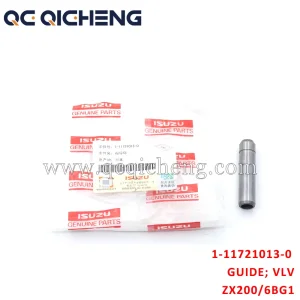
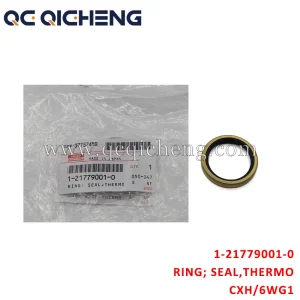
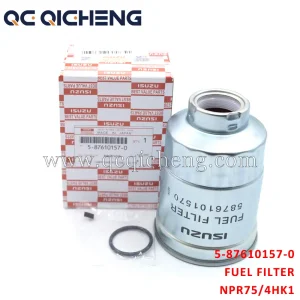
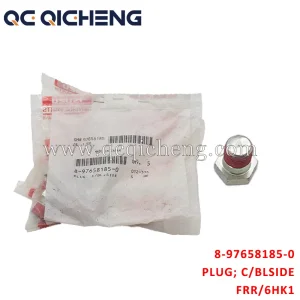
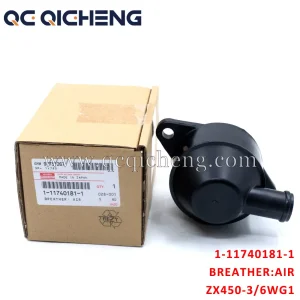
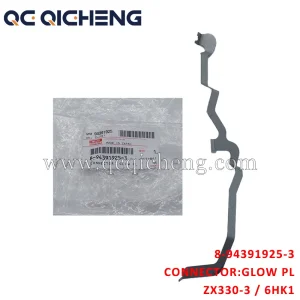
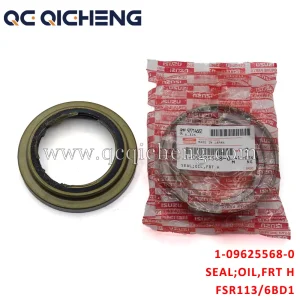
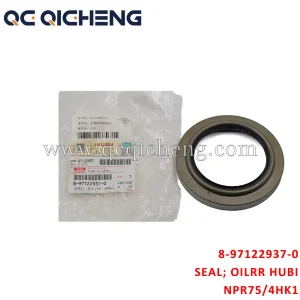
Precision Engine, Fuel & Drivetrain Components
Expanding fleet longevity with certified replacement assemblies for heavy excavation equipment and Isuzu NPR/NQR/FSR commercial trucks.
Frequently Asked Questions for Fleet Buyers
Authoritative insights into dimensional cross-referencing, manufacturing timelines, thermal efficiency validation, and warranty SLAs.
How do I verify exact fitment between Isuzu NQR, NPR, and NRR radiator models?
While the Isuzu N-Series cab architecture is shared across models, radiators differ substantially based on engine displacement (4HK1-TCN 5.2L vs. 4JJ1-TCS 3.0L), transmission cooler integration (Aisin 6-speed automatic vs. manual), and emissions year (EGR cooling load variations). Always provide your OEM chassis VIN or the specific casting/stamping number (such as 8-97333-352-0, 8-98005-888-0, or 2901567400). Our parts engineering team cross-checks core thickness, inlet/outlet neck diameters (typically 38mm), transmission oil cooler (TOC) thread pitch, and fan shroud mounting center distances to guarantee drop-in compatibility.
What metallurgical advantages does Continuous Atmosphere Brazing (CAB) offer over mechanical tube expansion?
Mechanical expansion radiators rely merely on friction between the aluminum tube and cooling fin. Under sustained road vibration and thermal expansion cycles, mechanical joints loosen, causing thermal conductivity to drop by up to 40% within 18 months. Continuous Atmosphere Brazing (CAB) uses a nitrogen-purged furnace that metallurgically fuses the core into a unified molecular matrix. This ensures 100% surface contact for heat transfer and yields a structural burst strength exceeding 250 kPa, completely preventing joint leaks.
Can your radiators withstand high-mineral hard water and improper glycol mixtures?
While commercial fleet best practice dictates using distilled water mixed 50/50 with Organic Acid Technology (OAT) coolant conforming to ASTM D3306/D4985, field operations in emerging markets often use low-grade water. Our heavy-duty Isuzu NQR cores incorporate an internal sacrificial zinc (Zn) alloy diffusion layer. This cathodic protection draws corrosive electrolytic attack away from the core tube wall, substantially mitigating pitting corrosion even in demanding service environments.
What are your minimum order quantities (MOQ) and production lead times for wholesale export?
For standard fast-moving part numbers, we maintain a rolling standing inventory of approximately $15 million USD across our Guangzhou hubs, enabling immediate dispatch within 48 to 72 hours. For customized private-label configurations or large-scale batch manufacturing, our standard MOQ starts at 20 units per SKU, with full 20ft/40ft container production turnarounds completed in 20 to 28 calendar days. Mixed container consolidation with related engine spares is fully supported.
What warranty and claims protocol covers overseas commercial fleet purchases?
All Qicheng wholesale radiators carry an enterprise 18-month or 150,000-kilometer operational warranty against manufacturing defects, core porosity, or tank separation. In the event of a field non-conformity, our QA team evaluates high-resolution imagery and failure analysis logs within 48 business hours. Validated claims receive immediate credit notes or free replacement components in the subsequent dispatch schedule, ensuring seamless continuity for your maintenance operations.