
Featured Commercial Fleet & Excavator Replacement Components
Verified OEM-spec replacement units in standing inventory across our global logistics hubs. Cross-referenced for exact tolerances and harsh heavy-duty cycles.
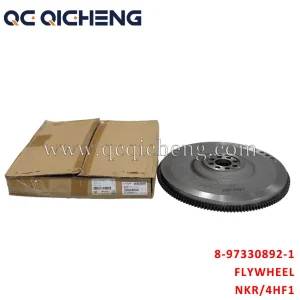
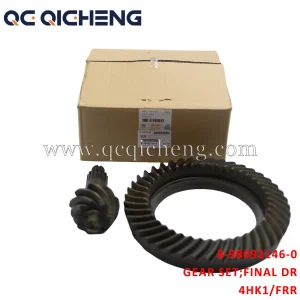
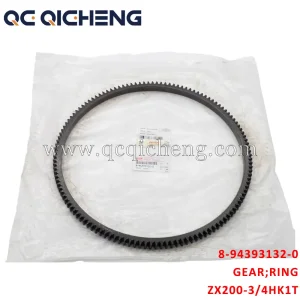
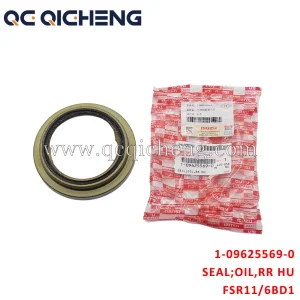
Global Commercial Landscape of Isuzu NQR Brake Booster Systems
The medium-duty commercial transport sector relies heavily on the Isuzu N-Series (including NQR, NPR, NKR, and NHR platforms), operating across Gross Vehicle Weight Ratings (GVWR) between 12,000 lbs and 19,500 lbs (Class 3 through Class 5). At the heart of active vehicle safety in these commercial workhorses lies the Isuzu NQR Brake Booster assembly. Whether configured as a dual-diaphragm vacuum servo unit or an Air-over-Hydraulic (AOH) booster, this critical component acts as the mechanical-pneumatic force multiplier between the driver's pedal input and the master cylinder hydraulic calipers.
As commercial fleet operators face tightening regulatory safety standards globally (such as FMVSS 105 in North America and UNECE Regulation 13 in Europe and Latin America), the technical integrity of the brake servo becomes an uncompromised priority. Operating under continuous stop-and-go metro transit, multi-drop delivery, and heavy gross payload conditions, vacuum fatigue, reaction disc degradation, or elastomeric diaphragm micro-cracks can cause catastrophic increases in vehicle stopping distances. Qicheng Machinery & Equipment (China) Co., Ltd. has served the global commercial fleet ecosystem since 2006, delivering Tier-1 quality, precision-forged brake booster assemblies and complete chassis braking sub-assemblies to distributors and fleet maintenance depots in over 120 countries.
Unlike spark-ignition gasoline engines that create natural manifold depression, Isuzu diesel engines (notably the 5.2L 4HK1 common-rail series) generate virtually zero intake vacuum. Consequently, the vacuum brake booster relies entirely on an auxiliary mechanical vacuum pump integrated into the rear gear housing or driven via the alternator shaft. An Isuzu NQR brake booster must maintain stable pedal force multiplication down to -65 kPa (-500 mmHg) of auxiliary vacuum, requiring ultra-low hysteresis seals and high-tensile internal return springs.
Isuzu NQR Brake Booster Wholesale Catalog & Pricelist Reference
Detailed tiered wholesale volume pricing, OEM part number interchange matrix, and engineering specifications. All units are 100% pneumatic pressure tested before export crating.
| OEM Reference | Platform / Chassis | Booster Architecture | Diaphragm / Chamber Size | MOQ | Wholesale Tier (10-49) | Wholesale Tier (50+) | Stock Status |
|---|---|---|---|---|---|---|---|
| 8-97162-963-0 | Isuzu NQR71 / NPR66 (4HE1 / 4HF1) | Tandem Vacuum Servo | 9.5" + 10.5" Dual EPDM | 5 Units | $86.50 / pc | $74.20 / pc | Immediate Dispatch |
| 8-97362-748-1 | Isuzu NQR75 / NPR75 (4HK1-TC 5.2L) | Dual-Chamber Vacuum Booster | 10.5" Single / Tandem | 5 Units | $92.00 / pc | $79.80 / pc | Immediate Dispatch |
| 8-98006-036-0 | Isuzu NQR / N-Series Euro 4/5 | Hydro-Boost / Hydro-Max Servo | Hydraulic Spool Valve Bore | 2 Units | $148.00 / pc | $129.50 / pc | In Stock (Guangzhou) |
| 8-97210-984-0 | Isuzu NQR Air-Over-Hydraulic | AOH Power Cylinder Unit | 70mm Power Bore | 3 Units | $115.00 / pc | $98.60 / pc | Immediate Dispatch |
| 8-98125-384-0 | Isuzu NQR / NPR EFI 4HK1-TCS | Tandem Vacuum with Sensor Port | 10" + 10" Reinforced HNBR | 5 Units | $96.80 / pc | $83.40 / pc | In Stock (Guangzhou) |
| 1-47800-474-0 | Isuzu FTR / FVR Medium-Duty | Air Servo Brake Booster | 90mm Relay Chamber | 2 Units | $165.00 / pc | $142.00 / pc | Ready for Container Load |
*Note: Pricelist reflects standard FOB Guangzhou or Shenzhen terms. High-volume procurement contracts (>200 units per order) qualify for customized sea-freight consolidation and private-label packaging discounts. Contact our parts specialists for live quotations including tariff mapping.
Localized Applications & Severe Duty Cycles for Isuzu NQR
Medium-duty trucks operate under vastly divergent operational environments across continents. Engineering the booster requires matching elastomer formulations to local ambient and kinematic conditions.
Metro Last-Mile Delivery
In congested urban hubs across North America and Europe, an Isuzu NQR delivery truck experiences an average of 140 to 220 braking actuations per hour. This rapid cycling induces thermal soak in the engine bay and high vacuum consumption. Our brake boosters utilize heat-stabilized EPDM diaphragms rated up to 125°C to resist continuous operational fatigue.
Refrigerated Logistics & High Payload
Isuzu NQR reefers carry dense thermal payloads that frequently run near maximum axle weight limits (5,360 kg rear axle rating). Under maximum deceleration, kinetic energy transfers radically to the front disc brakes. The booster’s internal reaction disc must maintain a precise 3.2:1 to 4.5:1 force boost curve without sudden pedal grab or non-linear displacement.
High-Altitude & Tropical Operations
In regions such as the Andean mining zones in South America or equatorial markets in Southeast Asia and Africa, ambient atmospheric pressure is severely diminished (below 75 kPa at 2,500m elevation). Lower barometric pressure reduces differential vacuum force. Qicheng supplies enlarged dual-diaphragm units (10.5" + 10") engineered to guarantee reserve power even under low barometric conditions.
Braking Architecture Evolution: From Pneumatic-Hydraulic to Intelligent Mechatronics
Analyzing the structural shift in commercial vehicle brake boosters, compliance thresholds, and the next decade of commercial truck stopping power.
Advanced Elastomer Chemistry
Traditional natural rubber diaphragms degrade prematurely when exposed to synthetic ester oil mist originating from diesel alternator vacuum pumps. Modern Isuzu NQR boosters from Qicheng utilize Hydrogenated Nitrile Butadiene Rubber (HNBR) and specialty EPDM alloys, boosting mechanical flexing cycle resistance beyond 1,000,000 continuous full-stroke actuations.
Integrated Anti-Corrosion Plating
Medium-duty trucks encounter aggressive road de-icing salts and tropical road brine. Booster shells undergo continuous deep-drawing stamping from high-ductility cold-rolled steel (SPCC/DC04), treated with trivalent chromium zinc-nickel electroplating that surpasses 720 hours of ASTM B117 neutral salt spray testing without red rust formation.
Telematics & Sensor Integration
With fleet telematics tracking driver behavior and wear forecasting, newer NQR series incorporate integrated linear travel sensors and vacuum differential micro-transducers within the booster neck. These sensors communicate real-time brake pedal depression velocity directly to the onboard Electronic Stability Control (ESC) and ADAS autonomous emergency brake units.
Zero-Pneumatic Electro-Hydraulic Boost
As electric and hybrid variants of the N-Series (e.g., Isuzu ELF EV / N-Series EV) gain market traction, traditional engine vacuum disappears entirely. The industry roadmap transitions toward mechatronic motor-driven boosters (such as electro-hydraulic power brake systems) where high-torque brushless DC motors deliver instantaneous hydraulic build-up within 120 milliseconds.
B2B Procurement Solutions for Fleet Importers & Wholesalers
Global supply chain disruptions, fluctuating maritime freight tariffs, and lengthy OEM production queues present severe risks to regional truck parts distributors and municipal fleet maintenance depots. When a delivery truck or municipal utility vehicle is grounded by a leaking vacuum booster or blown tandem seal, downtime costs exceed $800 to $1,500 per day per vehicle.
Qicheng Machinery & Equipment (China) Co., Ltd. solves these bottlenecks by maintaining an end-to-end strategic buffer stock model. Operating from our central logistics headquarters at Zhuji International Machinery Centre in Guangzhou, supported by 10 domestic operating branches, we house over $15 million in standing stock across 100,000+ distinct SKUs. This allows wholesale buyers to bundle Isuzu N-Series chassis components (brake boosters, hub seals, clutch slave cylinders, flywheel rings) alongside engine rebuild assemblies (4HK1, 6HK1, 6WG1) and Hitachi excavator hydraulic components into unified consolidated shipments.
Triple-Stage Quality Assurance
Every Isuzu NQR brake booster shipped from our facility undergoes stringent helium leak testing, high-vacuum decay verification (less than 1.33 kPa loss over 60 seconds), and high-pressure burst testing up to 25 MPa hydraulic pressure. Each lot carries traceable inspection certificates conforming to IATF 16949 production standards.
Engine & Chassis Cross-Verification
Procurement errors represent the primary driver of international returns. Our dedicated sales engineering team (Jane, Vicky, Linda, Samie, Sally) inspects your customer's VIN, machine model, chassis generation, and engine serial code to cross-match superseded part numbers (e.g., verifying 8-97162963-0 vs 8-97362748-1 fitment) prior to bill-of-lading confirmation.
Flexible Container & Air Consolidation
Whether you require expedited air delivery for emergency fleet grounding (AOG/VOG) via DHL/FedEx or consolidated 20ft/40ft maritime containers combining heavy undercarriage parts, engine long-blocks, and brake servos, our Guangzhou logistics team handles customized export crating, phytosanitary palletization, and clean customs documentation.
Frequently Asked Questions: Isuzu NQR Brake Systems
Direct technical and procurement answers addressing fitment, failure symptoms, wholesale minimums, and international shipping.
The most frequent failure mode in an Isuzu NQR (especially models equipped with the 4HK1 engine) is an excessively hard brake pedal accompanied by extended stopping distance, signaling a ruptured internal diaphragm or compromised internal check valve. Secondary indicators include an audible hissing noise inside the cabin when depressing the pedal (indicating vacuum seal bypass around the operating rod air valve), engine idle fluctuation during pedal depression, or slow pedal return caused by internal spring fatigue or swollen reaction rubber.
Depending on the specific GVWR and regional market destination, Isuzu utilizes three booster configurations across the N-Series. Standard NQR/NPR models typically use a dual-diaphragm vacuum booster energized by the alternator-mounted vacuum pump. In contrast, heavy-duty NQR variants (GVWR >17,950 lbs) and specific Asian/Australasian versions employ an Air-Over-Hydraulic (AOH) booster, which harnesses compressed air from an engine-driven air compressor to actuate a hydraulic master cylinder. Some North American diesel configurations employ a hydraulic "Hydro-Boost" unit powered by hydraulic pressure from the power steering pump rather than a vacuum differential.
Yes. Isuzu frequently updates part numbers across production runs (e.g., superseding 8-97162963-0 to 8-97362748-1 and subsequently 8-98125384-0 to account for minor revisions in internal spring rate, check valve angle, or mounting stud pitch). Our engineering team cross-checks your chassis number (VIN) and engine model in our factory database before order finalization, ensuring zero field-fitment discrepancy.
For fast-moving Isuzu NQR vacuum booster assemblies, our standard MOQ is 5 units for wholesale tiering. However, for initial sample testing or urgent fleet emergency orders (VOG), we accommodate 1-unit sample dispatches. Since we hold $15 million in standing stock in Guangzhou, standard catalog items ship within 24 to 48 hours following payment verification. Bulk orders of 100+ units require approximately 15 to 20 business days if custom private packaging is selected.
Yes. We supply both standalone brake booster servo units and complete pre-assembled "Tandem Master Booster" sets, including matched dual-bore master cylinders, fluid reservoirs with level sensors, and calibrated in-line vacuum check valves. Purchasing a matched assembly guarantees that pushrod clearance, reaction disc seating, and master cylinder piston depth are pre-calibrated to factory bench tolerances.
Complementary Isuzu Commercial & Heavy Machinery Parts
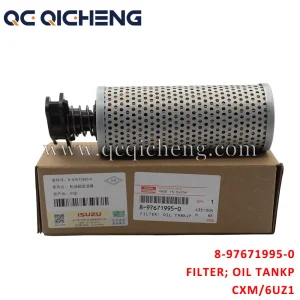
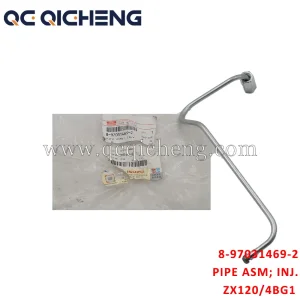
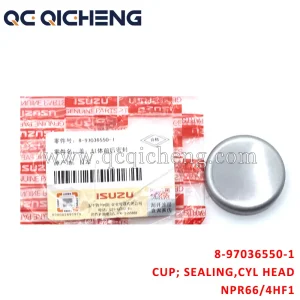
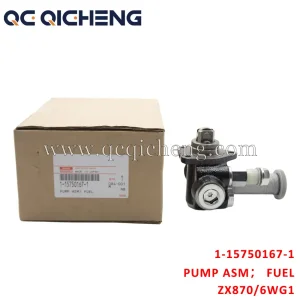
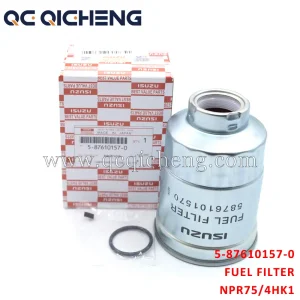
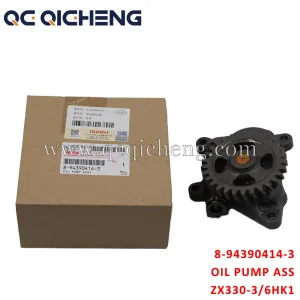
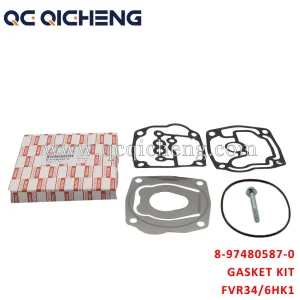
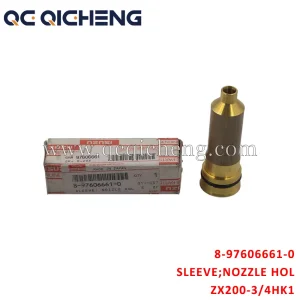
Full lifecycle powertrain, hydraulic, and chassis components ready for consolidated container shipment worldwide.
Partner Directly with Guangzhou Qicheng Machinery
Submit your required Isuzu NQR Brake Booster part numbers, required quantities, or complete truck VIN codes. Our technical parts team provides verified fitment confirmation, tiered volume pricelists, and guaranteed dispatch schedules within 24 business hours.