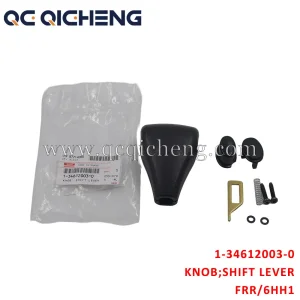
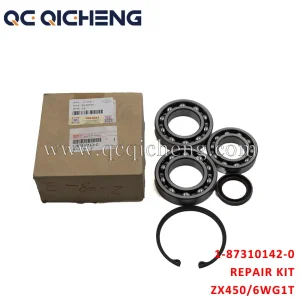
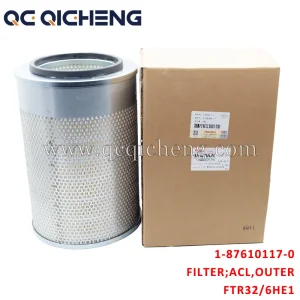
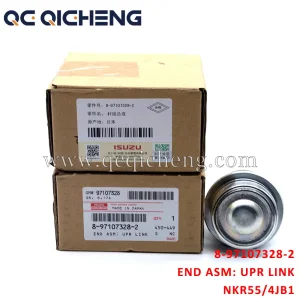
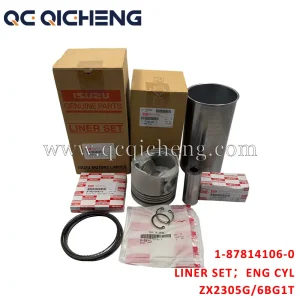
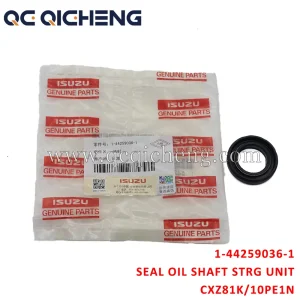
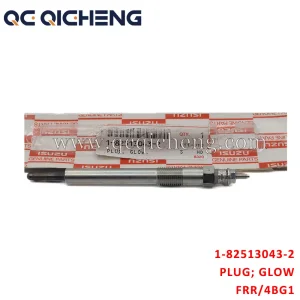
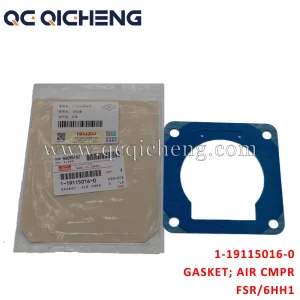
Primary Fleet Replacement Assemblies
Access standing inventory and tier-one pricing for Isuzu commercial and industrial powertrain components. Verified against OEM tolerances to minimize fleet downtime.
Chinese Automotive Manufacturing and the Isuzu NKR Ecosystem
A structural breakdown of production efficiencies, localized supply clusters, and international procurement benefits for commercial light-duty chassis.
Tier-1 Component Clustering
Chinese manufacturing hubs consolidate casting, heat treatment, precision machining, and electronic integration within tight logistical zones. This high density lowers overhead costs for Isuzu NKR platforms—enabling OEM-matching tolerances at commercial savings of 30% to 45% compared to Japanese and European aftermarket equivalents.
Metallurgical & Heat Treatment Standards
The NKR light truck ecosystem utilizes 4JB1, 4JH1, and 4HK1 engine platforms that demand strict thermal limits. Chinese manufacturing infrastructure incorporates induction-hardened crankshaft journals, molybdenum-coated piston assemblies, and centrifugal ductile cast iron liners, guaranteeing extended service intervals in high-load operating environments.
Direct-to-Port Export Logistics
Operating from modern export facilities adjacent to major shipping ports like Guangzhou and Shenzhen, orders undergo coordinated customs clearance and maritime consolidation. Mixed-SKU shipping consolidations prevent excessive storage surcharges, allowing corporate buyers to source structural body components and drivetrain consumables in a unified freight container.
Global Market Dynamics: The Isuzu N-Series Fleet Lifespan
Analyzing the long-term viability of the NKR light-duty platform across international shipping hubs, evolving emission standards, and fleet maintenance cycles.
The Durability Metric: Why the NKR Retains Predominant Global Market Share
The Isuzu NKR platform remains one of the world's most enduring light-duty commercial vehicle architectures. Originally engineered around the mechanical simplicity of the direct-injection 4JB1 naturally aspirated and turbocharged designs, the chassis has successfully bridged decades of industrial growth. In regions across Southeast Asia, South America, Eastern Europe, and Africa, NKR vehicles form the backbone of last-mile distribution networks, urban infrastructure support, and localized freight transfer.
From a maintenance perspective, the mechanical injection systems of early NKR series offer resilient performance against variable fuel quality—an operational reality across developing economies. While modern variants incorporate high-pressure common rail injection (HPCR) systems to satisfy Euro IV through Euro VI emission standards, the structural ladder frame, heavy-duty drop-forged reverse Elliot I-beam front axle, and hypoid final drive assemblies remain largely standardized. This modular continuity allows corporate fleet managers to service mixed fleets spanning various operational generations without duplicating tooling investments or technical training protocols.
Total Cost of Ownership (TCO) & Global Fleet Procurement Strategy
For large-scale enterprise buyers managing fleets in excess of 50 units, procurement decisions are governed by Total Cost of Ownership (TCO) models rather than initial purchase price alone. An analysis of the NKR platform across a 500,000-kilometer operational cycle indicates that component availability and drivetrain interchangeability drive profitability:
- Cross-Platform Compatibility: Engines like the 4HK1, 4BG1, and 6BG1 are deployed interchangeably across Isuzu commercial trucks (NKR, NPR, FTR) and heavy earthmoving equipment like Hitachi ZX excavators, JCB diggers, and Case machinery. Maintaining standardized spares reduces critical inventory buffers.
- Preventative Maintenance Cost Reductions: Standardized oil filtration, mechanical seal designs, and uniform suspension linkage geometries reduce procurement complexity, allowing high-volume scheduled replacement without sourcing single-use custom assemblies.
- Extended Residual Asset Value: Commercial trucks running on widely supported platforms maintain active secondary market value worldwide. Fleets rebuilt with certified OEM-standard tolerances retain high liquidity and resale value upon lifecycle retirement.
Cold-Chain & Urban Food Logistics
NKR refrigerated conversions operating in urban centers require consistent PTO (Power Take-Off) drives and electrical generation stability to sustain secondary compressor operation without draining engine cooling capacity during idle periods.
Municipal Sanitation & Waste Transfer
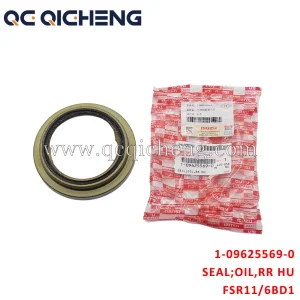
High-torque hydraulic pump configurations mounted to NKR frames endure severe start-stop duty cycles, requiring reinforced clutch packs, ceramic throwout bearings, and heavy-duty front hub seals to handle sustained gross axle load limits.
Remote Field Utility & Service Vehicles
Deployments in mining support, civil construction surveys, and off-grid maintenance necessitate robust leaf-sprung suspension layouts, hardened transmission output shafts, and accessible dual-circuit hydraulic braking valves.
Frequently Asked Questions on Wholesale Isuzu NKR Procurement
Technical guidance covering engine cross-compatibility, order verification, quality assurance standards, and maritime shipping logistics.
How do you cross-reference parts across Isuzu commercial vehicles and industrial machinery?
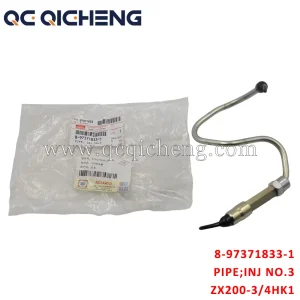
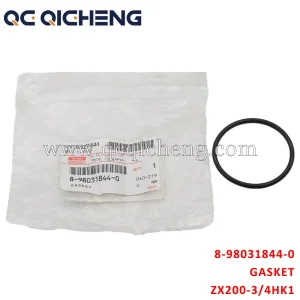
Isuzu engines share common base blocks across light trucks and off-highway machinery. For instance, the 4HK1 engine powers Isuzu N-Series/F-Series trucks and Hitachi ZX200-3 excavators. Because intake configurations, sumps, and flywheel housings differ, we match both the OEM part number and the specific engine serial code or machine configuration to guarantee fitment.
What testing standards are used for remanufactured and OEM-alternative NKR components?
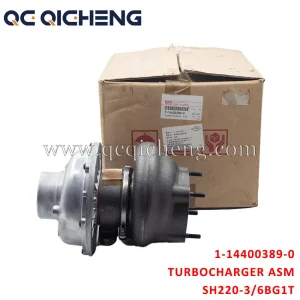
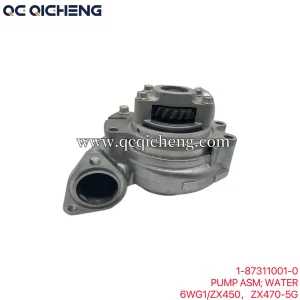
Every major mechanical component undergoes rigorous pre-export testing. Rotating assemblies—including turbochargers and water pumps—are dynamically balanced at speeds up to 120,000 RPM. Common rail injectors, high-pressure fuel pumps, and hydraulic valves undergo computerized pressure ramp testing to verify micron-level spray patterns and shutoff tolerances.
What are the Minimum Order Quantities (MOQ) and lead times for wholesale shipments?
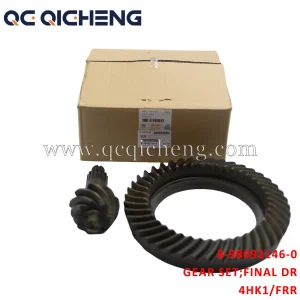
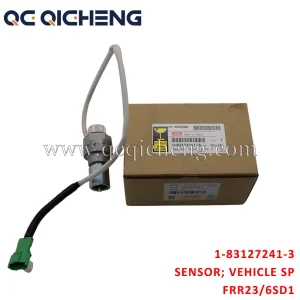
For fast-moving line items (such as filters, gasket sets, hub seals, and sensors), we maintain continuous stock with no MOQ constraints, shipping within 48 to 72 hours. For structural assemblies, full engine long blocks, or custom axle gear sets, our production runs generally require 10-unit minimums with a 15-day factory dispatch cycle.
How do you protect precision components during ocean freight transport?
All cast-iron engine components and precision machined steel parts are treated with VCI (Vapor Corrosion Inhibitor) compound coatings, sealed inside heavy-gauge polyethylene barriers, and secured in ISPM-15 compliant export timber crates. Delicate electronic relays and sensors are packed in moisture-controlled, antistatic shielding to ensure safe arrival.
Auxiliary Drivetrain and Engine Overhaul Components
Explore complete kits, final drive gears, linkage assemblies, and sensors configured for high-stress operational environments and sustained field reliability.