
Immediate Inventory: Isuzu FVR34 & 6HK1 Fast-Mover Components
Factory-inspected inventory ready for expedited global dispatch. Guaranteed dimensional conformity, original metallurgical integrity, and strict cross-referencing for heavy-duty commercial transport and heavy equipment.
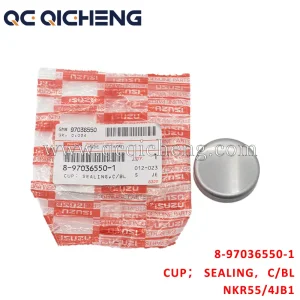
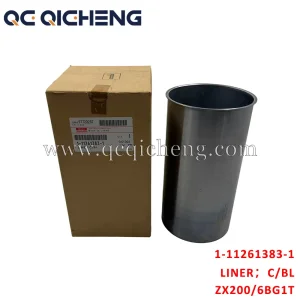
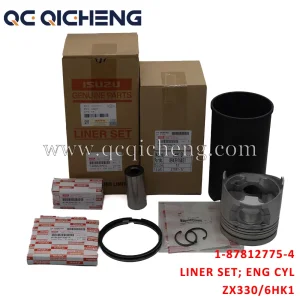
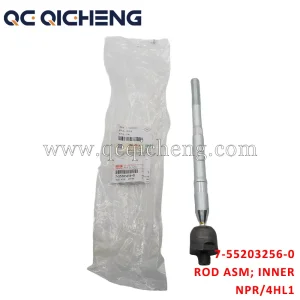
Isuzu FVR34 Heavy Commercial Platform: Engineering Authority & Systemic Reliability
An authoritative analysis into the engineering tolerances, structural load distributions, and powertrain dynamics of the Isuzu FVR34 medium-to-heavy commercial vehicle platform (F-Series).
The 6HK1-TCS Powertrain Infrastructure
At the heart of the Isuzu FVR34 lies the internationally acclaimed Isuzu 6HK1 diesel engine platform. Engineered as a 7.79-liter inline 6-cylinder, four-cycle, water-cooled, overhead camshaft (SOHC) engine equipped with an intercooled variable-geometry turbocharger (VGS), this platform generates an optimal balance between low-end tractive torque and sustained high-load thermodynamic efficiency. The 6HK1-TCS engine variant produces up to 280–300 metric horsepower (206–221 kW) at 2,400 RPM and exceptional peak torque exceeding 980 N·m across an extended operational band (1,450–2,400 RPM).
Equipped with Denso high-pressure Common Rail direct fuel injection (operating at injection pressures exceeding 1,800 to 2,000 bar) and multi-pulse micro-orifice solenoid injectors, the FVR34 ensures minimal particulate formation, reduced thermal shear across the combustion chamber bowl, and prolonged cylinder liner longevity. The integration of high-nickel ductile iron cylinder sleeves and induction-hardened forged crankshaft journals makes the 6HK1 platform the powertrain of choice not only in commercial haulage, but also in rigorous earthmoving excavators such as the Hitachi ZX200 and ZX330 lines.
Chassis Metallurgy & Dynamic GVM Rating
The Isuzu FVR34 chassis architecture utilizes high-tensile, cold-riveted steel channel members measuring 850 mm in width with section moduli engineered to absorb intense torsional deflection. Rated for a Gross Vehicle Mass (GVM) ranging from 16,000 kg up to 18,000 kg and gross combination masses (GCM) exceeding 32,000 kg, the rigid beam front axle and full-floating banjo-type hypoid rear drive axle (with load capacities exceeding 11,000 kg on the rear tandem group) represent the global standard for mixed-surface transit.
OEM Fleet Insight: Component wear on the FVR34 platform predominantly clusters around high-frequency thermal stress components (cylinder gaskets, valve guides, relief valves) and dynamic chassis mechanicals (inner tie rod assemblies, cooling fan drives, and clutch flywheel friction facings). Sourcing precision-matched OEM parts preserves factory-calibrated fuel consumption curves and avoids costly unscheduled line downtime.
Inline-6 6HK1-TCS turbocharged intercooled diesel architecture.
Broad plateau between 1,450 – 2,400 RPM for heavy incline pulling.
Reinforced chassis ladder frame for extreme industrial vocations.
Fine droplet atomization maximizing thermal efficiency and clean burn.
Localized Vocational Applications of the Isuzu FVR34 Architecture
From metropolitan high-density infrastructure logistics to remote unpaved mining extraction corridors, the FVR34 chassis serves diverse operating environments with customizable superstructure integration.
Regional Express & Cold-Chain Haulage
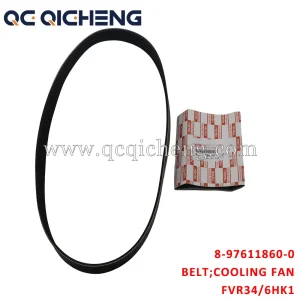
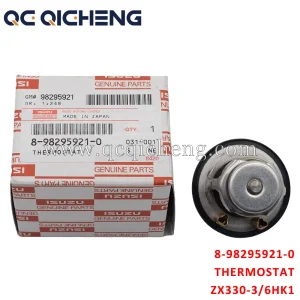
In long-haul intercity freight and refrigerated cargo, the FVR34 platform provides unmatched operational uptime. Outfitted with insulated thermo-bodies and high-output PTO cooling compressors, the vehicle demands rock-solid continuous power. Sourcing precision cooling fan belts (8-97611860-0), high-reliability engine thermostats (8-98295921-0), and balanced flywheels guarantees continuous thermal equilibrium across 1,000+ kilometer routes without risk of vapor locking or radiator boiling.
Municipal Sanitation & Heavy Compactor Units
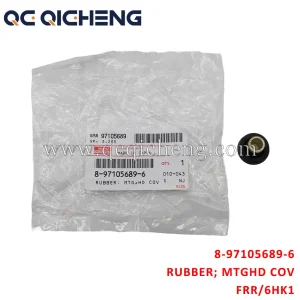
Urban refuse collection, high-pressure vacuum jetting, and compactor operations involve persistent start-stop cycles, low-speed PTO hydraulic engagement, and high idle vibration. The Isuzu 6HK1 engine requires premium vibration-dampening components such as the heavy-duty rubber mounting head covers (8-97105689-6) and inner rod assemblies to isolate lateral cyclic shock, preserving the vehicle's structural cab anchors and electronic control units.
Mining Support, Quarry Utilities & Fuel Tankers
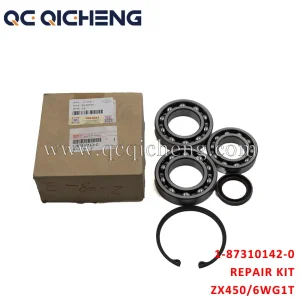
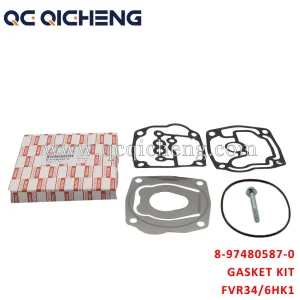
Operating across severe unpaved terrains in Africa, Australia, and South America, FVR34 service tankers and quarry runabouts face extreme particulate ingestion and structural torsional fatigue. Maintaining high sealing security via multi-layer steel (MLS) head gasket kits (8-97480587-0), reinforced coupling repair kits, and relief valve seals guarantees zero fluid contamination, protecting $250,000+ fleet capital investments from sudden field seizure.
Technical Roadmap & Future Engineering Outlook: Emissions, Telematics & Electrification
Tracking the evolutionary trajectory of the 6HK1-powered F-Series platform from Euro II/III mechanical systems to Euro VI-D ultra-low emission standards and connected digital powertrain telemetry.
| Emission Standard | Fuel Injection Architecture | Aftertreatment Strategy | Thermal & Sealing Demands | Core Replacement Needs |
|---|---|---|---|---|
| Euro II / Euro III (Legacy Emerging Markets) |
In-line mechanical jerk pump or first-gen Common Rail (1,350 bar) | Open crankcase ventilation, optional oxidation catalyst (DOC) | Standard copper/asbestos-free graphite composite gaskets | Mechanical injectors, injector delivery pipes, liner sets |
| Euro IV / Euro V (Current Global Backbone) |
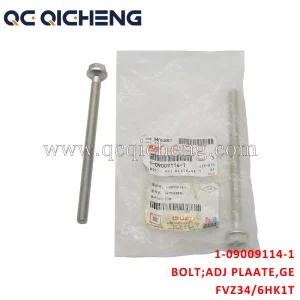
Common Rail HP3/HP4 systems (1,800–2,000 bar) with multi-hole solenoids | Cooled Exhaust Gas Recirculation (EGR) + Selective Catalytic Reduction (SCR) | High peak cylinder pressures (180+ bar); Multi-Layer Steel (MLS) gasket kits | MAP sensors, relief valve gaskets, cooling fan drive belts |
| Euro VI-E / EPA Tier 4F (Next-Gen Standards) |
Ultra-High Pressure Common Rail (2,500 bar) with Piezoelectric actuation | DOC + Diesel Particulate Filter (DPF) + Dual SCR with ammonia slip cat | Extreme combustion temperatures; silicon-carbide coated seals | EGR cooler gaskets, manifold adjustment bolts, thermo-sensors |
Telematics & Real-Time ECU Diagnostics
Modern fleet logistics demand continuous OBD-II / J1939 CAN-bus telemetry. Modern Isuzu ECMs monitor fuel rail pressure drops, air intake mass differential, and exhaust gas backpressure across thousandths of a second. A faulty intake manifold pressure sensor (such as the 8-97664441-0 MAP sensor) or a fluctuating starter relay (8-98005631-1) will prompt immediate ECM power derating. Supplying precision sensors and factory-matched electrical relays eliminates false DTC error codes and unneeded emergency limp-mode triggers.
Hybridization & Low-Carbon Alternative Fuels
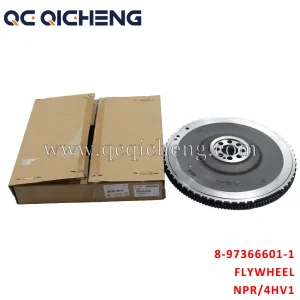
As commercial transport shifts toward decarbonization, the F-Series chassis acts as a development mule for compressed natural gas (CNG/LNG) retrofits (such as the 4HV1 powertrain family) and 48V mild-hybrid regenerative braking axles. Qicheng continuously updates its component blueprints to supply specialized hardened valve seat inserts, dedicated CNG flywheels (8-97366601-1), and thermal isolation kits compatible with higher combustion temperatures in alternative gaseous combustion cycles.
China Supply Chain Resilience: Metallurgical Precision & Efficiency Advantages
Capitalizing on the world's most dense automotive industrial cluster to deliver rapid turnaround times, rigid IATF 16949 quality control, and scalable cost structures.
Guangzhou Logistics Hub & Inventory Scalability
Strategically located at the Zhuji International Machinery Centre in Tianhe District, Guangzhou, Qicheng maintains an active standing inventory exceeding USD $15 million covering over 100,000 distinct SKUs. Backed by 10 domestic operating branches, our logistics dispatch processes break-bulk container loads and express air-cargo shipments within 24 to 48 hours of order confirmation, minimizing supply chain friction for distant overseas depots.
Metallurgical Verification & CMM Tolerances
Chinese advanced parts manufacturing no longer relies on baseline casting. Every cylinder sleeve (1-87812775-4 / 1-11261383-1) and high-load connecting bolt is forged from premium alloy steel (42CrMo4 / SAE 4140) and subjected to multi-axis coordinate measuring machines (CMM) achieving dimensional repeatability within ±0.003 mm. Micro-hardness testing, spectral alloy composition audits, and dynamic balancing run-outs below 5 g·cm guarantee plug-and-play assembly.
Wholesale Economies of Scale & Cost Compression
By aggregating replacement demands across mining companies, national postal fleets, and municipal utilities across 120+ countries, Qicheng delivers high-tier OEM-spec components at a 30% to 55% reduction against regional dealer markups. Our direct factory contracting eliminates intermediate agent commissions, passing direct bottom-line cash savings to procurement directors and inventory supply managers.
Global Industrial Footprint & Fleet TCO Optimization
How Tier-1 and Tier-2 contractors throughout Southeast Asia, Africa, Latin America, and Oceania leverage strategic spares holding to drastically drive down Total Cost of Ownership.
The True Equation of Fleet Downtime
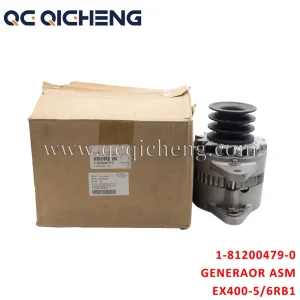
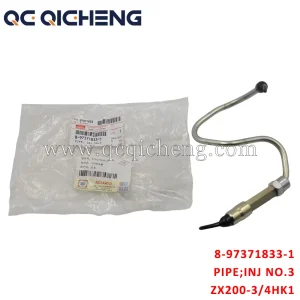
In industrial logistics and infrastructure construction, the commercial cost of a grounded vehicle far exceeds the invoice price of a spare part. When an 18-ton Isuzu FVR34 refuse truck or a 30-ton mining transport vehicle sits idle waiting for a high-pressure injection pipe (8-97371833-1) or an alternator generator assembly (1-81200479-0), the cascading financial losses include contracted demurrage penalties, delayed infrastructure handovers, and operator standby wages.
By implementing a standardized "Pre-emptive Rebuild Kit" methodology—bundling complete cylinder liner assemblies, main bearing shells, dynamic sealing kits (8-97480587-0), and cooling fan systems—fleet maintenance supervisors shift from expensive unplanned breakdown repairs to predictable preventative overhauls during scheduled routine servicing windows.
Cross-Platform Synergies: Truck & Excavator Fleet Sharing
A key operational advantage of the Isuzu engineering ecosystem is cross-platform modularity. The 6HK1 engine is the identical prime mover installed inside heavy road trucks (Isuzu FVR34, FTR, FVZ) and frontline hydraulic crawler excavators (Hitachi ZX200-3, ZX240-3, ZX330, and Case/Sumitomo machinery).
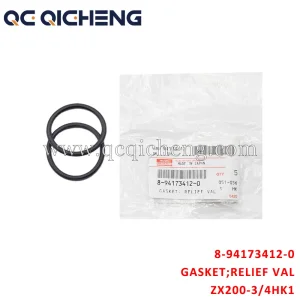
Cross-Fleet Asset Optimization: Diversified construction contractors can maintain a single unified inventory of 6HK1 wear components—liner sets (1-87812775-4), relief valve gaskets (8-94173412-0), engine control relays (8-98013790-0), and thermostats (8-98295921-0)—simultaneously supporting transport haulage assets and heavy pit excavation fleets.
Engineered Traceability, Pre-Shipment Inspection & Compliance
Our three-tier verification protocol eliminates incorrect part numbers, material fatigue, and customs clearance friction across international sea and air borders.
VIN & Engine Serial Cross-Referencing
Over 30% of global parts returns originate from outdated supersessions or region-specific market variations. Before order dispatch, our senior technical engineering desk cross-references the 17-character Vehicle Identification Number (VIN), engine casting number, and transmission code against factory EPC microfiches, verifying compatibility before export.
ISO 9001 & IATF 16949 Metrology Verification
All partner manufacturing facilities adhere strictly to automotive quality standards. Critical components receive 100% optical ultrasonic flaw detection, laser surface planarity profiling on sealing surfaces, and tensile hardness verification, preventing premature fatigue or gasket blowout under extreme cylinder combustion loads.
Export Crating & Anti-Corrosion Protection
Transoceanic maritime shipping exposes precision-machined steel to salt air corrosion and vibration shock. All bare-metal components receive micro-crystalline anti-rust coatings, vacuum vapor-corrosion-inhibiting (VCI) heat-sealed barrier wrapping, and heavy fumigated multi-ply export wooden crates that guarantee zero transit degradation.
Frequently Asked Questions: Wholesale Isuzu FVR34 Sourcing
Clear, definitive answers to technical, commercial, and logistical inquiries raised by international purchasing officers and procurement heads.
Isuzu FVR34 Powertrain Auxiliaries & Electronic Hardware
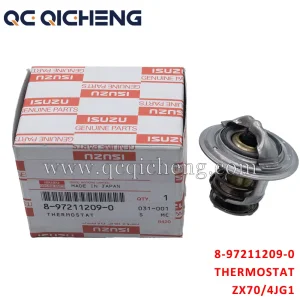
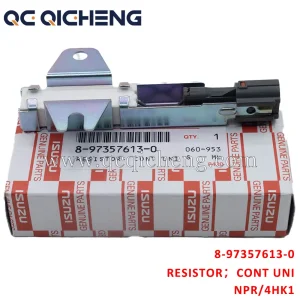
Precision cooling hardware, alternators, high-pressure injection pipes, and electronic control relays. Factory inspected and verified for immediate worldwide distribution.
Request Your Institutional Wholesale Quote Today
Send our parts engineering desk your target bill of materials (BOM), required OEM numbers, or target fleet model lists. Our parts specialists respond within 24 hours with confirmed availability, factory direct tier-pricing, and multimodal freight schedules.