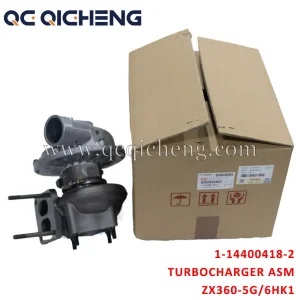
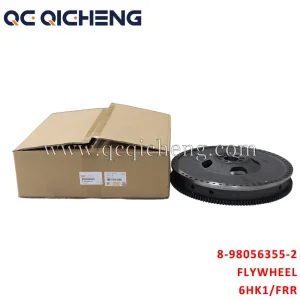
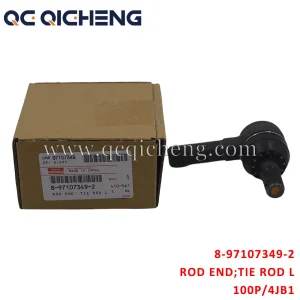
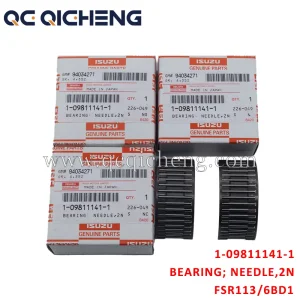
Featured Isuzu FSR Engine Assemblies & Critical Components
Enterprise procurement line items verified against OEM micro-tolerances, comprehensive warranty standards, and high-duty operational metrics.
Industry Trends & Macro Paradigm Shifts in Commercial Powertrains
Analyzing global transition pathways across medium-duty distribution networks, construction duty-cycles, and heavy logistics.
The medium-duty diesel propulsion market, epitomized by the world-renowned Isuzu F-Series (FSR, FRR, FTR), is undergoing a monumental engineering and operational shift. As commercial fleets and heavy machinery operators navigate increasing regulatory scrutiny, total cost of ownership (TCO) constraints, and demanding duty cycles, powertrain longevity has emerged as the definitive performance metric. The legendary Isuzu 6BD1, 6BG1, 4HK1, and 6HK1 platforms installed across FSR applications represent engineering milestones in structural rigidity, thermal balance, and high dynamic load tolerance.
Modern commercial operations face a bifurcated market dilemma: premature capital depreciation through untested aftermarket alternatives versus extended uptime through verified OEM and Tier-1 remanufactured powertrain assemblies. Industry data indicates that unscheduled downtime in heavy commercial logistics and civil engineering fleets carries an average disruption penalty of $760 per day per vehicle. Consequently, global corporate buyers are transitioning from ad-hoc break-fix procurement strategies to long-term systemic sourcing programs governed by strict component traceability, metallurgical verification, and proactive inventory rotation.
Lifecycle Optimization
Moving from run-to-failure paradigms to preventive overhaul cycles using matched cylinder head assemblies, precision bearings, and OEM-calibrated injection systems.
Thermal & Fuel Efficiency
Adoption of higher pressure common rail (HPCR) technology across Tier 3 and Stage V builds, optimizing combustion profiles and cutting fuel consumption by up to 14%.
Direct Traceability Standards
Mandatory batch testing and material certification on structural components such as crankcases, exhaust valves, and turbochargers to mitigate supply chain fraud.
Global Enterprise Procurement Demands & Architecture
How multi-regional enterprise contractors, OEM plant managers, and independent fleet operators secure supply resilience.
Enterprise procurement managers operating across North America, Latin America, Southeast Asia, and the EMEA zone manage diverse fleet rosters composed of legacy naturally aspirated workhorses alongside electronically managed modern units. Sourcing for Isuzu FSR platforms (frequently integrated with 6BD1, 6BG1, 6HE1, or 6HK1 engines) demands an acute understanding of engine serialization, regional emissions trim, flywheel configuration, and cross-compatibility with industrial equipment such as Hitachi ZX excavators.
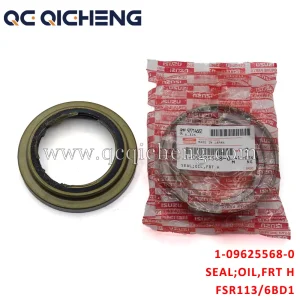
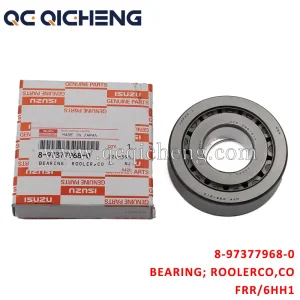
Key procurement requirements include cross-referencing multi-digit Japanese domestic OEM part codes against export catalog variations. A simple discrepancy in oil seal design (such as front hub seal 1-09625568-0) or bearing clearance (roller counter end 8-97377968-0) can lead to catastrophic oil starvation, gear lash misalignment, or premature assembly binding under full torsional load. Enterprise contracts therefore mandate clear technical SLAs, comprehensive customs pre-clearance certificates, and guaranteed lot consistency across bulk deliveries.
| Engine Series | Standard Displacement | Primary Applications | Aspiration & Fuel Delivery | Typical Fleet Maintenance Interval |
|---|---|---|---|---|
| Isuzu 6BD1 / 6BD1T | 5.78 Liters | Isuzu FSR113, Industrial Gen-sets | Mechanical In-line Pump / Turbocharged | 250 - 300 Hours (Heavy Mining / Civil) |
| Isuzu 6BG1 / 6BG1T | 6.49 Liters | FSR Trucks, Hitachi ZX200 Excavators | Direct Injection / Turbo Intercooled | 350 - 500 Hours (Standard Distribution) |
| Isuzu 4HK1-TCS | 5.19 Liters | Modern FSR / FRR, Hitachi ZX210LC-7 | Common Rail High Pressure (HPCR) | 500 - 600 Hours (Clean Fuel Regimes) |
| Isuzu 6HK1-TCN/TCS | 7.79 Liters | FSR / FTR Commercial, SH350-3, ZX330 | Variable Geometry Turbo + Common Rail | 500 - 750 Hours (Over-the-Road Logistics) |
Macro Industry Engineering Solutions
Holistic lifecycle management, modular rebuild frameworks, and integrated cross-platform supply ecosystems.
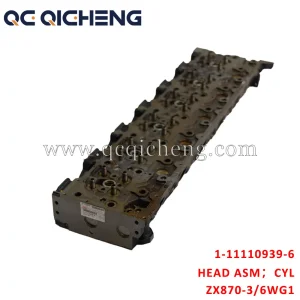
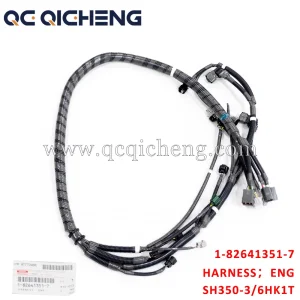
To reduce fleet lifecycle expenditure, leading civil infrastructure contractors and industrial logistics providers are moving away from piecemeal component purchasing toward integrated assembly ecosystems. An Isuzu FSR engine is not merely an isolated commercial truck motor; its fundamental architecture forms the mechanical heart of high-demand construction equipment worldwide. When procurement officers analyze an engine assembly such as the 1-82641351-7 ENG for 6HK1T platforms or high-capacity cylinder heads like 1-11110939-6, they require end-to-end integration across multiple heavy-duty verticals.
Modular Rebuild Kits
Pre-packaged overhaul solutions combining piston rings, cylinder liners, main bearings, and full top-to-bottom gasket sets to eliminate assembly delays.
Cross-Platform Interchange
Direct mapping between Isuzu commercial truck chassis numbers and off-highway equipment (Hitachi, Sumitomo, Case) sharing identical block footprints.
Predictive Overhaul Scheduling
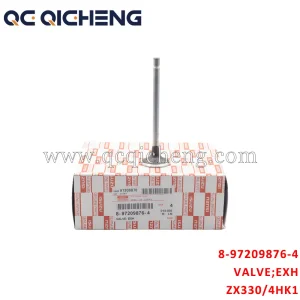
Advanced diagnostic telemetry integration ensuring high-friction items like high-speed turbochargers and exhaust valves are renewed prior to terminal failure.
Localized Support, Quality Validation & Regulatory Compliance
Ensuring cross-border shipments conform with international trade protocols, phytosanitary packaging, and metallurgical certifications.
International wholesale distribution of heavy cast-iron blocks, micro-machined fuel rails, and complex electronics requires strict compliance infrastructure. Operating out of specialized export facilities in Guangzhou, Qicheng Machinery & Equipment guarantees that each component leaves our distribution hubs adhering to ISO 9001 quality management benchmarks, with absolute alignment across commercial invoicing, packing manifests, and international HS coding.
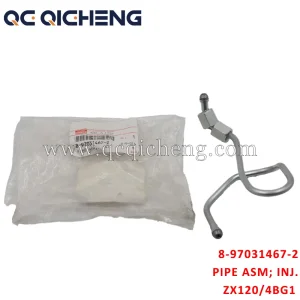
Engine components destined for North America or the European Union undergo rigorous compliance checks against EPA Tier / Euro emission configurations. For example, installing an incorrect fuel rail pipe (e.g., 8-97031467-2) or an uncertified injector can compromise exhaust gas recirculation (EGR) balance, resulting in failed roadside emissions tests or ECM error codes. Every consignment is packed in heat-treated, fumigated seaworthy wooden cases equipped with corrosion-inhibiting VCI barrier foils to eliminate moisture oxidation across trans-oceanic shipping routes.
Pre-Dispatch Bench Testing
Every complete engine assembly, generator, and turbocharger undergoes static pressure analysis, balance verification, and tolerance audits prior to crating.
Rapid Dispatch SLAs
Standing inventory of over $15 million enables 24-to-48-hour order dispatch for stock line items, drastically cutting international lead times.
Multilingual Engineering Support
Direct communication with certified diesel specialists fluent in English, Chinese, and regional trade customs to verify complex parts catalogs.
Technical Roadmap & Future Powertrain Horizons
Balancing internal combustion reliability with emerging hybridization, synthetic fuels, and circular remanufacturing.
The medium-duty transport landscape is positioned at an evolutionary crossroads. While battery-electric propulsion is gaining ground for urban last-mile delivery vans, long-distance distribution and heavy-duty regional freight still rely heavily on thermal combustion efficiency. The Isuzu FSR platform continues to evolve through advanced electronic controls, improved common rail injection pressures exceeding 2,000 bar, and closed-loop DPF/SCR exhaust aftertreatment modules.
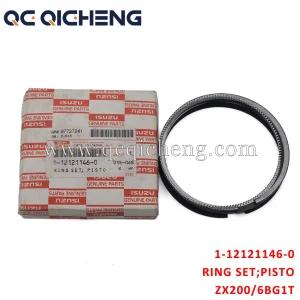
Looking toward 2030, remanufacturability will define industrial sustainability agendas. Forward-thinking procurement strategies now incorporate "Cradle-to-Cradle" core recycling, where cast iron engine blocks (such as those used across the 6HK1 and 6BG1 series) are chemically ultrasonically cleaned, precision-machined to oversize specifications, and fitted with certified standard or oversized piston sets (e.g., 1-12121146-0). This circular approach cuts embodied carbon by up to 78% while delivering operational performance identical to factory-new units at a fraction of the cost.
Frequently Asked Questions (FAQ) for Fleet Procurement
Authoritative technical answers to common questions encountered by purchasing teams and mechanical superintendents.
To guarantee 100% fitment, provide both your vehicle/machine chassis number (VIN) and the stamped engine serial number located on the lower left of the cylinder block. Our parts specialists cross-reference these against factory EPC diagrams to verify flywheels, front gear covers, starter positions, and oil pans.
A complete drop-in engine assembly typically costs 40% to 60% more than a short block (block, crank, rods, pistons) but eliminates 30+ hours of bench labor, transfer of worn ancillary parts, and risks of contamination, resulting in lower net downtime expenses.
While the core block and cylinder head share basic architectural dimensions, industrial engines (such as those in Hitachi ZX330 excavators) use differing governor profiles, torque curves, oil pans, bell housings, and front gear drive assemblies. Modifications may be required, which our engineering team can review prior to purchase.
Standard wholesale orders include a 6 to 12-month commercial warranty against material defects and casting flaws. Detailed warranty certificates and operational logging sheets are supplied with every major unit shipment.
With over $15M in stock, standard orders typically dispatch within 48 to 72 hours. Consolidated 20ft or 40ft container shipments containing mixed engine blocks, cylinder heads, and fast-moving service items are normally staged and containerized within 7 to 10 working days.
All machined steel surfaces are treated with a military-grade rust preventative oil film, sealed within heat-sealed Volatile Corrosion Inhibitor (VCI) bags, and secured in custom-fitted, fumigated solid timber export crates with desiccant packs.
Additional Isuzu Machinery & Powertrain Components
Explore related inventory line items available for consolidated container shipment and regional warehouse replenishment.