
Wholesale Isuzu Industrial Engine & Chassis Components
Immediate dispatch available for critical wear items, fuel delivery rails, oil pump units, and structural link assemblies cross-verified by OEM production code.
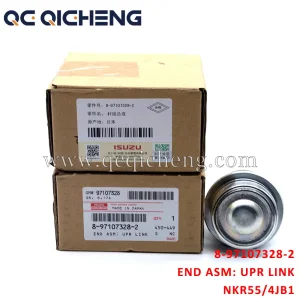
High-Quality 8-97107328-2 END ASM UPR LINK For ISUZU NKR55 4JB1
Request Wholesale Quote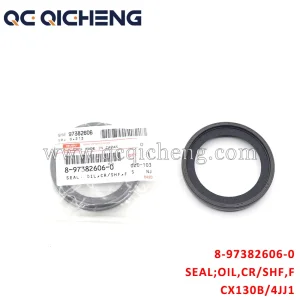
High-Quality 8-97382606-0 SEAL OIL CR/SHF FRT For ISUZU CX130B 4JJ1
Request Wholesale Quote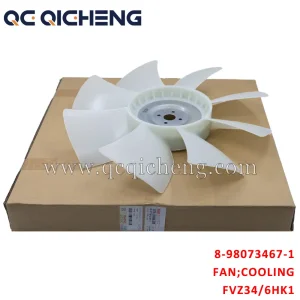
High-Quality 8-97161600-1 FAN COOLING for Isuzu FVZ34 6HK1
Request Wholesale Quote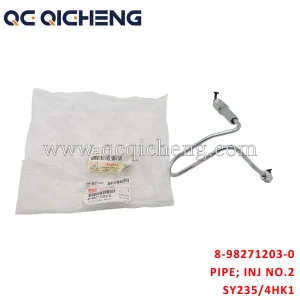
Wholesale 8-98271203-0 PIPE INJ NO 2 For ISUZU SY235 4HK1
Request Wholesale Quote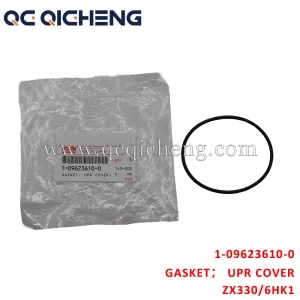
High-Quality 1-09623610-0 GASKET UPR COVER SEDIMENTER For ISUZU ZX330 6HK1
Request Wholesale Quote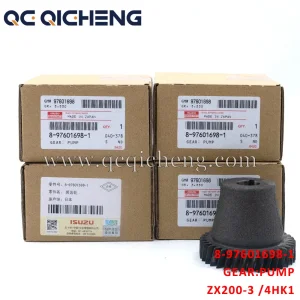
High-Quality 8-97601698-1 GEAR PUMP for Isuzu ZX200-3 4HK1
Request Wholesale Quote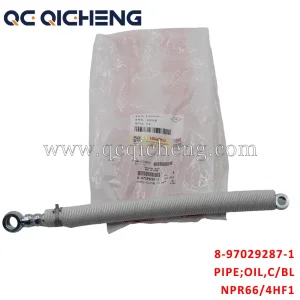
Wholesale 8-97029287-1 PIPE OIL C/BL TO VAC PUMP For ISUZU NPR66 4HF1
Request Wholesale Quote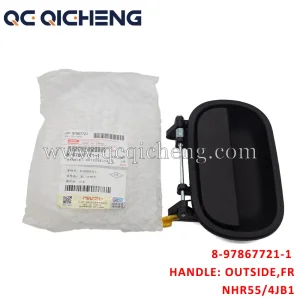
Wholesale 8-97867721-1 HANDLE OUTSIDE FRT DOOR For ISUZU NHR55 4JB1
Request Wholesale QuoteThe Global Landscape of Isuzu Diesel Powertrain Systems
An authoritative evaluation of cross-continental operational demands, supply chain vulnerabilities, and OEM engine standardization in heavy industrial machinery.
The Universal Excavator Backbone
Isuzu industrial diesel engines serve as the primary powertrain foundation across multinational heavy machinery original equipment manufacturers (OEMs). Beyond Isuzu’s proprietary commercial truck range (N-Series, F-Series, Giga), heavy excavation leaders including Hitachi Construction Machinery (ZX Series), Sumitomo, Case New Holland (CX Series), JCB, and SANY leverage Isuzu's 4HK1, 6HK1, 4JJ1, and 6WG1 platforms. The global market footprint is characterized by high duty cycles, operating in environments exceeding 45°C ambient temperatures in resource-rich markets like Western Australia and the Middle East, down to sub-zero quarry regimes across Northern Scandinavia and North America.
Supply Security & Lead Time Deficits
Global logistics post-disruption has caused critical parts fragmentation. Extended supply chain lag from centralized manufacturing hubs has forced tier-1 fleet operators, commercial concession holders, and large repair operations to bypass fragmented retail intermediaries. Sourcing direct, large-volume replacement parts—such as cylinder heads, crankshaft standard metal sets, forged pistons, and common rail diesel injectors—is now paramount to maintaining operational viability. Qicheng Machinery & Equipment maintains over $15 Million in ready inventory, providing strategic parts buffers that reduce typical 16-week OEM backorders down to standard air-cargo delivery windows.
Stringent Metallurgy Standards
Counterfeit components and sub-par metallurgical formulations present catastrophic risks to high-pressure common rail (HPCR) diesel blocks. Modern Isuzu combustion systems generate peak injection pressures surpassing 2,000 to 2,500 bar, demanding precise nitrided steel crankshafts, multi-layer steel (MLS) head gaskets capable of sustaining extreme cylinder blow-by pressures, and precision-balanced dynamic cooling fans. Procurement strategies that disregard verified metallurgy experience accelerated piston crown cavitation, early liner glazing, and destructive turbocharger surge failures under continuous peak load.
Technology Roadmap: Emission Standards & Diagnostic Evolution
Deciphering engineering transitions across Tier 3, Tier 4 Final, and EU Stage V calibrations, alongside telemetry-driven preventive component replacement.
| Engine Platform | Emissions Compliance | Fuel Injection Architecture | Critical Overhaul Components | Thermal & Pressure Profiles |
|---|---|---|---|---|
| 4JJ1-T / 4JJ1X (3.0L) | EPA Tier 3 to Tier 4F / Stage IV | Denso HP3/HP4 Common Rail (1,800 bar) | Front/Rear Crank Oil Seals, Glow Plugs, Oil Cooler Cores | Compact high-torque, max boost 1.6 bar, high EGR thermal load |
| 4HK1-TC / 4HK1X (5.2L) | EPA Tier 4 Final / EU Stage V | Direct Multi-Hole Solenoid (2,000+ bar) | Injection Pipe #2, Cam Angle Sensors, Relief Valves, Gear Pumps | Variable Geometry Turbo (VGT), DPF soot loading regeneration cycle |
| 6HK1-TC / 6HK1T (7.8L) | Tier 2 to Tier 4 Final / Stage V | Ultra-High Pressure HPCR with pilot injection | Cylinder Head Gasket (MLS), Standard Crank Bearing Set, Thermostats | High continuous torque (up to 980 Nm), continuous duty in 30-35T excavators |
| 6WG1-TCX (15.7L) | EPA Tier 4 Final / Stage IV & V | Electronic Unit Injector (EUI) to Denso G4 HPCR | Air Breathers, Distance Spacers, Oil Cooler Housings, Injector Sleeves | Heavy mining & quarry duty (ZX450/ZX870), extreme vibration stress |
Advanced Exhaust Gas Recirculation (EGR)
Modern Stage V Isuzu engines deploy cooled EGR circuits with electronically controlled stepping motors. These systems recirculate controlled volumes of exhaust gas back into the combustion chamber to reduce combustion temperature spikes and lower NOx emissions. Servicing requires OEM-grade sedimenter cover gaskets, thermal sensors, and high-temperature vacuum lines to avoid unmetered air ingress that triggers limp-mode ECU warnings.
Selective Catalytic Reduction (SCR) & DPF
The transition to active regeneration via Diesel Particulate Filters (DPF) and urea-based Selective Catalytic Reduction (SCR) requires precise thermal control. Sensors such as the camshaft angle sensor (e.g., 8-98014831-0) and manifold absolute pressure (MAP) sensors (8-97664441-0) ensure millisecond fuel timing accuracy. Inaccurate sensor signals disrupt post-injection pulses, leading to unburned diesel wash-down into crankcase oil pans.
Alternative Fuels & HVO Compatibility
Isuzu continues validating paraffinic diesel fuels, including Hydrotreated Vegetable Oil (HVO) and Gas-to-Liquid (GTL), in industrial engines without altering baseline power ratings. Wholesale replacement seals (such as front and rear crankshaft seals 8-97382606-0) are fabricated using advanced fluorocarbon polymers (FKM) to eliminate swelling, hardening, or loss of elasticity when transitioning between fossil fuels and low-aromatic biofuels.
Mission-Critical Deployment Scenarios & Heavy Fleet Applications
Field-proven parts reliability across intense industrial operating environments where unexpected downtime generates catastrophic hourly loss.
Heavy Civil & Earthmoving
On infrastructure sites, excavators such as the Hitachi ZX200-3, ZX210LC-7, and ZX330 run 14-hour daily shifts. Hydraulic load transients require peak responsiveness from the Isuzu 4HK1 and 6HK1 powertrains. Reliable gear pumps, cooling fan assemblies (8-97161600-1), and genuine fuel delivery pipes prevent overheating and stall cycles in heavy excavation applications.
Open-Pit Mining & Quarrying
Extracting overburden and fragmented rock with 45-to-90-ton excavators (powered by Isuzu 6WG1 engines) exposes rotating assemblies to high vibration. Using micro-toleranced crankshaft metal sets (8-97372077-1) and high-volume oil pumps prevents hydrodynamic bearing failure under high shock-load cycles.
Commercial Logistics Fleets
Urban delivery trucks such as the Isuzu NPR66, NHR55, and NKR55 (powered by 4HF1, 4HG1, and 4JB1 engines) face frequent stop-start cycles. Maintaining reliable cabin door hardware (8-97867721-1), alternator cooling fan belts (5-87610262-0), and vacuum pump oil lubrication lines prevents unplanned fleet off-road time.
Off-Grid Power Generation
Stationary diesel gensets powering mining camps, marine auxiliary pumps, and telecommunications towers demand continuous 1,500/1,800 RPM duty. In these setups, crankcase breathers (1-11740181-1) and multi-stage fuel sedimenter covers protect internal pressures during uninterrupted power generation runs.
Wholesale Procurement Solutions for High-Volume Buyers
Strategic supply models designed for fleet superintendents, regional distributors, and engineering procurement teams worldwide.
Dual-Layer Fitment Verification
One of the largest hidden costs in heavy equipment maintenance stems from ordering incorrect parts due to mid-cycle OEM modifications or regional emission variance. Qicheng operates an engineering verification protocol where every customer enquiry is cross-referenced against original factory microfiche schematics using three data points: the OEM Part Number, the Machine Model (e.g., ZX200-3), and the Stamped Engine Serial Code (e.g., 4HK1-123456). This process virtually eliminates misallocated inventory returns and freight loss.
Total Cost of Ownership (TCO) Reduction
By leveraging direct warehouse inventory across 10 strategic hubs throughout China, Qicheng delivers wholesale pricing that lowers lifecycle maintenance costs by 30% to 55% compared to local authorized dealer pricing networks. This wholesale advantage allows fleet operators to maintain dedicated consignments of fast-wearing parts (oil seals, cooling belts, sensors, filters, injector tubes) directly on-site at mining camps or central equipment depots.
Export-Grade Protective Packaging
Precision engine components require rigorous preservation during trans-oceanic transit. Qicheng applies multi-stage anti-corrosion protection: vacuum sealing, VCI (Volatile Corrosion Inhibitor) plastic encapsulation, reinforced structural inner cushioning, and fumigated timber crating. Whether handling precision micro-electronic camshaft angle sensors or cast-iron complete engine assemblies, our shipments arrive field-ready across Latin America, Africa, the Middle East, and Southeast Asia.
Complete Engine Blocks, Overhaul Gaskets & Precision Sensors
Engineered components built to withstand extreme thermal variations, cyclic mechanical shock, and continuous commercial duty.
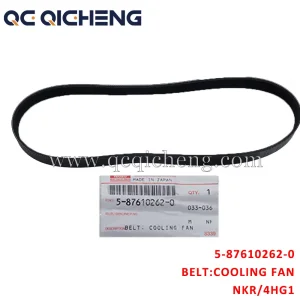
High-Quality 5-87610262-0 BELT COOLING FAN For ISUZU NKR 4HG1 4JJ1
Request Wholesale Quote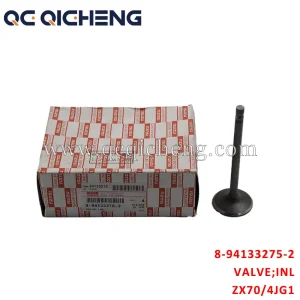
High-Quality 8-94133275-2 VALVE INJ For ISUZU ZX70 4JG1
Request Wholesale Quote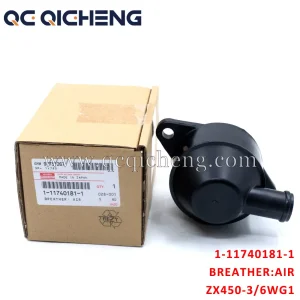
High-Quality 1-11740181-1 BREATHER AIR For ISUZU ZX450-3 6WG1 6HK1
Request Wholesale Quote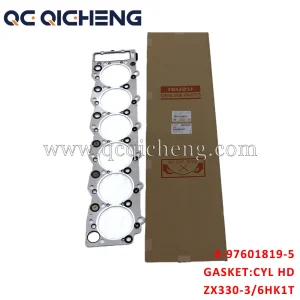
High-Quality 8-97601819-5 GASKET CYL HD for Isuzu ZX330-3 6HK1T
Request Wholesale Quote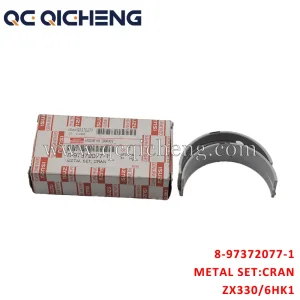
High-Quality 8-97372077-1 METAL SET CRANKSHAFT STANDARD for Isuzu ZX330
Request Wholesale Quote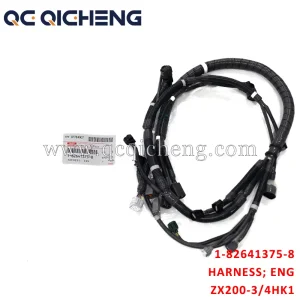
Wholesale 1-82641375-8 ENG For ISUZU ZX200-3 4HK1 Complete Unit
Request Wholesale Quote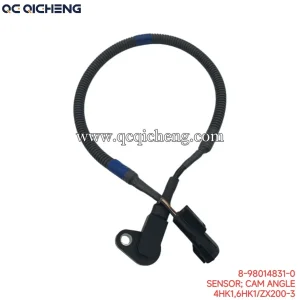
Wholesale 8-98014831-0 Camshaft Angle Sensor for Isuzu 4HK1 6HK1
Request Wholesale Quote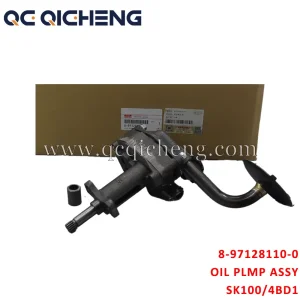
High-Quality 8-97128110-0 OIL PUMP ASSY For ISUZU SK100 4BD1
Request Wholesale QuoteFrequently Asked Questions: Wholesale Isuzu Diesel Parts
In-depth guidance covering engine compatibility, OEM verification, metallurgy standards, minimum order quantities, and international logistics.
How do I confirm that an Isuzu engine part will match my specific excavator or truck configuration?
1. The OEM Part Number (e.g., 8-98014831-0, 8-97601819-5).
2. The Machine Model & Serial Number (e.g., Hitachi ZX200-3, Case CX130B, or Isuzu NKR55).
3. The Stamped Engine Identification Plate Data (e.g., 4HK1-XY01 with emissions family Tier 3 vs. Tier 4 Final).
Because engine manufacturers update injector calibrations, wiring looms, and head gasket thicknesses mid-production, our team cross-references your numbers across official parts microfiche before order confirmation to eliminate return overhead.
What are the differences between Tier 3, Tier 4 Inter, and Tier 4 Final / Stage V Isuzu 4HK1 and 6HK1 components?
• Fuel Injection: Tier 3 engines generally utilize earlier Denso HP3 common rail pumps operating at ~1,600 bar, whereas Tier 4F/Stage V systems use HP4/G4 pumps delivering 2,000–2,500 bar with different injector nozzle spray patterns.
• Exhaust & Emissions: Tier 4F models incorporate active DPF and SCR systems requiring additional timing-critical sensors, including specialized MAP sensors, camshaft position sensors, and heavy-duty EGR cooler assemblies.
• Gaskets & Fasteners: Peak cylinder pressures on Stage V engines require heavy-duty Multi-Layer Steel (MLS) cylinder head gaskets with revised bore bead profiles to prevent gas micro-leakage.