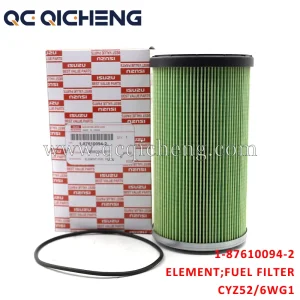
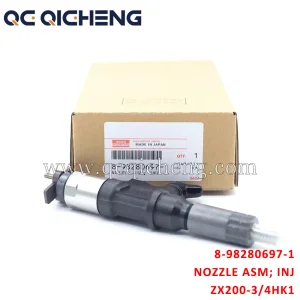
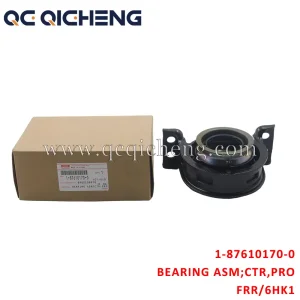
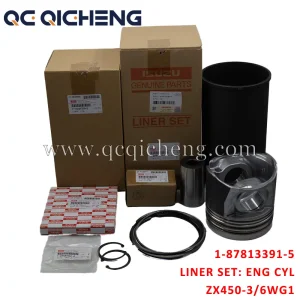
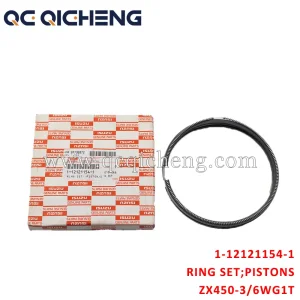
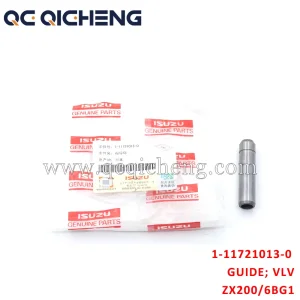
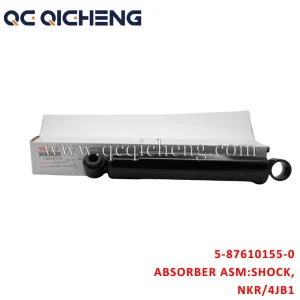
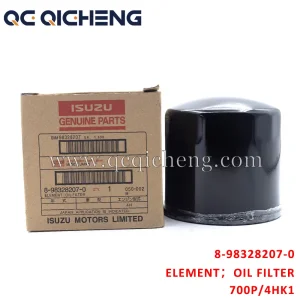
Precision Engine & Powertrain Components (SKU Lineage 1-8)
OEM-traceable industrial diesel mechanisms engineered for zero-failure operating cycles under intensive industrial work profiles.
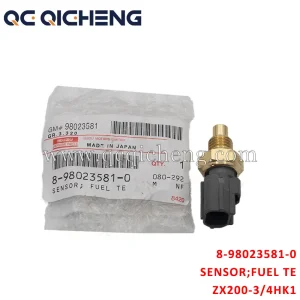
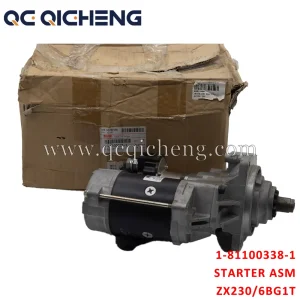
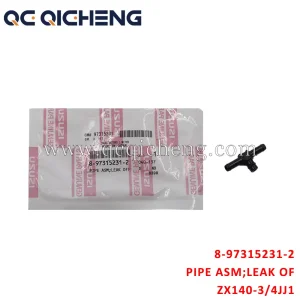
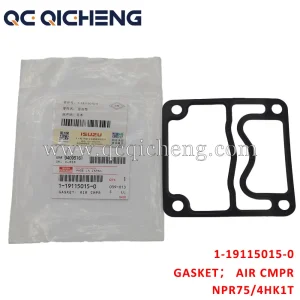
Global Supply Chain Economics of Isuzu Utility Platforms
Strategic supply chain analysis regarding Isuzu D-Max commercial utility architectures, industrial power units, and fleet aftermarket scalability.
The global demand for wholesale Isuzu D Max parts and accessories has reached an unprecedented scale as multi-sector commercial industries transition toward heavy-duty, long-lifecycle light commercial vehicles (LCVs). As global enterprises grapple with fleet operational overhead, the Isuzu D-Max platform has emerged as a cornerstone of utility, mining logistics, telecommunications support, and agricultural transportation. However, securing reliable wholesale supply chains for critical components requires an intricate understanding of part lineage, material compositions, and manufacturing ecosystems.
Evolving Global Trends: The Shift toward High-Endurance Diesel Platforms
Commercial vehicle markets in Australia, Latin America, Southeast Asia, and Sub-Saharan Africa have demonstrated an accelerating pivot toward common-rail turbo-diesel reliability. Modern fleets are increasingly subjected to extended lifecycle targets, extending operational deployment from 3-5 years to 7-10 years. This longevity mandate drastically elevates the consumption rate of wear-and-tear engine parts, precision injection systems, heavy-duty suspension assemblies, and thermal management modules. Suppliers must navigate cross-generational platform compatibility (from the classic 4JJ1 3.0L configurations to the high-efficiency RZ4E-TC and newer generation 4JJ3-TCX engines).
Procurement Bottlenecks Facing International Fleet Managers
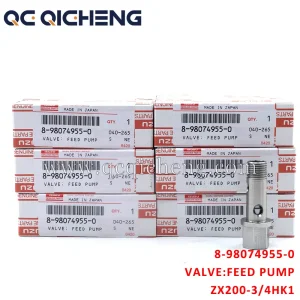
Large-scale fleet operators face systemic challenges in parts procurement: counterfeit or sub-par aftermarket components lacking structural metallurgy compliance, volatile lead times, and mismatched part numbers. A single mismatched oil feed pump or piston ring tolerance failure can cascade into catastrophic engine seizure, leading to five-figure downtime penalties. Authoritative wholesale sourcing mandates stringent OEM interchange verification—ensuring that every counter-shaft bearing, water pump, and fuel temperature sensor strictly mirrors Japanese industrial standards (JIS) and ISO/TS 16949 automotive manufacturing criteria.
Interoperable Powertrains
Direct supply line integration linking Isuzu commercial vehicle drivetrains (D-Max, N-Series, F-Series) with industrial excavation power plants (Hitachi ZX lines powered by 4JJ1, 4HK1, and 6WG1 engines).
China Smart Factory 4.0
Leveraging Chinese manufacturing precision, automated optical inspection, and digitalized CNC casting nodes to guarantee identical mechanical tolerances at optimal wholesale production cost profiles.
Global Compliance Matrix
Export packaging protocols meeting stringent customs clearance standards across 120+ destination countries, supported by full material traceability data and standardized shipping consolidation.
China Factory 4.0: Resilient Infrastructure & Local Scenarios
How modernized manufacturing paradigms eliminate single-point supply vulnerabilities across diverse global working environments.
Manufacturing Integration: Why Wholesale Direct-from-China Holds Strategic Advantage
The global automotive aftermarket has transitioned beyond simple cost arbitrage. Today, China’s industrial ecosystem operates as the nerve center for precision component manufacturing. Through the deployment of Industry 4.0 production environments—combining robotic casting, dynamic balancing, coordinate measuring machine (CMM) dimensional checks, and surface hardening treatments—manufacturers produce Isuzu-compatible engine, suspension, and driveline assemblies that mirror original equipment integrity. By maintaining localized parts hubs with upwards of 100,000 SKUs, international distributors reduce procurement lead times from months to business days, hedging against geopolitical volatility and maritime shipping anomalies.
Localized Heavy-Duty Application Scenarios
The functional requirements for Isuzu D-Max parts are determined entirely by the terrain and operational stresses of the deploying territory:
Australian Mining Support
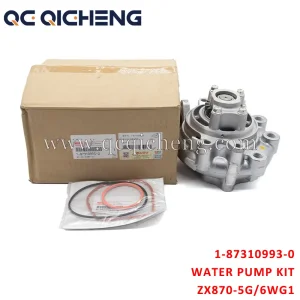
Harsh red-dust exposure, extreme ambient heat, and continuous corrugated dirt road operation demand reinforced shock absorbers, heavy-duty filtration, and fail-safe water pumps.
Latin American Agriculture
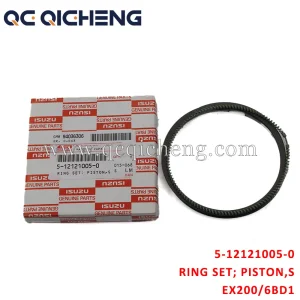
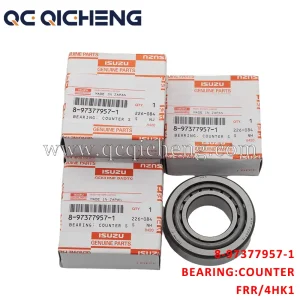
Navigating rough terrain with severe payload fluctuations requires robust counter shaft bearings, resilient clutch pressure plates, and high-tensile piston ring assemblies.
Sub-Saharan Fleet Logistics
Remotely stationed utility fleets rely heavily on fuel temperature sensors, injection leak-off piping, and secondary inline fuel separators capable of operating reliably on high-particulate diesel fuel.
Strategic Technical & Procurement FAQ
Direct answers to mission-critical questions posed by global procurement managers, parts importers, and enterprise fleet engineers.
How does cross-compatibility work between Isuzu D-Max parts and Isuzu industrial engines?
Many core engine architectures are shared across commercial vehicles and industrial equipment. For instance, the renowned 4JJ1 engine platform is deployed both within the Isuzu D-Max utility vehicle and Hitachi ZX-series excavators (e.g., ZX140-3). However, specific peripheral configurations—such as turbocharger spool profiles, sump shapes, ECU mapping sensors, and water pump drive ratios—frequently differ. Our engineering team cross-references the OEM part number and engine serial stamp to verify direct installation fitment before shipment.
What metallurgical and manufacturing tolerances are guaranteed on wholesale internal engine parts?
Our internal powertrain offerings—such as piston ring sets, cylinder liners, and counter-shaft bearings—are manufactured under strict ISO/TS 16949 compliant environments. Piston rings feature specialized plasma-molybdenum coatings for superior scuff resistance, while bearings are composed of tri-metal matrixes engineered for high load-bearing endurance under extended high-temperature run profiles.
How do you prevent shipment discrepancies with superseded Isuzu part numbers?
Isuzu frequently supersedes part numbers to incorporate engineering revisions or standardize across model lines (e.g., transitioning from an older 8-97xxxxxx-x to an 8-98xxxxxx-x prefix). Our technical sales desk utilizes the latest global electronic parts catalogs (EPC) and maintains a historical revision database, cross-checking your chassis VIN or machinery serial number against the factory bill of materials (BOM).
What are the minimum order quantities (MOQ) and lead times for wholesale international consignments?
Because we maintain over USD 15 million in standing stock across 10 distribution facilities, standard wear items, gaskets, and filters have flexible minimum order constraints suitable for sample testing or complete container consolidation. Stock orders generally dispatch from our central Guangzhou logistics center within 48 to 72 hours via express air freight or ocean container lines.
How are fragile and precision items protected against maritime corrosion and transit shock?
All finished steel components, precision bearings, and electronic sensors are preserved with volatile corrosion inhibiting (VPI/VCI) wrapping, vacuum-sealed barrier films, and shock-absorbent multi-wall corrugated packaging. Heavy core components (like water pump assemblies and starter motors) are strapped inside fumigated hardwood export crates for international maritime transport.
Filtration, Fuel & Heavy Chassis Infrastructure (SKU Lineage 9-16)
Engineered for severe duty cycles: heavy filtration systems, high-pressure injectors, and structural suspension damping components.