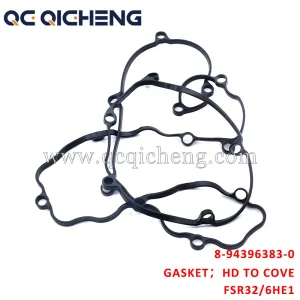
Critical Component Tier: FRR & Industrial Series Spares
Direct-from-factory OEM replacement components, high-stress filtration, valve protection arrays, and precision cylinder architecture qualified for high-duty cycle applications.
-
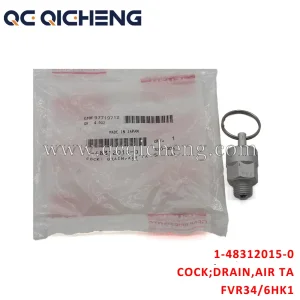
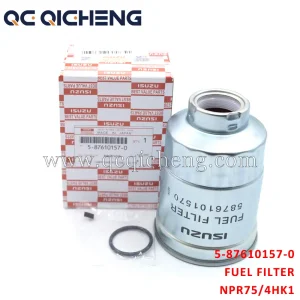 Part # 5-87610157-0
High-Quality 5-87610157-0 FUEL FILTER for Isuzu NPR75 4HK1 Supplier, Quotes
-
-
-
-
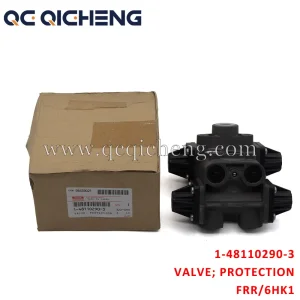 Part # 1-48110290-3
High-Quality 1-48110290-3 VALVE PROTECTION For ISUZU FRR 6HK1 Supplier, Quotes
-
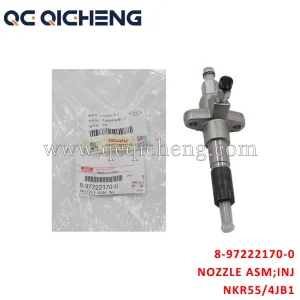
-
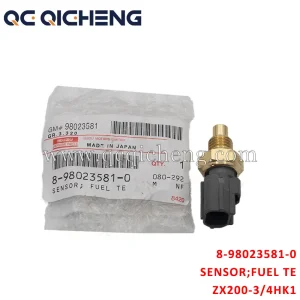 Part # 8-98023581-0
Wholesale 8-98023581-0 SENSOR FUEL TEMP For ISUZU ZX200-3 4HK1 Pricelist, Quotes
-
Executive Summary: The Isuzu FRR Medium-Duty Vehicle Platform
The Isuzu FRR (Forward Medium-Duty Series) represents the global benchmark in 10.4-tonne to 14.0-tonne Gross Vehicle Weight (GVW) logistics engineering. Powered principally by the advanced Isuzu 4HK1-TCS and 6HK1-TCN common-rail direct-injection diesel platforms, the FRR platform integrates high torque outputs at exceptionally low operational RPMs with an ultra-rigid ladder chassis architecture.
Enterprise procurement officers, governmental fleet managers, and international third-party logistics (3PL) conglomerates require granular cost-per-kilometer predictability. In heavy commercial transport, vehicle acquisition price represents less than 28% of full lifecycle expenditure, with fuel, scheduled preventative maintenance, drivetrain rebuilds, and unpredicted downtime constituting the remaining 72%. Sourcing whole-unit Isuzu FRR chassis-cabs and complete OEM knock-down (CKD/SKD) kits through direct industrial channels unlocks profound competitive advantages, balancing stringent Euro III through Euro VI emissions homologation with substantial capital expenditure reductions.
| Chassis Variant | Engine Architecture | Displacement & Output | Transmission Option | Braking & Safety Architecture | Optimized Logistics Payload |
|---|---|---|---|---|---|
| FRR 90 (Euro V / VI) | Isuzu 4HK1-TCS (4-Cyl In-line Common-Rail) | 5,193 cc | 210–240 PS @ 2,600 rpm | 706 N·m | Isuzu MZW-6P 6-Speed Manual / Smoother-G AMT | Full Air Dual Circuit with ABS/EBD/ESC & ASR | 7.2 – 8.0 Metric Tonnes (Dry Van / Refrigerated) |
| FRR 34 (Euro III / IV) | Isuzu 6HK1-TCN (6-Cyl Turbocharged Intercooler) | 7,790 cc | 240 PS @ 2,400 rpm | 706 N·m | Isuzu MZW-6P with PTO Integration Port | Air Over Hydraulic (AOH) or Full Air System | 7.8 – 8.5 Metric Tonnes (Dump Body / Crane Truck) |
| FRR Low-Deck Urban | Isuzu 4HK1-TCH (Eco-Calibrated Urban Cycle) | 5,193 cc | 190 PS @ 2,600 rpm | 510 N·m | Isuzu MZZ-6W with Overdrive | Full Air Disc Front, Drum Rear, Hill Start Assist | 6.8 – 7.4 Metric Tonnes (Beverage / Tail-Lift) |
China Manufacturing Ecosystem & Tier-1 Supply Cluster Advantages
Dissecting the economic, logistical, and metallurgical infrastructure that establishes the Qingling Isuzu and Chinese OEM manufacturing axis as the world's most competitive sourcing matrix.
CapEx Disruption: The 25–35% Cost Delta
Through industrialized joint-venture operations including Qingling Motors (Chongqing) and extensive localized manufacturing clusters across Guangdong and Jiangsu, commercial buyers access complete Isuzu FRR chassis units, 4HK1/6HK1 engines, and sub-assemblies at a 25% to 35% pricing advantage over Japanese domestic export (FOB Japan) lines. This price disparity is achieved not through quality dilution, but via comprehensive integration of raw material smelting, casting, robotic stamping, and fully automated localized assembly lines.
Rigorous Japanese Quality Assurance Protocols
Every commercial assembly adheres strictly to Isuzu Manufacturing System (IMS) Level-4 criteria. High-pressure common-rail fuel injection setups incorporate genuine Denso/Bosch localized assemblies, cylinder liners undergo high-frequency induction hardening, and axle stampings undergo multi-axis stress-testing under ISO/TS 16949 / IATF 16949 governance, securing identical dimensional tolerances and tensile ratings to OEM Japanese parent designs.
Lead-Time Compression & Massive Standing Inventory
Western supply chains often mandate 6 to 9-month allocation windows for custom-spec commercial chassis. The Guangzhou-headquartered industrial hub maintains substantial standing stock of commercial truck components, long-blocks, transmission assemblies, and structural chassis members, reducing typical delivery lead times for containerized fleet replenishment shipments to between 14 and 28 business days.
Localized Support, Environmental Compliance & Global Homologation
Supplying commercial vehicles across 120+ sovereign markets requires acute mastery over regional homologation frameworks, varying fuel sulfur levels, and specialized operational environments ranging from sub-Saharan arid zones to high-humidity equatorial coastal corridors.
Emissions CalibrationModular Aftertreatment Architectures
Depending on regional mandates, FRR truck units can be configured with Euro III mechanical-governed or uncomplex early electronic common-rail fuel systems (tolerant of fuels exceeding 500 ppm sulfur content), or elevated to Euro V and Euro VI compliant Selective Catalytic Reduction (SCR) with Diesel Exhaust Fluid (DEF/AdBlue) dosing and Diesel Particulate Filters (DPF) for stringent environmental zones across North America, Europe, and developed APAC nations.
Thermal EngineeringDesert & Heavy-Duty Tropicalization
Export-spec FRR packages incorporate high-efficiency multi-core aluminum radiators, high-output cooling fans with viscous clutches, dual fuel water-separators with micron sediment screening, and cyclonic air pre-cleaners designed specifically to withstand harsh mine-site dust concentrations, ambient operational temperatures up to 52°C, and prolonged continuous PTO operations.
Statutory SafetyADR, GCC & ECE Compliance
Chassis engineering fully aligns with UNECE structural cab strength directives (ECE-R29), Australian Design Rules (ADR), and Gulf Standardization Organization (GSO) regional vehicular requirements. Assemblies integrate unified Electronic Braking Systems (EBS), Anti-lock Braking Systems (ABS), underrun rear protection beams, and reinforced side impact bars as standard baseline build specifications.
Total Cost of Ownership (TCO) & Localized Superstructure Deployment
Evaluating lifecycle mechanical depreciation, fleet payload interchangeability, and superstructure integration versatility across demanding municipal, agricultural, and commercial logistics verticals.
Refrigerated Logistics & Cold-Chain
The FRR's high alternator output capacity (24V-90A standard, 120A optional) combined with direct engine crankshaft PTO pulley access makes it an exceptional base for multi-temperature cold chain bodies. Compatible with Carrier, Thermo King, and local high-efficiency refrigeration units, transporting chilled perishable produce with minimal thermal leakage.
Municipal Waste & Compactor Vehicles
Featuring a reinforced high-tensile web-flange chassis frame without protruding rivets on upper surfaces, the FRR enables straightforward mounting of 8m³ to 10m³ hydraulic waste compactor bodies. High idle torque characteristics of the 4HK1/6HK1 engines ensure sustained hydraulic pump pressure during continuous cycle loading without stalling.
Articulated Knuckle-Boom Cranes & Flatbeds
Equipped with reinforced front axle load ratings up to 3,600–4,000 kg and wide multi-leaf front suspension, the FRR platform accommodates behind-cab crane installations (such as HIAB, XCMG, or Palfinger 3.2 to 5.0 tonne-meter units) while preserving ample cargo capacity on the rear hardwood or chequered steel flat deck.
Fuel & Water Distribution Tankers
With wheelbases extending up to 5,320 mm, the chassis provides low-center-of-gravity stabilization for 6,000 to 8,000-liter rigid liquid baffler tanks. Factory options include exhaust spark arrestors, battery isolation switches, and static grounding lines pre-engineered to ADR/ADNR hazardous materials transit codes.
Technology Horizons: Fleet Telematics, Level-2 ADAS & Drivetrain Hybridization
The medium-duty transport landscape is undergoing an aggressive technological transformation driven by carbon reduction mandates, autonomous active safety protocols, and deep telematics vehicle health analytics.
Modern export iterations of the Isuzu FRR integrate factory-fitted or standardized aftermarket CAN-bus telematics (FMS interface compliant). This enables enterprise fleet directors to remotely extract critical real-time operating metrics: fuel burn rates per ton-kilometer, injector fuel trimming balance, DPF soot accumulation percentages, oil degradation indexing, hard braking events, and transmission gear engagement analytics. These digital integrations allow operators to pivot from reactive scheduled servicing to precision predictive maintenance protocols, routinely reducing unplanned fleet maintenance expenses by upwards of 18%.
Concurrently, electrification pathways within regional distribution are accelerating. The development of parallel-hybrid FRR variants and hydrogen-fuel-cell electric (FCEV) pilot conversions reflects the industry's shift toward zero-emission regional distribution. By standardizing mounting dimensions and electrical harnesses across traditional diesel and alternate powertrain chassis, Isuzu ensures fleet operations achieve seamless fleet standardization without redundant crew training or workshop re-tooling.
Frequently Asked Procurement Inquiries (B2B Commercial Q&A)
Technical, contractual, logistics, and supply chain clarifications compiled for procurement officers, enterprise fleet planners, and wholesale distributors.
What specific factors differentiate the Isuzu FRR from the N-Series (NPR/NQR) and larger F-Series (FVR/GIGA)?
How can our engineering team verify parts interchangeability between Japanese-built and China-built Isuzu FRR trucks?
What are the minimum order quantities (MOQ) and lead times for wholesale chassis-cabs and knock-down (CKD/SKD) kits?
How are warranty claims, technical diagnostics, and field service addressed in regions lacking an official franchise dealer?
What emissions certifications can be supplied for tenders in regions with specific environmental laws?
Industrial Valvetrain, Gasketry & Drivetrain Assemblies
Precision metallurgical components, camshafts, oil jet manifolds, and severe-duty cylinder head seals certified for extended operational intervals across Isuzu commercial series.
-
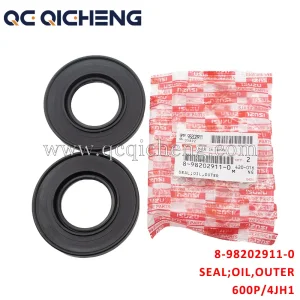
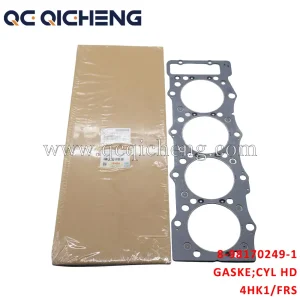 Part # 8-98170249-1
Wholesale 8-98170249-1 GASKET CYL HD for Isuzu 4HK1 FRS Supplier, Quotes
-
-
-
-
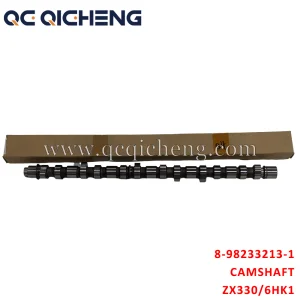 Part # 8-98233213-1
Wholesale 8-98233213-1 CAMSHAFT for Isuzu FVR NPR ZX330 6HK1 Supplier, Quotes
-
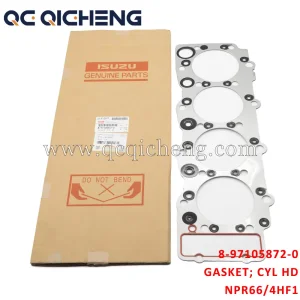 Part # 8-97105872-0
High-Quality 8-97105872-0 GASKET CYL HD for Isuzu NPR66 4HF1 Supplier, Pricelist
-
-