
Priority In-Stock OEM Assemblies & Sub-Units
Direct access to mission-critical engine assemblies, cooling loops, electrical hardware, and fuel injection parts cross-referenced for Isuzu & Hitachi powertrain platforms.
-
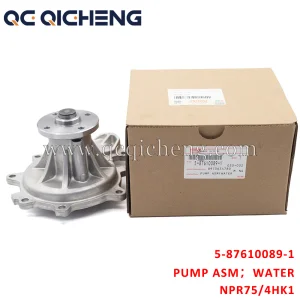
High-Quality 5-87610089-1 PUMP ASM WATER For ISUZU NPR75 4HK1 Supplier, Quotes
-
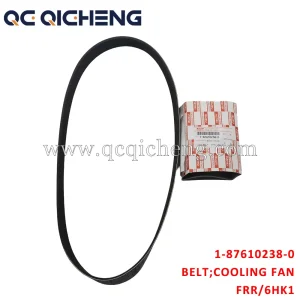
Wholesale 1-87610238-0 BELT COOLING FAN For ISUZU FRR 6HK1 Suppliers, Pricelist
-
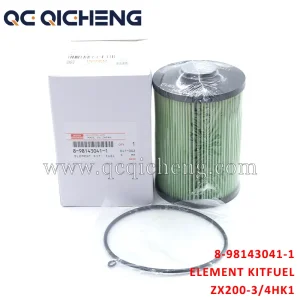
High-Quality 8-98143041-1 EEMENT KIT FUEL for Isuzu ZX200- 4HK1 6HK1 Supplier, Pricelist
-
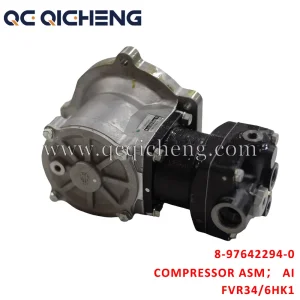
High-Quality 8-97642294-0 COMPRESSOR ASM AIR For ISUZU FVZ34 6HK1 Supplier, Quotes
-
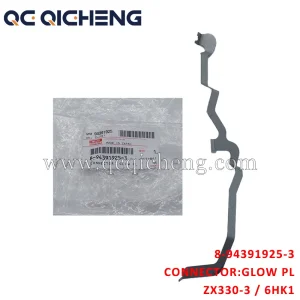
High-Quality 8-94391925-3 CONNECTOR GLOW PLUG For ISUZU ZX330-3 6HK1 Supplier, Quotes
-
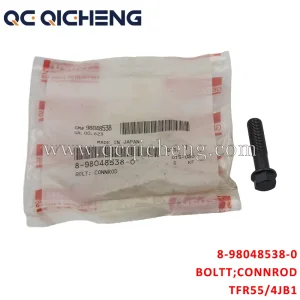
High-Quality 8-98048538-0 BOLT CONNROD For ISUZU TFR55 4JB1 Suppliers, Pricelist
-
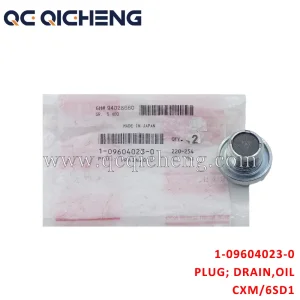
High-Quality 1-09604023-0 PLUG DRAIN OIL For ISUZU CXM 6SD1 Suppliers, Pricelist
-
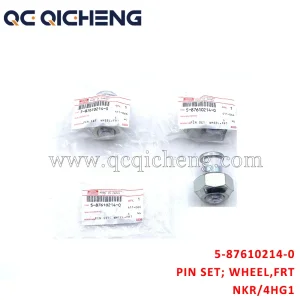
High-Quality 5-87610214-0 PIN SET WHEEL FRT For ISUZU NKR 4HG1 Supplier, Quotes
The Global Commercial Footprint of the Isuzu 4HG1 Diesel Powertrain
Analyzing the long-term operational viability, mechanical resilience, and global utility of naturally aspirated and turbocharged 4HG1 variants across international logistics, construction, and agricultural sectors.
Mechanical Purity & High-Sulfur Tolerance
Unlike contemporary common-rail architectures sensitive to fuel particulate density, the 4HG1 naturally aspirated and turbocharged platforms utilize mechanical distribution or inline fuel injection systems (Zexel/Bosch PE/VE type). This delivers unmatched tolerance against high-sulfur diesel (often >500 ppm) prevalent in Latin America, Southeast Asia, and Sub-Saharan Africa, mitigating catastrophic fuel injector seizure common in electronic Tier-4/Stage-V variants.
Architectural Structural Stability
With an overhead camshaft (OHC) valve train directly actuating oversized valves via hardened rocker assemblies and gear-driven timing cassettes, the 4HG1 minimizes parasitic harmonic distortion. Its dry-liner induction-hardened cylinder bores support up to three standardized OEM oversized boring stages (+0.25mm, +0.50mm, +0.75mm), maximizing engine block multi-generational usability across extended 500,000+ kilometer fleet lifespans.
Broad Global Application Base
The 4HG1 serves as the universal motive platform for Isuzu NPR, NQR, and NKR medium-duty transport vehicles, while simultaneously acting as the base industrial auxiliary driver in skid steer loaders, industrial irrigation pumps, marine auxiliary gensets, and mid-capacity heavy construction equipment operating in harsh operational matrices.
| Engineering Parameter | 4HG1 Standard Mechanical | 4HG1-T Turbocharged Specification | Evaluation & Diagnostic Threshold |
|---|---|---|---|
| Displacement & Configuration | 4,570 cc (4.57L), Inline 4-Cylinder, 8-Valve | 4,570 cc (4.57L), Turbocharged Intercooled | 121 mm Stroke x 115 mm Bore Configuration |
| Rated Power Output | 121 PS (89 kW) @ 3,200 RPM | 140 PS (103 kW) @ 3,000 RPM | Benchmarked via ISO 1585 Net Operational Testing |
| Peak Torque Band | 304 N·m (31.0 kg·m) @ 1,600–1,800 RPM | 363 N·m (37.0 kg·m) @ 1,800 RPM | Low-end operational curve optimized for torque delivery |
| Injection Configuration | Direct Mechanical Injection (Bosch Inline Pump) | Mechanical Boost-Compensated Direct Injection | Opening Pressure: 19.1 - 20.1 MPa (195-205 kg/cm²) |
| Compression Ratio | 19.0 : 1 | 18.0 : 1 | Cold Crank Compression Check: 3.04 MPa @ 200 RPM |
Supply Chain Resilience & Chinese Advanced Remanufacturing Ecosystem
How Qicheng Machinery and advanced Chinese manufacturing clusters leverage automated metallurgy, ultra-precision metrology, and high-density inventory to reduce complete assembly lifecycle acquisition costs by 42%.
Sub-Micron CNC Dynamic Machining
Engine components sourced and remanufactured through our Guangzhou facilities utilize multi-axis CNC line-boring and optical coordinate measurement machines (CMM). Main bearing saddles, connecting rod journals, and cylinder head deck planes adhere to micro-tolerances within ±0.003 mm, restoring pristine factory quench volumes and bearing oil film integrity.
Metallurgical Heat Treatment Integrity
Forged steel crankshafts and high-tensile connection bolts (e.g. 8-98048538-0) undergo computerized plasma nitriding and inductive hardening cycles. This ensures core tensile strengths exceeding 980 MPa and a surface hardness rating of HRC 55-62, completely eliminating fatigue-induced fracture hazards under prolonged high-torque shock loads.
Turnkey End-of-Line Dyno Certification
Every complete 4HG1 short-block, long-block, or turn-key complete assembly is subjected to automated hot-test dynamometer profiling before export packaging. Real-time oil gallery pressures (minimum 294 kPa @ idle), main bearing thermal dispersion patterns, and cold crank compression balances are verified and archived with full traceability certificates.
Regional Demands, Retrofit Strategies & Industry Trajectories
Real-world operational analysis across key geographic territories, illustrating why industrial fleet owners opt for remanufactured 4HG1 platforms rather than transitioning to complex Tier-4/Tier-5 electronics.
Southeast Asia & Latin America Retrofits
In municipal route delivery, public transport jeepneys (Philippines), and inter-city agricultural hauling (Indonesia, Colombia, Peru), operating margins dictate extreme fuel tolerance and field repairability. Replacing failing common-rail platforms with remanufactured mechanical 4HG1 engines saves operators thousands of dollars in proprietary sensors, DEF fluid logistics, and downtime.
African Harsh-Environment Mining Logistical Fleets
In high-dust, high-ambient temperature mines and timber extraction operations throughout Ghana, Nigeria, and Kenya, modern electronic diesel engines experience pervasive wiring harness brittle degradation and ECM failure. The mechanical simplicity of the 4HG1 powertrain provides total immunity to electrical voltage surges and harsh vibration.
Decarbonization & Circular Engine Economics
The global heavy-machinery aftermarket is experiencing an intense shift toward circular lifecycle engineering. Remanufacturing an Isuzu 4HG1 core block uses 85% less raw material energy compared to casting a new metallurgy block from virgin ore, aligning tier-1 mining and logistics procurement contracts with international ESG and carbon reduction mandates.
Technical Verification Checklist for Enterprise 4HG1 Sourcing
Standard operating procedures deployed by Qicheng Machinery to guarantee zero-defect international delivery across B2B freight corridors.
1. Flywheel & Bell-Housing Verification
Prior to shipment confirmation, our engineering desk cross-references starter mount tooth pitch (11T vs 9T), flywheel ring gear teeth count (126T standard), and rear housing bolt circles against the chassis VIN or machine serial number to prevent bellhousing misalignment.
2. Oil Sump Geometry & Dipstick Orientation
Industrial auxiliary engines, excavators, and commercial trucks require entirely different oil pan sump clearances (front-sump, center-sump, or rear-sump) to clear structural crossmembers and differential axles. We configure and swap oil pans and pickup strainers to precise chassis requirements.
3. Moisture-Barrier Ocean Freight Packaging
All engines receive an internal vapor-corrosion inhibitor (VCI) oil treatment, external anti-rust wax sealing, and are vacuum-encapsulated inside heat-sealed foil bladders before being secured within fumigated ISPM-15 compliant structural steel-framed timber shipping crates.
Engine Rebuild Kits, Liner Sets & Injection Hardware
High-precision replacement components, common rail systems, cylinder liners, and factory seals for Isuzu 4HG1, 4HK1, 6HK1, and 6WG1 engines.
-
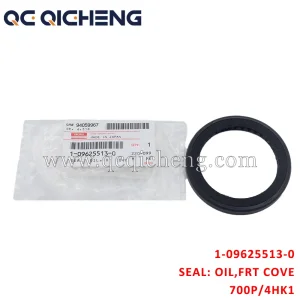
Wholesale 1-09625513-0 SEAL OIL FRT COVE For ISUZU 700P 4HK1 Pricelist, Quotes
-
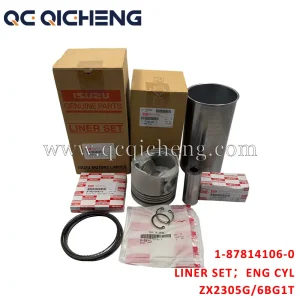
Wholesale 1-87814106-0 LINER SET ENG CYL For ISUZU ZX2305G 6BG1T Supplier, Pricelist
-
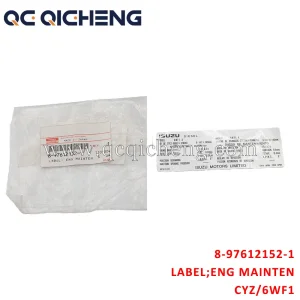
High-Quality 8-97612152-1 LABEL ENG GMAINTENANCE for Isuzu CYZ 6WF1 Supplier, Quotes
-
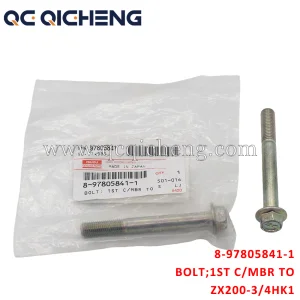
Wholesale 8-97805841-1 BOLT 1ST C/MBR TO S/MBR For ISUZU ZX200-3 6HK1 Suppliers, Quotes
-
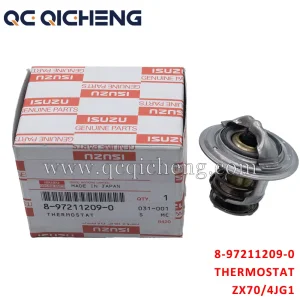
High-Quality 8-97211209-0 THERMOSTAT For ISUZU ZX70 4JG1 4LE2 Suppliers, Quotes
-
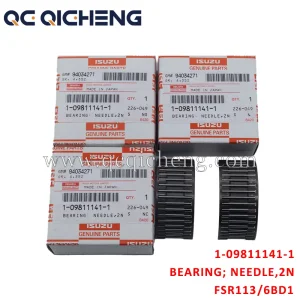
Wholesale 1-09811141-1 BEARING NEEDLE 2ND GEAR For ISUZU LR 6BG1 Suppliers, Pricelist
-
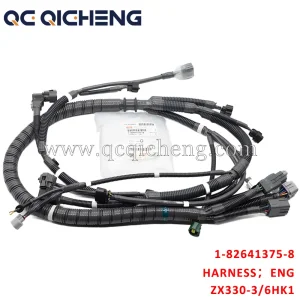
High-Quality 1-82641375-8 ENG For ISUZU ZX330-3 6HK1 Supplier, Quotes
-
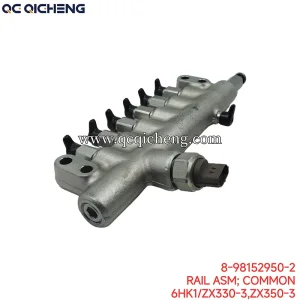
Frequently Asked Questions (FAQ)
Comprehensive technical and commercial clarity directly from our Guangzhou engineering dispatch office.
What are the primary differences between the Isuzu 4HG1 and 4HF1 / 4HE1 engines?
While sharing a similar block architecture, the 4HG1 features an enlarged cylinder bore of 115 mm and stroke of 121 mm yielding 4,570 cc displacement, compared to the 4HF1's 4,334 cc (112 mm bore). The 4HE1 introduces a 110 mm stroke turbo system. The 4HG1 delivers higher naturally aspirated low-end torque (304 N·m @ 1,600 RPM) and utilizes an all-mechanical governor assembly, which eliminates electronic throttle actuators and ECU failure vulnerabilities.
How do you ensure engine block integrity and eliminate micro-fractures in wholesale units?
Every engine cylinder block and cylinder head undergoes rigorous electromagnetic wet fluorescent magnetic particle inspection (MPI) and pneumatic hydro-testing at 0.4 MPa (58 PSI) heated to 85°C. This reveals any thermal micro-cracking across cylinder bridges, injector sleeves, and valve seat pockets prior to machining.
Can a naturally aspirated 4HG1 be upgraded with a turbocharger for high-altitude applications?
Yes. However, a complete engineering conversion requires replacing the standard piston assemblies with oil-cooled gallery pistons (which lower compression from 19.0:1 to 18.0:1), installing higher-flow under-piston oil spray nozzles, upgrading the exhaust manifold to ductile iron (FCD), and retiming the injection pump delivery stroke with an integrated boost compensator (aneroid capsule) to avoid thermal overloading.
What documentation is supplied for customs clearance and fleet asset registration?
Every commercial invoice and packing list is accompanied by a certified Certificate of Origin (CO / Form E / Form F), dynamometer calibration performance printout, clean factory engine serial stamping dossier, non-asbestos gasket certification, and ISPM-15 heat-treated crate phytosanitary declarations.
What is your typical export lead-time and emergency airfreight protocol for stranded fleets?
With over USD 15 million in standing stock in Guangzhou, standard 4HG1 long blocks, rebuild gasket kits, crankshafts, and water pumps ship within 48 to 72 hours via sea container or multimodal rail. For urgent machine-down emergencies, airfreight dispatches via DHL/FedEx or cargo charter depart Guangzhou Baiyun International Airport (CAN) within 24 hours of fitment verification.