High-Performance Isuzu Forward Stock Assets
Verified OEM-grade components pre-calibrated for medium-duty commercial platforms, ready for dispatch.
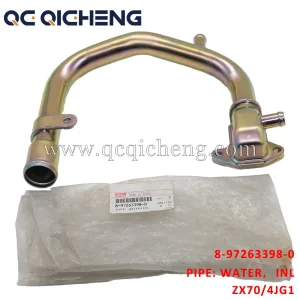
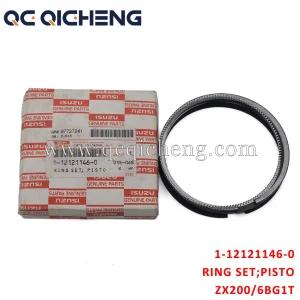
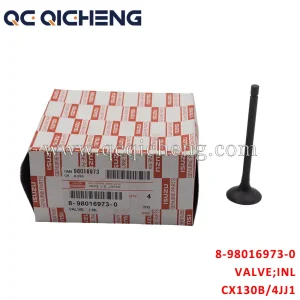
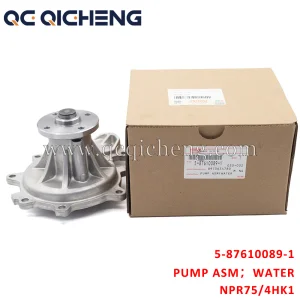
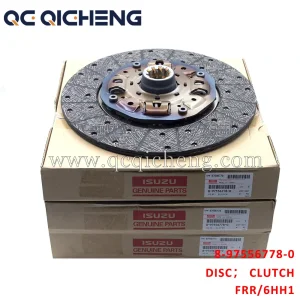
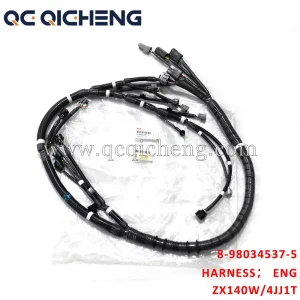
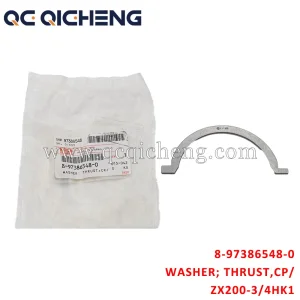
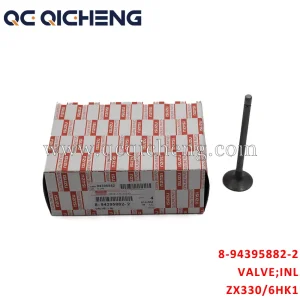
Global Commercial Dynamics: The Engineering Reality of Medium-Duty Fleets
Understanding how global logistics corridors rely on the metallurgical precision of the Isuzu Forward platform.
Supply Chain Resilience
The medium-duty haulage sector relies heavily on continuous operation. Unplanned downtime in Class 4-7 commercial vehicles creates systemic operational friction across arterial transit networks.
- Minimizing MTBF with authentic grade tolerance
- Cross-regional component interoperability
Emissions & Thermal Compliance
Global decarbonization initiatives require strict combustion tolerances. Precision valve profiles and common-rail injection modules directly govern NOx output and fuel economy benchmarks.
- Euro VI / EPA Tier 4 Final compatibility
- Thermal dynamics optimized for cooling cycles
Total Cost of Ownership (TCO)
Substandard aftermarket parts result in secondary component degradation. Strategic engineering procurement relies on verified dimensional geometry and tensile metallurgy.
- Preserving residual asset value across lifecycles
- Reduced frequency of overhaul intervals
Synchronized Powertrain & Hydraulic Architectures
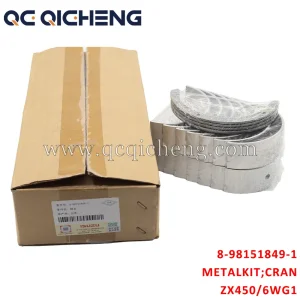
Isuzu Forward engines (4HK1, 6HK1, 6WG1) power leading commercial trucks and premier construction excavators such as Hitachi ZX-Series units worldwide.
Cylinder Head Systems
Micro-finished combustion surfaces engineered for extreme compression ratios in heavy haulage and sustained civil works.
Fuel Injection Precision
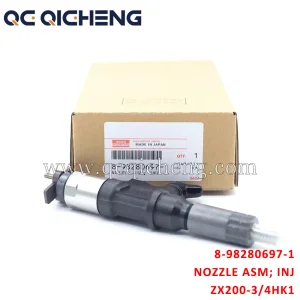
High-pressure common-rail injectors operating up to 2,500 bar to maximize droplet atomization and thermal efficiency.
Reciprocating Dynamics
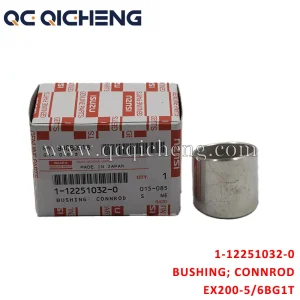
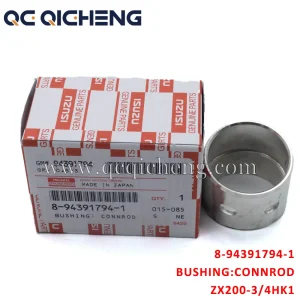
OEM-spec connecting rods, thrust washers, and piston assemblies balanced to neutralize secondary vibrations.
Thermal Dispersion
High-volume water pumps and intake manifolds designed to eliminate thermal load concentrations across continuous duty cycles.
Localized Engineering Applications Across Industrial Frontiers
Isuzu Forward equipment operates in diverse operational environments around the globe.
Tropical & High-Humidity Forestry
Southeast Asia and equatorial Africa demand advanced sealing and anti-corrosive water pump assemblies. High moisture levels degrade standard gaskets, making genuine-grade Viton and composite seals essential.
Arid & Particulate Mining Zones
In Australian outback operations and Latin American open-pit mining, particulate contamination is a primary challenge. Clean intake dynamics and precision piston rings prevent cylinder wall scoring.
High-Density Urban Logistics
Stop-and-go metro transit corridors across Europe and North America induce rapid heat cycling on clutch assemblies and turbochargers. Reinforced clutch discs and balanced rotating shafts maintain smooth engagement.
Compliance, Quality Governance & Traceability
Maintaining stringent engineering standards from warehouse receiving to point of installation.
CMM Dimensional Metrology
Critical load-bearing components undergo Coordinate Measuring Machine (CMM) testing to verify micro-inch dimensional compliance with factory engineering drawings.
Complete Customs Traceability
Every dispatch contains clear OEM cross-referencing, customs HS code classification, and certificates of origin for straightforward clearance into international jurisdictions.
Heavy-Duty Export Packaging
Engineered anti-corrosion barrier wrapping, VCI vapor-phase inhibitors, and reinforced crating ensure components arrive ready for installation after extended maritime transit.
Engineering Perspectives: The Future of Forward Powertrains
How component engineering continues to evolve alongside digital telematics and alternative powertrain integrations.
Predictive Telematics Integration
Next-generation Isuzu platforms feature onboard CAN-bus sensors tracking thermal variance and pressure deltas in real-time. Maintenance schedules shift from static mileages to condition-based overhaul triggers.
Alternative & Biofuel Resilience
The rise of HVO (Hydrotreated Vegetable Oil) and synthetic drop-in fuels demands specialized elastomers within injectors and fuel delivery modules to prevent premature seal deterioration under higher aromatic variance.
Hybrid Auxiliary Powertrains
Modern Forward medium trucks increasingly integrate 48V auxiliary mild-hybrid architectures. Parts providers must align mechanical rotating components with automated start-stop duty cycles and regenerative stress curves.
Frequently Asked Questions: Global Sourcing & Engineering Fitment
Key technical and procurement insights for commercial vehicle and heavy machinery operators.
How can fleet engineers distinguish authentic Isuzu Forward parts from counterfeit variants?
What specific cross-compatibility exists between Isuzu Forward engines and Hitachi excavators?
What protocols prevent shipment errors when ordering complex engine rebuild kits?
How does logistics management handle fragile assemblies such as common-rail injectors and ECUs?
What documentation is provided for enterprise international customs compliance?
Factory Direct Engine Assemblies & Chassis Modules
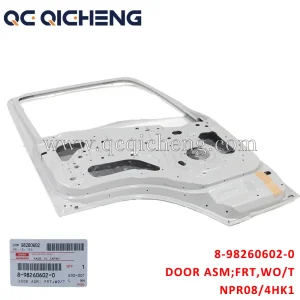
Heavy-duty structural components, crankshafts, and cab mount systems ready for worldwide export.