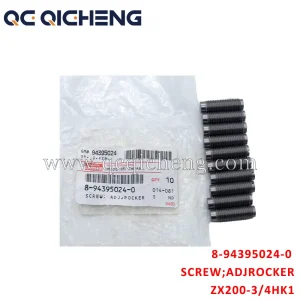
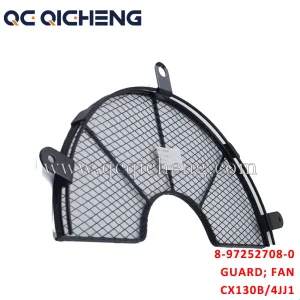
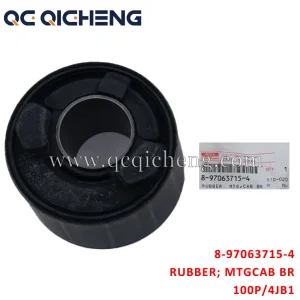
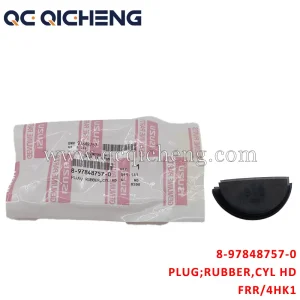
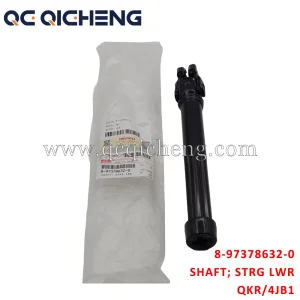
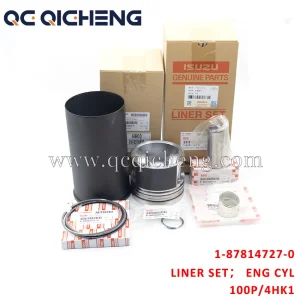
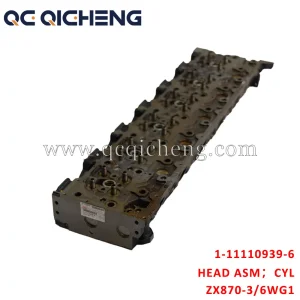
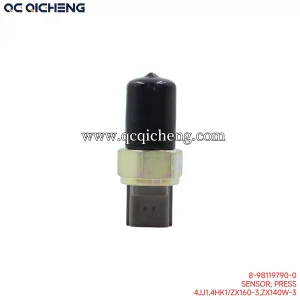
Featured Powertrain & Chassis Components: Batch I
Direct from standing global inventory in Guangzhou: high-precision parts matched by engine model, chassis code, and OEM catalog standards for light commercial trucks and heavy excavation equipment.
The Isuzu Elf NKR Platform: Global Industrial Status & Architecture
Since its introduction within the sixth and earlier fifth-generation Isuzu N-Series family, the Isuzu Elf NKR (typically classified under the 3.5 to 5.5-ton Gross Vehicle Weight tier) has served as the backbone of global urban and peri-urban logistics. Characterized by its narrow-cab design, exceptional power-to-weight ratio, and legendary diesel block designs—most notably the naturally aspirated and turbocharged 4JB1, 4JH1, and modern 4JJ1 common-rail iterations—the NKR platform represents one of the most widely adapted automotive architectures in history.
Beyond dedicated light commercial vehicles (LCVs), the industrial footprint of the Elf NKR engine family is uniquely intertwined with global heavy machinery. Major earthmoving equipment manufacturers, including Hitachi Construction Machinery (ZX Series), Sumitomo, and CASE, utilize identical Isuzu core powertrain technologies. The metallurgy, cylinder bore geometry, valvetrain mechanics, and electronic high-pressure common rail (HPCR) architectures engineered for Isuzu road transport directly power mid-to-large-size hydraulic excavators, material handlers, and stationary generation sets across six continents.
Last-Mile Freight & Distribution
The narrow cab configuration of the NKR chassis provides superior turning radiuses in crowded urban centers across Southeast Asia, Latin America, and Southern Europe, operating under stop-and-go thermal cycles.
Cross-Platform Industrial Synergy
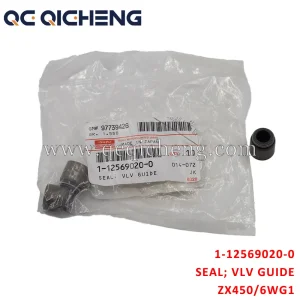
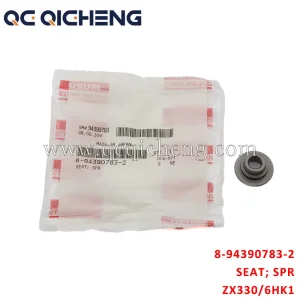
Powertrain components such as valve guide seals, rocker assemblies, and crank-angle sensors share identical specifications across the Isuzu commercial truck range and heavy-duty Hitachi ZX series excavators.
Harsh Operating Resilience
From African mining transport routes to high-sulfur diesel regions in developing economies, the dry cylinder sleeve metallurgy and mechanical tolerances of the Elf platform withstand aggressive contamination profiles.
Powertrain Technical Evolution & Future Outlook
Understanding the evolution of the Isuzu Elf NKR architecture is paramount for fleet maintenance officers and international procurement managers. Over three decades, the transition from mechanical direct-injection to multi-stage piezoelectric common-rail management has dictated drastic shifts in component specifications and tolerances.
| Generation / Engine Series | Fuel Injection System | Emissions Compliance | Key Mechanical Vulnerabilities | Procurement Strategy Focus |
|---|---|---|---|---|
| Legacy Elf NKR (4JB1 / 4JG2) | Mechanical VE Distributor Pump | Euro 0 - Euro II | Liner wear, mechanical pump governor wear | Liner kits, valve spring seats, water pump integrity |
| Intermediate NKR/NHR (4JH1-TC) | Electronic VP44 Rotary Pump | Euro III | Pump driver failure, injector tip erosion | Sensory inputs, electronic timing advance, harness clips |
| Modern NKR/NNR (4JJ1-TCS / 4HK1) | Denso High-Pressure Rail (1800+ bar) | Euro IV - Euro VI / Tier 4 | SCV sticking, piezo nozzle clogging, MAP sensor drift | Genuine common rails, precision MAP sensors, micro-filter seals |
| Heavy Excavator Hybrid (6HK1 / 6WG1) | Dual-Actuation Denso HPCR | Tier 4 Final / Stage V | Cavitation erosion in liners, excessive oil pan vibration | Oil pan distance spacers, heavy-duty valve guide seals |
High-Pressure Injection Dynamics
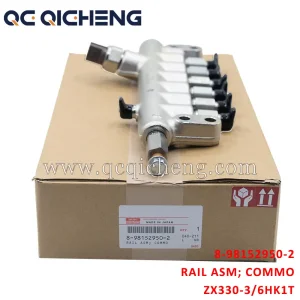
Modern common rail assemblies (such as OEM 8-98152950-2) operate above 1,800 atmospheres. Precision manufacturing within micron tolerances prevents internal fuel bypassing and uneven cylinder balancing.
Thermal Management Optimization
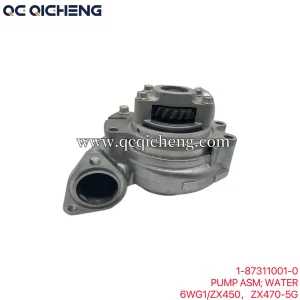
High engine loads in industrial machines require high-capacity water pump assemblies (e.g., 1-87311001-0) to combat local boiling points in block coolant passages during sustained excavating tasks.
Electronic Closed-Loop Feedback
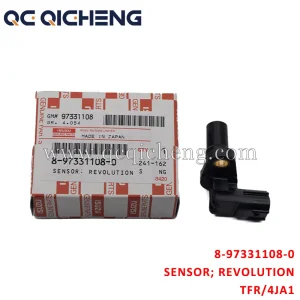
Transitioning to digital engine controllers requires millisecond-accurate sensor signals (MAP, Revolution, Rail Pressure) to maintain clean emissions profiles under erratic variable-payload scenarios.
Macro Industrial Solutions: Fleet Sourcing & Downtime Mitigation
Unplanned downtime in heavy industries carries catastrophic financial repercussions. A stalled 45-ton excavator or a disabled refrigerated logistics fleet directly impacts SLA performance. Qicheng Machinery & Equipment tackles structural procurement failures via integrated enterprise solutions.
Triple-Parameter Cross-Checking
Eliminate return rates by verifying orders against three strict parameters: Part Number + Equipment Serial Number + Engine Core Block Code. This mitigates mid-generation supersessions common in Isuzu parts catalogs.
Strategic Consolidation Depots
Centralizing inventory in our 10 Chinese branch hubs allows international buyers to consolidate complex orders containing truck body components, delicate electronics, and multi-ton excavator cylinder heads in a single shipment.
Strict OEM Tier-1 Traceability
From metallurgical hardness testing on cylinder liners to dimensional tolerance validation on rocker arm adjustment screws, all components conform to genuine Japanese engineering standards.
Frequently Asked Questions: Technical & Sourcing Intelligence
Direct engineering clarity addressing common cross-compatibility, supply chain protocols, and fitment inquiries.
What is the primary difference between Isuzu Elf NKR, NHR, and NPR chassis designations?
The designations represent payload classifications and frame widths within the Isuzu N-Series (Elf) matrix. The NHR features a narrow cab with single rear wheels designed for light urban loads (1.5–2 tons). The NKR utilizes a narrow cab architecture with a reinforced rear dual-wheel axle and heavier spring packages (2.5–3.5 tons payload). The NPR introduces a wide-cab format accommodating larger displacement engines (such as the 4HK1) and gross vehicle weights exceeding 6.5–7.5 tons.
Can an Isuzu 4HK1 engine part from a truck be installed directly onto a Hitachi ZX200-3 excavator?
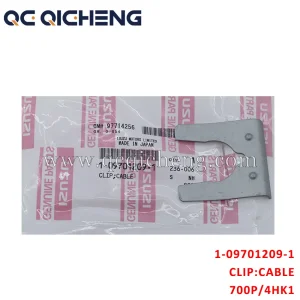
While the core internal mechanical architecture (piston diameters, connecting rods, crankshaft journal dimensions, and cylinder head casting) is largely identical, external auxiliary components differ. Excavator applications often use unique oil pans with high-angle baffles (e.g., 8-98090013-0 distance spacers), different flywheel housings to accommodate hydraulic pumps, and application-specific ECU fuel calibration maps. Our engineering desk verifies part numbers against equipment build sheets before dispatch.
How do you guarantee genuine fitment and avoid delivery discrepancies?
We operate a zero-tolerance verification protocol. Clients provide the OEM part number, the vehicle or equipment chassis/VIN code, and the stamped engine serial number. Our database cross-checks international supersession chains to confirm whether an older revision part has been replaced by an updated OEM part number, completely mitigating incorrect field fitments.
What are the global logistics lead times for high-volume standing inventory?
With over $15 million in standing stock across 100,000+ SKUs in our Guangzhou distribution hubs, standard wear and service parts (valves, sensors, pumps, liner kits) ship within 24 to 48 hours via express air freight (DHL/FedEx/UPS), reaching global operations in 3 to 7 business days. Consolidated ocean container shipments depart weekly from Guangzhou and Shenzhen ports.
Featured Powertrain & Chassis Components: Batch II
Precision-machined structural, electronic, and internal engine components ready for immediate worldwide dispatch.