
Direct Fleet Inventory: High-Demand Isuzu Precision Spares
Immediate dispatch available for enterprise fleet overhauls, high-stress king pin systems, drivetrain seals, and dynamic powertrain sub-assemblies cross-compatible across Isuzu industrial and commercial platforms.
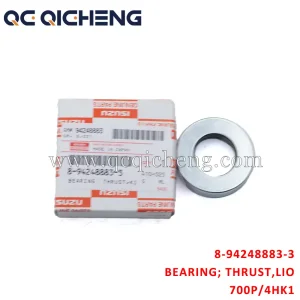
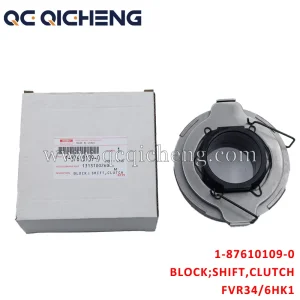
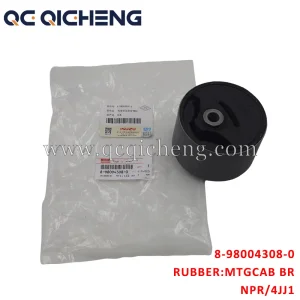
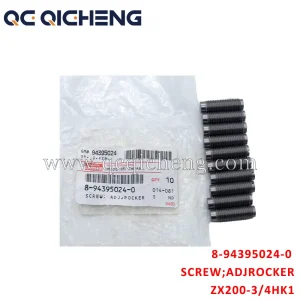
Rocker Arm Adj Screw (8-94395024-0) for ZX200-3 4HK1 6HK1
Request Instant Quote
Global Corporate Demands for Isuzu D-Max & Fleet Ecosystems
Navigating total cost of ownership (TCO), supply security, cross-platform engine part standardization, and uptime assurance for high-mileage utility vehicle operations.
In modern industrial commerce, the Isuzu D-Max pickup platform and its heavy-duty commercial lineage (N-Series, F-Series, and off-highway excavator applications) represent the operational backbone of global resource extraction, municipal utilities, emergency response, and express freight corridors. The procurement matrix for tier-1 enterprises is not merely predicated on initial unit acquisition costs; rather, it is dictated by Mean Time Between Failures (MTBF), availability of critical-path replacement items, and predictable Total Cost of Ownership (TCO) over operational lifecycles spanning 500,000 to 1,000,000 kilometers.
For operations directors across Australia, Latin America, Southeast Asia, and Sub-Saharan Africa, supply chain disruptions present catastrophic liabilities. A stalled fleet of service vehicles on an active mining concession or infrastructure artery incurs unrecoverable project penalties. Consequently, multinational procurement divisions have transitioned away from fragmented, multi-tier intermediaries toward direct, high-capacity centralized supply partners capable of delivering verified OEM specification parity, rigorous batch metallurgical traceability, and strategic buffer inventory across high-wear engine, chassis, and drivetrain components.
SKU Rationalization & Cross-Compatibility
Global fleets operating mixed configurations—such as Isuzu D-Max workhorses alongside NHR/NPR light trucks and Hitachi excavators powered by 4JJ1, 4HK1, and 6HK1 architectures—require optimized cross-reference mapping to minimize unnecessary on-site warehouse stock holding.
- Shared valvetrain components (e.g. 4HK1/6HK1 adjusters)
- Standardized hydraulic power steering clamp systems
- Multi-application elastomeric cab vibration dampeners
Severe Duty Cycle Durability
D-Max vehicles deployed in high-sulfur fuel environments, continuous washboard gravel haul roads, and corrosive open-pit mining environments place unprecedented mechanical shear on steering knuckles, king pins, and oil sealing surfaces.
- Case-hardened thrust bearings engineered for radial shock
- Fluoroelastomer (FKM) dual-lip hub oil seals
- Reinforced spring bushings resisting polymer delamination
Batch Traceability & Regulatory Fit
Mining and infrastructure procurement contracts require rigorous supply provenance to satisfy environmental and workplace safety governance, preventing counterfeit infiltration that induces premature catastrophic breakdown.
- Full mill certificate traceability on all high-tensile fasteners
- Verified metallurgical composition conforming to JIS/DIN
- Customs HS code alignment to mitigate clearance hold-ups
Powertrain Evolution: 4JJ1, 4JJ3, RZ4E & Heavy Platforms
A technological deep dive into common-rail calibration, thermal boundary management, and heavy chassis dynamics across the Isuzu commercial spectrum.
The evolutionary trajectory of Isuzu diesel powertrains over the past two decades illustrates a continuous drive toward higher injection pressures, stricter emissions compliance (Euro 4 through Euro 6d / Stage V), and elevated specific torque density. From the legendary 4JJ1-TC / 4JJ1-TCX (3.0L) engines found throughout generation-one and two D-Max platforms and N-Series commercial cabovers, to the ultra-refined 4JJ3-TCX and the downsized high-efficiency RZ4E-TC (1.9L Blue Power), each generational leap has imposed increasingly rigorous engineering tolerances on replacement hardware.
In high-rail-pressure common-rail injection systems operating at up to 2,500 bar, internal mechanical tolerances are measured in micrometers. Minute deviations in fuel filtration media porosity, injector nozzle needle coating, or high-pressure pump gear lash directly result in rail pressure pulsation anomalies, excessive exhaust gas recirculation (EGR) fouling, and catastrophic piston crown erosion. Understanding these structural dynamics is essential for corporate parts coordinators seeking to safeguard modern commercial diesel assets.
Technical Specification Notice: Multi-Layer Steel (MLS) Head Gaskets & Thermal Expansion
In turbo-intercooled Isuzu engines like the 4HK1, 6HK1, and high-output 4JJ3, combustion chamber peak pressures routinely exceed 18 MPa. Substituting genuine-specification Multi-Layer Steel (MLS) head gaskets with inferior composite alternatives causes thermal boundary leakage, liner drop, and coolant oil contamination. Our inventory upholds strict micro-finish surface standards and elastomeric viton beading to withstand high cyclic thermal stress.
| Engine / Platform | Displacement & Layout | Critical Component Vulnerabilities | Recommended Service Intervention | Fleet Applications |
|---|---|---|---|---|
| 4JJ1-TC / TCX | 2,999 cc / Inline-4 Turbo | Timing chain tensioners, SCV valve sticking, turbo-to-manifold gaskets | Every 100,000 km tensioner inspection; OEM seal renewal | D-Max (Gen 1-2), NHR, NKR |
| 4JJ3-TCX | 2,999 cc / Inline-4 VGS | Electronically controlled VGS turbo actuator, DPF pressure sensors | Sensor calibration check; injector return flow verification | D-Max (Gen 3), MU-X, Elf |
| RZ4E-TC | 1,898 cc / Inline-4 Turbo | High-pressure EGR valve clogging, hydraulic valve lifter lash | Closed-crankcase ventilation cleaning; intake manifold decarb | D-Max Eco, Light Utility |
| 4HK1-TCS / 6HK1 | 5,193 cc / 7,790 cc Inline-4/6 | Rocker arm screw wear, water pump mechanical face seals, king pin thrust bearings | Overhead valve clearance adjust; oil hub seal replacement | 700P, FVR34, ZX200-3 |
| 6WG1 / 6UZ1 | 15,681 cc / Inline-6 Heavy | Cylinder liner cavitation, unit injector harness, oil pan distance spacer leakage | Coolant inhibitor maintenance; vibration damper inspection | Giga, CXZ, ZX450/800 |
Global Commercial Landscapes: Where Isuzu Workhorses Operate
Tailored component provisioning adapted to regional operating environments, regional fuel sulfur disparities, and rigorous regulatory requirements.
Asia-Pacific (APAC) Infrastructure & Mining
Within the Pilbara mining belt of Western Australia, the palm oil plantations of Indonesia, and high-altitude construction throughout Southeast Asia, D-Max utility fleets experience constant full-payload operating conditions under hyper-dusty atmospheres.
Primary Hardware Demand: Secondary stage air filtration units, reinforced king pin thrust bearings, heavy leaf-spring polyurethane and rubber rear bushings, and water-separating diesel sedimenters to combat fine airborne silica and condensation.
EMEA & Sub-Saharan Logistics
Cross-border commercial corridors spanning Eastern Europe, the Middle East, and Sub-Saharan Africa require logistics fleets capable of traversing vast distances with variable fuel purity, ranging from ultra-low sulfur diesel (ULSD) to high-sulfur (500+ ppm) distillates.
Primary Hardware Demand: Ruggedized common-rail mechanical fuel feed pumps, sacrificial copper turbo gaskets, robust clutch release bearings for stop-and-start urban distribution, and heavy-duty front hub seals resisting high ambient desert heat.
Latin America Forestry & Agriculture
Across the Andes mining concessions of Chile and Peru, as well as agricultural arterial networks throughout Brazil and Colombia, Isuzu 4WD utility fleets operate across extreme elevation gradients ranging from sea level to 4,500+ meters above sea level.
Primary Hardware Demand: Manifold absolute pressure (MAP) sensors, high-altitude turbocharger wastegate rebuild kits, chassis-to-body brackets capable of handling torsional twist, and dynamic engine vibration mounts.
Supply Integrity Protocol: ISO 9001 & Full Traceability
How our verification process eliminates fitment discrepancies, counterfeit materials, and export customs bottlenecks for enterprise partners.
Triple Cross-Check Fitment
Every single line item is triple-checked against factory EPC databases: matched simultaneously by OEM Part Number, Chassis VIN Code, and Specific Engine Serial to eliminate regional variance errors.
Metallurgical Verification
Critical structural components (fasteners, rocker shafts, connecting rod bolts, king pins) undergo hardness testing (Rockwell/Brinell) and optical spectrometer analysis to confirm tensile integrity.
Export-Grade Preservation
VCI (Vapor Corrosion Inhibitor) packaging, nitrogen-sealed component cavities, and reinforced wooden crates built to ISPM 15 phytosanitary standards protect sensitive surfaces during long ocean transits.
Expedited Air / Multimodal
For grounded fleets (Vehicle Off Road - VOR situations), our Guangzhou central consolidation facility offers 24-48 hour DHL/FedEx priority air dispatch, alongside scheduled 20ft/40ft FCL freight services.
Specialized Drivetrain, Suspension & Ancillary Components
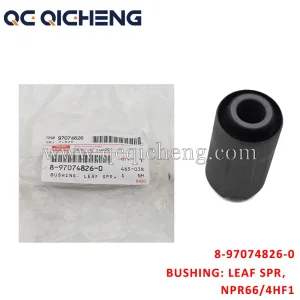
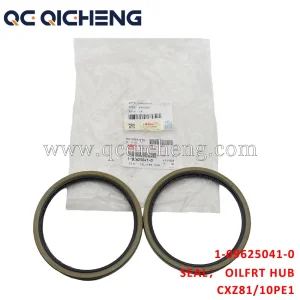
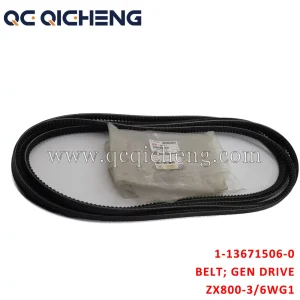
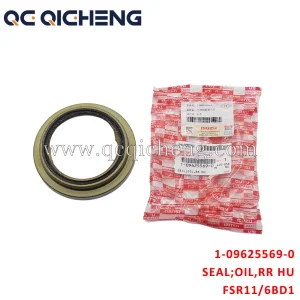
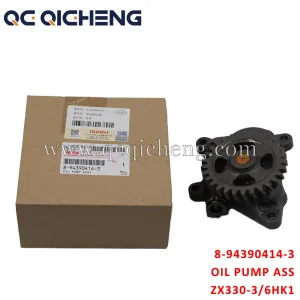
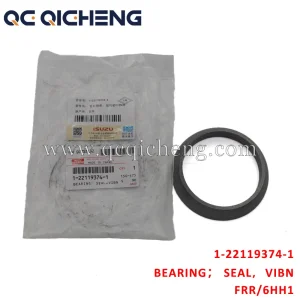
High-reliability leaf spring bushings, oil pumps, hub seal retainers, exhaust vibration seals, and pneumatic safety valves built for rigorous enterprise utility operations.
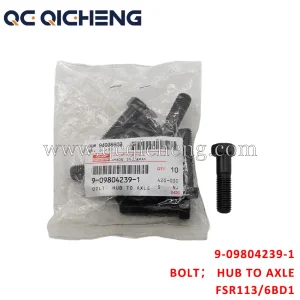
Hub to Axle Shaft Bolt (9-09804239-1) for Isuzu FSR113 6BD1
Request Instant Quote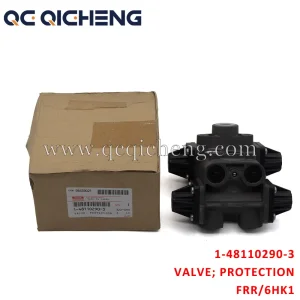
Frequently Asked Questions for Fleet Purchasing Managers
Clear, technically verified guidance on OEM part verification, international dispatch, and long-term procurement agreements.