
Precision OEM & Industrial Powertrain Components
Direct supply from Guangzhou central warehouse: authenticated Isuzu and Hitachi components fully inspected for dimensional tolerances, thermal resilience, and dynamic hydraulic compatibility.
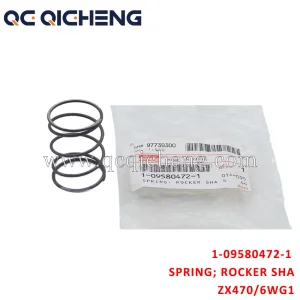
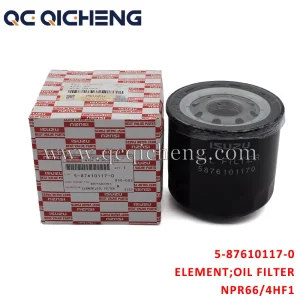
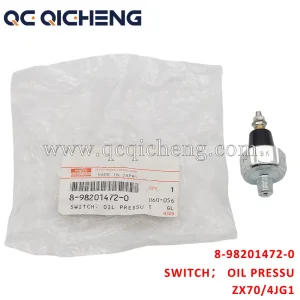
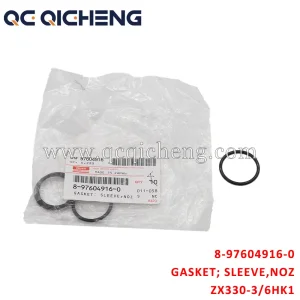
Global Dynamics of Isuzu Commercial & Industrial Brake Systems
In the global transport and construction machinery ecosystem, braking performance is the critical determinant of operational uptime, structural safety, and regulatory compliance.
Hydraulic & Air-Over-Hydraulic (AOH)
For mid-duty platforms including the Isuzu NPR, NQR, and N-Series ELF variants, Air-Over-Hydraulic architectures integrate high pneumatic line pressures with rapid-response dual-circuit hydraulic calipers. This balances low pedal effort with robust clamping force under GVWs spanning 4.5 to 9.0 metric tons.
Full-Air Pneumatic Architecture
Heavier commercial platforms like the Isuzu F-Series (Forward FVR, FTR, FVZ) and heavy-duty Giga (CYZ, EXR) rely on s-cam drum or pneumatic disc brake assemblies. Operating at 8.5 to 10.2 bar reservoir pressures, they guarantee fade-free retardation even during high-tonnage regional hauling.
Industrial Equipment Retardation
Where Isuzu 4HK1, 6HK1, and 6WG1 engines power Hitachi excavators (ZX200, ZX330, ZX470), swing parking brakes and travel motor counter-balance valves utilize wet multiple-disc friction packs submerged in hydraulic oil, demanding strict shear stability and anti-chatter tolerances.
Engineering Trends: Friction Formulations, EBS & Wear Telematics
Braking science is evolving beyond conventional asbestos-free organic compounds toward intelligent, low-emission, and thermal-gradient friction interfaces.
Copper-Free & Ceramic Formulations
Complying with Washington and California State environmental mandates (NSF Level N rating <0.5% copper by weight), advanced aftermarket brake pads for Isuzu trucks use synthetic aramid fibers, potassium titanate whiskers, and high-purity graphite matrices to reduce brake dust and aquatic toxicity.
Next-Gen Electronic Braking (EBS 3.0)
Modern Isuzu commercial fleets transition from mechanical load-sensing valves to electro-pneumatic brake management. Integrated electronic stability control (ESC) and autonomous emergency braking systems (AEBS) execute millisecond-level pressure metering directly at wheel ends.
Brake Wear Telematics Integration
Continuous-wear potentiometer sensors mounted into brake pad backplates interface with CAN-bus J1939 telematics. Fleet superintendents forecast pad replacement intervals based on duty cycle severity rather than rigid, calendar-driven service schedules.
| Component Group | OEM Metallurgy / Material | Critical Tolerance Standard | Operational Temperature Range | Primary Failure Mechanism Addressed |
|---|---|---|---|---|
| Front Brake Rotors (NPR/NQR) | High-Carbon Grey Cast Iron (FC250 / G3000) | Runout < 0.015 mm; DTV < 0.008 mm | -40°C to 680°C | Disc warping, pedal pulsation & hot judder |
| Heavy Brake Drums (FVR/FVZ) | Centrifugally Cast Alloy Iron with Cr-Mo | Bore Circularity < 0.035 mm; Dynamic Balance ISO 1940 G6.3 | -30°C to 550°C | Bell-mouthing, radial thermal crazing |
| Heavy Duty Brake Shoes | Semi-Metallic / Ceramic-Matrix Hybrid | Shear Strength > 3.5 N/mm² (ISO 6312) | 100°C to 450°C Friction Stability | Glazing, high-temperature friction fade |
| Hydraulic Wheel Cylinders | Anodized Cast Aluminum / Ductile Iron Bore | Bore Micro-finish Ra 0.2–0.4 µm; EPDM Seals | DOT 4 / DOT 5.1 Fluid Compatible | Seal degradation, piston seizure, micro-leakage |
| Pneumatic Relay & Unloader Valves | Die-cast Zinc / Engineered Polyacetal Plungers | Operating Pressure 0.2 to 10.5 Bar; Leakage < 2 cm³/min | -40°C to 80°C Ambient | Moisture freeze-up, internal valve bypass |
Localized Applications & Harsh Operational Environments
Brake systems encounter drastically varied physical stresses across geographies. Below is how our supply chain optimizes parts specifications for targeted operational realities.
Urban Stop-and-Go Fleets
Delivery trucks operating in dense metropolises (Tokyo, London, Manila) experience constant low-speed friction engagements. High-frequency micro-cycling induces localized boundary friction heating, demanding pads with superior low-temperature cold bite and reduced micro-grooving rotor wear.
Mountainous Haulage & Altitude
In high-gradient corridors like the Andes, Rocky Mountains, or Ethiopian Highlands, prolonged downhill descent tests thermal heat sink capacities. We specify drilled or vented disc rotors and auxiliary exhaust brake butterfly assemblies (Isuzu 4HK1/6HK1) to absorb continuous retarding energy.
Severe Mining & Off-Highway
Hitachi excavators and heavy Isuzu tippers working in open-pit quarries encounter silica slurry, fine iron tailings, and abrasive slurry. Brake caliper slider boots require fluorosilicone encapsulation and triple-lip sealing rings to prevent premature guide-pin seizure and unbalance.
Equatorial Humid & Coastal Zones
Tropical maritime logistics (Southeast Asia, Caribbean, West Africa) subject metallic components to continuous salt spray and high dew-point condensation. Backing plates receive zinc-nickel cathodic electro-deposition, passing 1,000-hour ASTM B117 salt fog testing without red rust.
Macro Supply Chain Solutions: Mitigating Counterfeits & Protecting TCO
In the commercial transport sector, brake component procurement goes well beyond superficial purchase-price parity. Fleet downtime costs, catastrophic liability exposures from hydraulic failure, and warranty disputes make supplier authentication paramount. Qicheng Machinery & Equipment (China) Co., Ltd. operates as a strategic distributor with 10 branch centers across mainland China, supplying verified components to commercial vehicle fleets and earthmoving contractors across 120+ countries since 2006.
Crucial Technical Distinction: A sub-standard brake drum or misaligned lining compound can increase emergency stopping distances by up to 34% at 80 km/h, while inducing uneven thermal expansion that cracks hub bearings. Certified suppliers verify casting graphite nodularity and friction coefficient stability across the SAE J661 Chase test spectrum.
Total Cost of Ownership (TCO) Optimization Architecture
Procurement teams managing multi-ton regional fleets balance three operational metrics when specifying replacement brake components: Friction Material Life, Mating Rotor Preservation, and Labor Frequency. While inferior low-cost brake linings may appear economically attractive, excessive abrasive constituents scour the brake rotor surface, shortening rotor lifespans from 300,000 km to under 120,000 km.
By pairing high-thermal-capacity grey iron rotors alloyed with molybdenum and copper against matched low-metallic friction compounds, Qicheng delivers a predictable maintenance cycle where pad-to-rotor wear ratios remain within the golden window of 2:1. This reduces shop turnover, eliminates irregular taper wear across multi-piston calipers, and guarantees absolute adherence to fleet safety governance.
Part-Number Verification & Engineering Precision
Because Isuzu platforms utilize overlapping designations across distinct regional production hubs (e.g., Japanese domestic specifications versus European Euro VI variants or Latin American tier engines), parts cross-referencing demands deep catalog fluency. Our engineering and parts specialists systematically verify 10-digit OEM numbers against vehicle chassis numbers (VIN), engine family codes (such as 4JJ1, 4HK1, 6HK1, 6WG1), and axle ratings prior to dispatch, achieving a warehouse return rate under 0.08% across $15M in active inventory.
Frequently Asked Questions on Isuzu Braking Systems
Expert procurement and engineering answers straight from our technical dispatch desk.
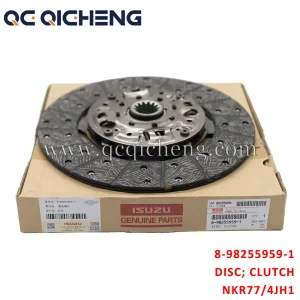
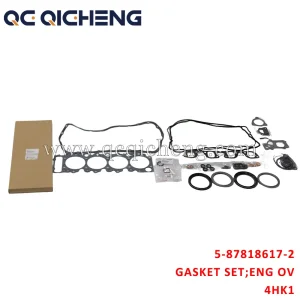
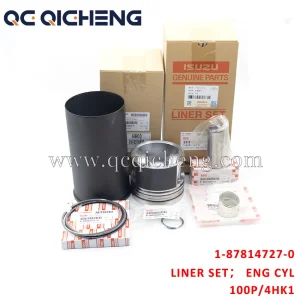
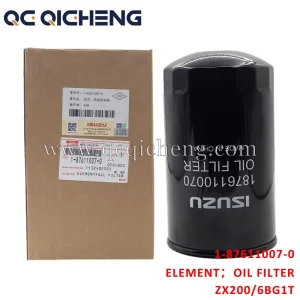
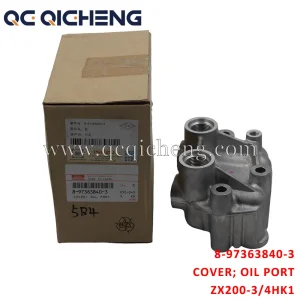
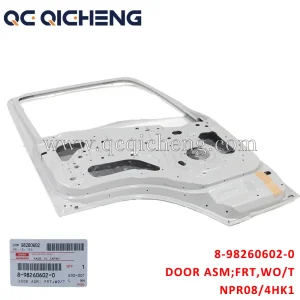
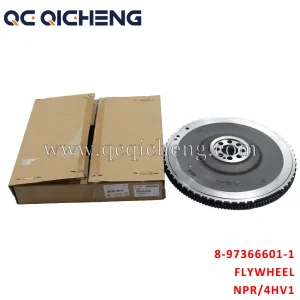
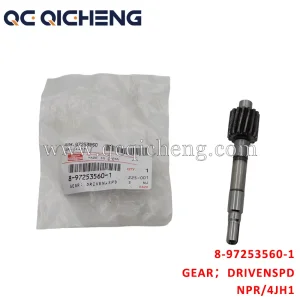
Heavy Fleet Mechanical & Overhaul Assemblies
Complete powertrain components engineered to operate seamlessly alongside Isuzu commercial vehicle friction and chassis systems.
Connect With Our Technical Parts Specialists
Operating from Zhuji (International) Machinery Centre in Guangzhou with 10 branch hubs across China, our technical dispatchers respond to parts fitment and export quote requests within 24 hours.
Telephone & Direct Voice
Direct lines to our sales engineering desk:
Tel: +86 20 8202 8500
Mobile/Support: +86-178-2053-7812
Fax: +86 20-82028500-8010
Digital Communications
Send blueprints, OEM cross-references & BOM lists:
Email: [email protected]
WhatsApp: +86 151 1933 3452
Global Logistics: Serving 120+ Countries Worldwide
Guangzhou Headquarters
Qicheng Machinery & Equipment (China) Co., Ltd.
Facility: 734-738, 7th Street, Zhuji (International) Machinery Centre, No.36 Zhuji Road, Tianhe District, Guangzhou, China.
Stock: 100,000+ SKUs standing ready for dispatch.