
Precision Engine & Drivetrain Components
Explore instant-quote verified OEM replacements manufactured to rigorous Japanese JIS and ISO 9001 quality specifications for heavy-duty commercial operations.
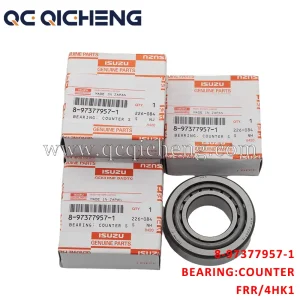
High-Quality 8-97377957-1 BEARING COUNTER SHAFT FRT For ISUZU FRR 4HK1 Supplier, Pricelist
Get Quote & Specs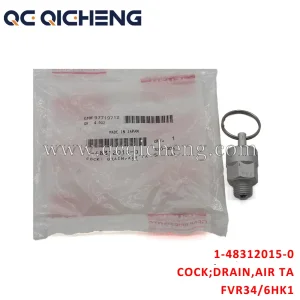
High-Quality 1-48312015-0 COCK DRAIN AIR TANK For ISUZU FVR34 6HK1 Pricelist, Quotes
Get Quote & Specs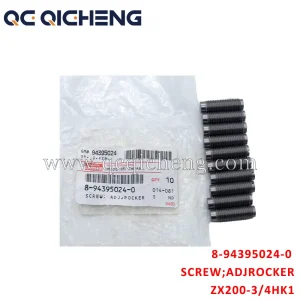
Wholesale 8-94395024-0 SCREW ADJ ROCKER ARM For ISUZU ZX200-3 4HK1 6HK1 Supplier, Pricelist
Get Quote & Specs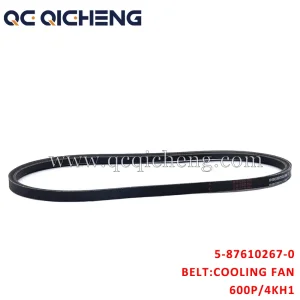
High-Quality 5-87610266-0 BELT A/C PUMP For ISUZU 600P 4KH1 4HF1 4HG1 Suppliers, Pricelist
Get Quote & Specs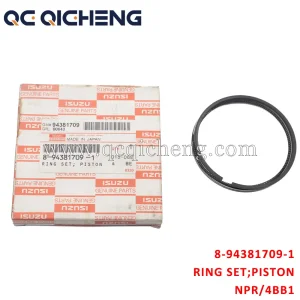
Wholesale 8-94381709-1 RING SET PISTON For ISUZU NPR 4BB1 Pricelist, Quotes
Get Quote & Specs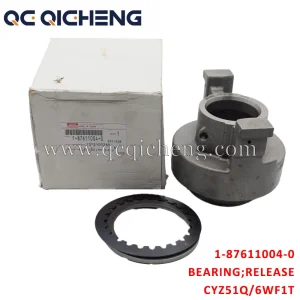
Wholesale 1-87611004-0 BEARING RELEASE For ISUZU CYZ51Q 6WF1T Supplier, Quotes
Get Quote & Specs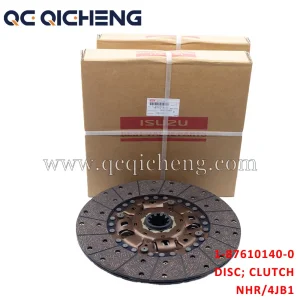
High-Quality 1-87610140-0 DISC CLUTCH For ISUZU NHR 4JB1 Suppliers, Quotes
Get Quote & Specs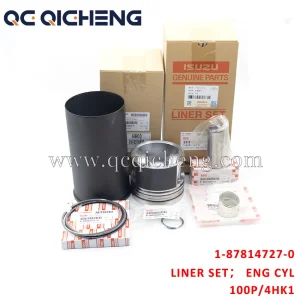
High-Quality 1-87814727-0 LINER SET ENG CYL For ISUZU 100P 4HK1 Supplier, Pricelist
Get Quote & SpecsThe Global Commercial Legacy & Market Dynamics of the Isuzu 4JB1 Engine
An exhaustive analysis of the world's most ubiquitous 2.8L direct-injection diesel platform: fleet lifespans, operational economics, and strategic supply chain shifts.
Originally engineered by the Isuzu Motors Corporation as an ultra-reliable, high-thermal-efficiency commercial workhorse, the Isuzu 4JB1 (and its turbocharged variants 4JB1T and intercooled 4JB1TC) has cemented its position as one of the most widely deployed 4-cylinder four-stroke diesel powerplants in automotive and industrial history. Displacing 2,771 cc with a bore and stroke configuration of 93.0 mm × 102.0 mm, this naturally aspirated and turbocharged direct-injection platform revolutionized light commercial transport, municipal distribution, civil excavation machinery, and stationary power generation across six continents.
In modern industrial procurement, the 4JB1 is not merely a legacy model; it represents an active global installed base exceeding 5.5 million operational units. From the tortuous high-altitude mining supply roads of the Peruvian Andes to the humid, stop-and-go delivery fleets of Manila, Jakarta, and Nairobi, the 4JB1 remains the operational backbone for fleet managers who demand mechanical injection simplicity, zero reliance on complex ECU harness wiring, and unparalleled resilience against variable diesel cetane ratings. However, maintaining fleet availability while containing lifecycle overhaul costs presents profound supply chain challenges. Enterprise buyers routinely struggle with inconsistent foundry quality, counterfeit assemblies, and premature component fatigue originating from non-audited aftermarket producers.
Mechanical Resilience
Features an overhead valve (OHV) valvetrain with a high-mounted gear-driven camshaft running directly off the crankshaft gears. Eliminating rubber timing belts prevents catastrophic valve-to-piston interference failures under extreme torsional load spikes.
Direct Injection Fuel System
Utilizing Bosch-licensed VE mechanical distributor rotary pumps and multi-hole pintle injectors, the 4JB1 generates direct swirl combustion inside the piston crown bowl, delivering rapid cold-start response and superior fuel economy without complex electronics.
Dry-Liner Rebuild Flexibility
The alloy cast iron block features induction-hardened, thin-walled dry cylinder liners. This enables repeated field re-sleeving back to factory bore tolerances without requiring full engine block replacement or custom oversized piston assemblies.
China's Manufacturing Efficiency & Metallurgical Superiority
How state-level joint-venture ecosystems, automated CNC machining centers, and complete industrial clusters deliver OEM-grade components at scale.
The dominance of Chinese manufacturing in the supply of Isuzu 4JB1 components is grounded in history and strategic industrial clusters. Beginning in the mid-1980s, technology transfer agreements and official joint ventures—notably Qingling Motors in Chongqing and Jiangling Motors Corporation (JMC) in Nanchang—established deep domestic production ecosystems. For nearly four decades, Chinese manufacturing clusters have iterated and upgraded every facet of the 4JB1 supply matrix, transitioning from licensed assembly to world-class automated precision casting, induction metallurgy, and ISO/TS 16949-certified quality systems.
Today, sourcing Isuzu 4JB1 components from top-tier Chinese facilities offers international distributors an unbeatable combination of metallurgical consistency and cost optimization. Chinese foundries utilize automated DISA molding lines and electric induction furnaces with spectral carbon-silicon-manganese monitoring to pour engine blocks with high tensile strength (HT250/HT300 gray iron). Crankshafts are forged from 42CrMo structural alloy steel, micro-polished to Ra ≤ 0.2 μm, and treated with high-frequency journal nitriding to achieve case depths ≥ 0.5 mm and surface hardnesses exceeding 55 HRC.
| Critical Component | Material Specification | Manufacturing & Heat Treatment Process | Factory Precision Tolerance | Quality Failure Prevention |
|---|---|---|---|---|
| Cylinder Block | Alloy Cast Iron (HT250 / FC250) | Automated green-sand casting, artificial aging stress relief | Bore cylindricity ≤ 0.008 mm, deck flatness ≤ 0.03 mm | Prevents cylinder distortion & head gasket blowout |
| Cylinder Head | High-Density Alloy Cast Iron | Precision resin core casting, CNC multi-axis port machining | Combustion chamber volume variance ± 0.8 cc | Eliminates thermal crack propagation between valve seats |
| Crankshaft | Forged Alloy Steel (42CrMo) | Closed-die drop forging, continuous induction hardening | Journal runout ≤ 0.015 mm, dynamic unbalance ≤ 20 g·cm | Avoids high-RPM torsional fracturing & main bearing wear |
| Piston & Rings | High-Silicon Aluminum Alloy (ZL109) | Gravity die casting, steel strut expansion insert, anodized crown | Pin bore clearance 0.004–0.009 mm, ring gap ± 0.02 mm | Prevents high-temperature seizure & oil blow-by |
| Connecting Rod | Forged Micro-Alloy Steel (40Cr / 45#) | Integral die forging, cracked-cap or precision split machining | Weight match per engine set ± 2.5 g, bend ≤ 0.02 mm | Eliminates harmonic vibration & wrist pin bushing galling |
| Dry Cylinder Liners | Centrifugal Alloy Cast Iron | Centrifugal spinning, diamond plateau cross-hatch plateau honing | Inner diameter wall thickness variance ≤ 0.012 mm | Optimizes oil film retention while cutting break-in friction |
Diverse Industrial Application Scenarios Across Global Sectors
Examining the multi-sector versatility of the 4JB1 platform: commercial trucks, heavy earthmoving, logistics handling, and stationary utilities.
Light Commercial Fleets (N-Series)
Powers the globally acclaimed Isuzu NHR, NKR55, and 100P light cab-over trucks. Fleet operations in urban logistics rely on the low-RPM torque delivery (180–200 Nm at 2,000 RPM) for constant urban stop-and-start delivery schedules.
Material Handling & Forklifts
Standardized by world-leading forklift brands including TCM, Heli, Hangcha, Dalian, and Toyota industrial conversions (2.5t to 3.5t lift trucks). Its thermal stability prevents overheating during prolonged indoor warehousing shifts.
Excavators & Compact Earthmoving
Equipped across 5-ton to 8-ton compact crawler excavators, skid steer loaders, and trench rollers. The mechanical governor maintains immediate throttle responsiveness when hydraulic pump relief valves experience peak breakout pressure.
Stationary Diesel Generators
Engineered into 20 kVA to 35 kVA primary and standby generator sets. Its mechanical simplicity allows remote telecom cell towers, mining field stations, and agricultural pump systems to run continuously without diagnostic scan tools.
Agricultural & Marine Conversions
Adapted for coastal fishing vessels, barge auxiliary pumps, and high-volume crop irrigation rigs. High resistance to cooling gallery cavitation and salt-air corrosion makes it a preferred platform for marine marinization engineers.
Emerging Industry Trends: Emission Upgrades & Remanufacturing
How the 4JB1 architecture is evolving through common rail diesel integration, circular remanufacturing, and alternative fuel compatibility.
While the classic Euro II mechanical 4JB1 remains the volume leader in unregulated markets across Africa, Central Asia, and parts of Latin America, regional emission mandates have propelled massive engineering updates. Tier-1 manufacturers have systematically updated the 4JB1 core architecture into Euro IV, Euro V, and China VI-compliant iterations—commonly designated as 4JB1-CRDI or 4JB1TC-HP. These advanced variants replace the mechanical distributor pump with 1,600–1,800 bar common-rail fuel injection systems, cooled Exhaust Gas Recirculation (EGR), variable-geometry turbochargers (VGT), and Diesel Particulate Filters (DPF).
This technical fork requires industrial procurement officers to maintain strict SKU discipline. While the foundational casting footprint (crankcase, bellhousing bolt pattern, connecting rod centers) remains backwards-compatible, cylinder heads for common-rail 4JB1 engines feature modified injector well angles, four-valve-per-cylinder configurations, and integrated glow plug boss revisions. Sourcing correct overhaul kits requires cross-referencing piston bowl geometries: Euro II pistons feature deep toroidal bowls matched to low injection pressures, whereas common-rail pistons feature re-entrant combustion bowls engineered for ultra-fine micro-droplet fuel atomization.
Simultaneously, the global push toward circular economy metrics has spurred rapid growth in certified engine remanufacturing. Rather than scrapping worn core blocks, multinational fleet operators are partnering with certified Chinese remanufacturing centers. Using automated ultrasonic immersion cleaning, magnetic particle crack inspection (MPI), CNC line-boring of main bearing journals, and laser cladding of worn sealing surfaces, remanufactured 4JB1 long blocks now achieve 100% of OEM service life at 45–55% of the capital expenditure of a brand-new crate engine.
Global Enterprise Sourcing Strategy & Quality Control Checklist
A rigorous 5-stage verification methodology designed for spare parts importers, mining operators, and commercial fleet purchasing directors.
OEM Part Validation
Cross-reference OEM part numbers with engine serial numbers (ESN) and chassis VIN to differentiate naturally aspirated (4JB1), turbocharged (4JB1T), and intercooled (4JB1TC) valvetrain configurations.
Metallurgical Auditing
Demand certified foundry spectral analysis reports verifying HT250 gray cast iron block chemistry and 42CrMo forged crankshaft composition to avoid brittle nodular iron counterfeits.
CMM Dimensional Check
Conduct automated coordinate measuring machine (CMM) inspections on cylinder liner concentricity, crankshaft journal taper, and cylinder head deck flatness within ± 0.005 mm limits.
Dyno Load Testing
Complete engine assemblies must undergo 45-minute dynamometer bench testing: checking cold cranking pressure (≥ 3.0 MPa), full-load oil pressure (0.3–0.5 MPa), and zero blow-by leakage.
VCI Maritime Packing
All machined bare-metal surfaces require volatile corrosion inhibitor (VCI) anti-rust wrapping, sealed foil desiccants, and fumigated multi-layer plywood export crating compliant with ISPM-15.
Heavy Excavator, Powertrain & Chassis Components
Explore our inventory of genuine and high-precision aftermarket replacement parts for Isuzu commercial trucks and Hitachi heavy machinery.
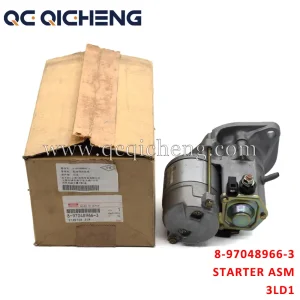
Wholesale 8-97048966-3 KING KIT PIN For ISUZU 3LD1 Supplier, Pricelist
Get Quote & Specs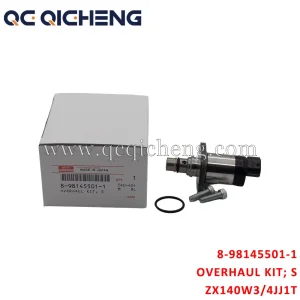
Wholesale 8-98145501-1 OVERHAUL KIT SUPPLY PUMP For ISUZU ZX140W3 4JJ1T Suppliers, Quotes
Get Quote & Specs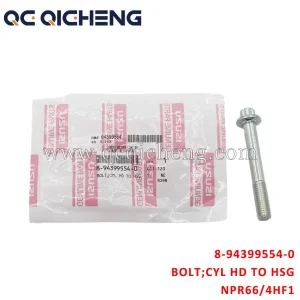
High-Quality 8-94399554-0 BOLT CYL HD TO HSG For ISUZU NPR66 4HF1 4HK1 6HK1 Supplier, Quotes
Get Quote & Specs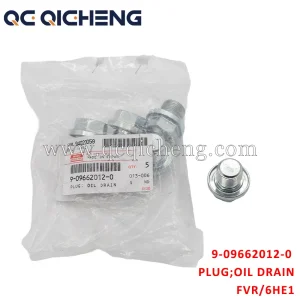
High-Quality 9-09662012-0 PLUG OIL DRAIN For ISUZU FVR 6HE1 Suppliers, Quotes
Get Quote & Specs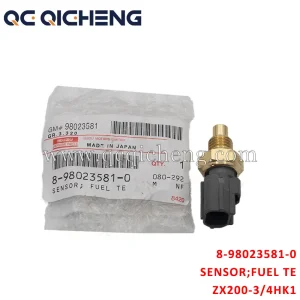
Wholesale 8-98023581-0 SENSOR FUEL TEMP For ISUZU ZX200-3 4HK1 Pricelist, Quotes
Get Quote & Specs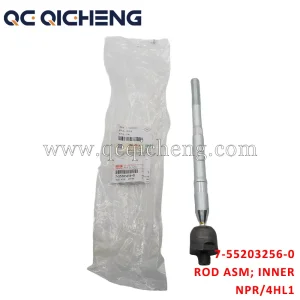
Wholesale 7-55203256-0 ROD ASM INNER For ISUZU NPR 4HL1 Supplier, Pricelist
Get Quote & Specs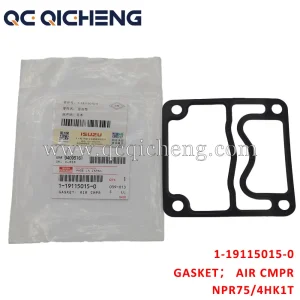
High-Quality 1-19115015-0 GASKET AIR CMPR For ISUZU NPR75 4HK1T Pricelist, Quotes
Get Quote & Specs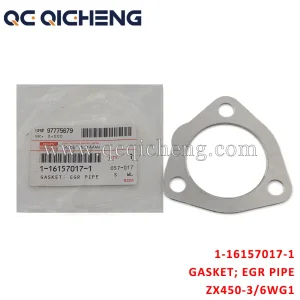
High-Quality 1-16157017-1 GASKET EGR PIPE For ISUZU ZX450-3 6WG1 Supplier, Pricelist
Get Quote & SpecsFrequently Asked Questions (FAQ) for Procurement Teams
In-depth technical answers addressing parts interchangeability, metallurgy standards, minimum order quantities, and international logistics.
What are the critical technical differences between naturally aspirated 4JB1, turbocharged 4JB1T, and intercooled 4JB1TC parts?
While all three variations share the identical basic 2,771 cc engine block architecture, significant internal differences exist across their combustion and cooling components:
- Pistons: The 4JB1 uses high-silicon aluminum pistons with a standard round toroidal bowl. The turbocharged 4JB1T and intercooled 4JB1TC incorporate steel strut inserts for thermal expansion control, internal cooling oil galleries fed by under-piston oil spray jets, and combustion bowls specifically contoured for boosted swirl patterns. Installing non-turbo pistons into a 4JB1T engine will result in crown thermal fatigue and crown meltdown within 500 operating hours.
- Piston Rings: The top compression ring on the 4JB1T/TC features a keystone (wedge-shaped) cross-section coated with molybdenum or plasma-applied ceramic to resist ring-sticking under high combustion temperatures, whereas the standard 4JB1 utilizes a rectangular ductile iron ring.
- Oil Pump & Cooling: The 4JB1T and 4JB1TC feature high-flow trochoid oil pumps delivering 20–30% higher volumetric output to support turbocharger journal bearing lubrication and under-crown cooling jets. The cylinder heads also feature revised valve guide metallurgy and inconel exhaust valves to handle elevated exhaust gas temperatures (EGT).
Can Isuzu 4JB1 dry cylinder liners be installed without a hydraulic press or liquid nitrogen cooling?
The 4JB1 engine utilizes thin-wall, dry-type alloy cast iron liners with an outer interference fit of approximately 0.020 to 0.045 mm. Attempting to hammer or force liners into the cylinder block at room temperature without dedicated hydraulic press guides will invariably distort the liner bore, induce barrel-shape deformation, or crack the upper collar.
Professional engine rebuilders utilize the thermal differential method: the bare cylinder block is uniformly heated to 80–90°C in a hot tank or heating oven, while the dry liners are chilled in liquid nitrogen or dry ice (-78°C). When thermal equilibrium allows, the liner will drop freely into the block counterbore without mechanical force. Once normalized to room temperature, the bore roundness must be verified with an internal bore micrometer to ensure runout does not exceed 0.015 mm before piston installation.
How do you verify part compatibility when an OEM part number has been superseded or the nameplate is unreadable?
When engine data plates are corroded or absent, our technical support department applies a tripartite identification protocol:
- Physical Casting Identification: We locate the secondary casting marks permanently embossed into the iron block. On the 4JB1, the engine serial number is stamped on the left rear side of the crankcase near the bellhousing flange. Cylinder heads feature distinct casting raised ribs indicating whether the unit is an early-style mechanical direct injector or a late-style screw-in/clamp injector head.
- Key Dimensional Metrology: We require the client to supply three critical measurements: connecting rod big-end journal diameter (56.0 mm on 4JB1), piston pin diameter (31.0 mm for standard vs 34.0 mm for heavy-duty turbo), and flywheel bolt circle PCD.
- EPC Database Cross-Matching: Our parts specialists cross-reference these physical attributes against our proprietary electronic parts catalog (EPC) database covering Isuzu, Hitachi, Qingling, and JMC platforms to identify the exact OEM superseded part number.
What are your minimum order quantities (MOQ), warranty terms, and international delivery lead times?
Our supply operations are tailored to support both urgent maintenance downtime (AOG/VOG) and scheduled bulk containerized procurement:
- Minimum Order Quantities (MOQ): For standard replacement components (crankshafts, cylinder heads, gasket sets, bearings, liners), our MOQ is 1 piece/set when shipping via express air cargo (DHL/FedEx/UPS). For containerized sea freight orders, pallet-level consolidation is available across our 100,000+ SKU inventory.
- Warranty Terms: All genuine OEM and premium aftermarket 4JB1 parts carry an international 12-month non-prorated operating warranty against material defects, dimensional inaccuracy, and premature fatigue when installed according to OEM workshop manuals.
- Lead Times: In-stock catalogued items ship within 24 to 48 hours from our Guangzhou central warehouse. Air courier shipments typically reach destination hubs in 4–7 business days, while full container load (FCL) sea freight averages 14–28 days depending on port of entry.
What anti-corrosion protection is applied to ensure machined engine surfaces survive oceanic transit?
Ocean freight containers experience extreme relative humidity shifts and salt-laden atmospheres that can cause flash rust on bare machined iron and forged steel within 72 hours if inadequately protected. Every bare-metal component we export undergoes a strict multi-tier preservation process:
- Chemical Passivation: Crankshaft journals, cylinder liner inner bores, and cylinder head deck surfaces are spray-coated with non-tacky, solvent-dispersed rust preventative oil meeting MIL-PRF-16173 Grade 3 standards.
- Volatile Corrosion Inhibitor (VCI) Packaging: Components are hermetically sealed inside heavy-gauge VCI polyethylene film bags that emit odorless molecular vapor, forming an active electrochemical protective layer on all interior ferrous surfaces.
- Fumigated Export Crating: Heavy assemblies are fastened into custom ISPM-15 compliant fumigated solid timber or composite plywood cases lined with heavy moisture-barrier plastic and industrial-grade silica gel desiccant bags.