Inventory Release · Phase 1
Precision OEM-Spec Replacement Inventory
Verified mechanical and electronic components aligned with global emissions standards and industrial powertrain specifications.
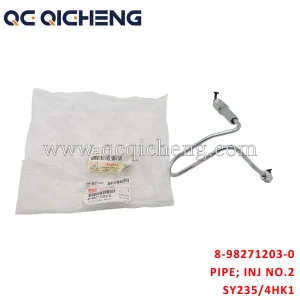
Wholesale 8-98271203-0 PIPE INJ NO 2 For ISUZU SY235 4HK1 Pricelist, Quotes
Request Quote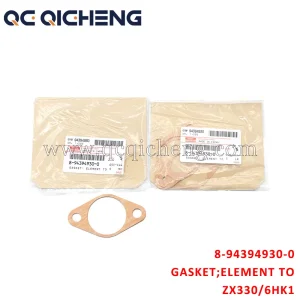
Wholesale 8-94394930-0 GASKET ELEMENT TO BODY For ISUZU ZX330 6HK1 Suppliers, Supplier
Request Quote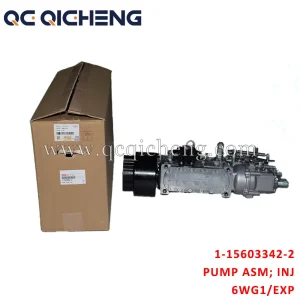
Wholesale 1-15603342-2 PUMP ASM INJ For ISUZU 6WG1 EXP Suppliers, Supplier
Request Quote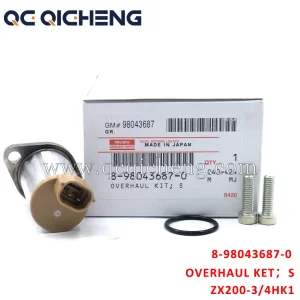
High-Quality 8-98043687-0 OVERHAUL KIT For ISUZU ZX200-3 4HK1 6HK1 Pricelist, Quotes
Request Quote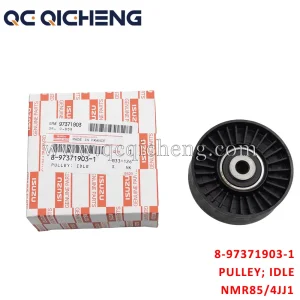
Wholesale 8-97371903-1 PULLEY IDLE For ISUZU NMR85 4JJ1 Suppliers, Supplier
Request Quote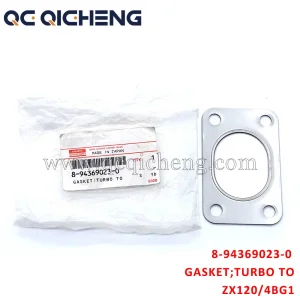
High-Quality 8-94369023-0 GASKET TURBO TO For ISUZU ZX120 4BD1 4BG1 Suppliers, Quotes
Request Quote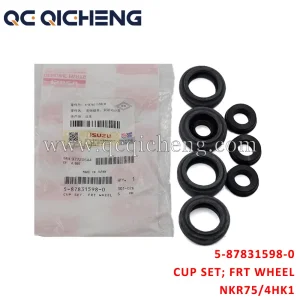
High-Quality 5-87831598-0 CUP SET FRT WHEEL CYL For ISUZU NKR75 4HK1 Pricelist, Quotes
Request Quote
Industry Analysis & Engineering Whitepaper
The Global Landscape of Aftermarket Isuzu Heavy & Medium-Duty Truck Spares
A rigorous examination of metallurgy, thermal dynamics, global supply vulnerabilities, and predictive life-cycle maintenance protocols across heavy logistics networks.
100,000+
Standing Inventory SKUs
$15M+
Warehoused Capital Value
120+
Sovereign Regions Supplied
99.8%
First-Time Fitment Rate
1. Global Industrial Landscape: The Maturation of Medium and Heavy Duty Platforms
The international commercial transport and construction sector relies heavily on the unmatched mechanical architecture of Isuzu powertrain systems. From the ubiquitous forward-cab N-Series (ELF) distribution haulers to the robust F-Series (Forward) and the severe-duty Giga (C/E Series) platforms, Isuzu engines—including legendary configurations such as the 4HK1, 6HK1, 6WG1, 4JJ1, and legacy 6BD1—serve as the arterial infrastructure of global logistics. In emerging economies throughout Southeast Asia, Sub-Saharan Africa, and Latin America, alongside high-compliance jurisdictions in North America and the European Union, total cost of ownership (TCO) constraints have fundamentally altered fleet preservation strategies. OEM supply-chain bottlenecks and soaring inflation on direct-from-dealer spares have created an urgent operational imperative: fleet operators require high-tolerance, precision-engineered aftermarket components that mirror or exceed original metallurgical metrics without debilitating acquisition overheads.
Historically, the commercial vehicle aftermarket operated under the shadow of variability, where tier-3 replacement spares often exhibited irregular alloy composition, imprecise casting tolerances, and suboptimal thermal stress resistance. However, the modern aftermarket industrial landscape has transformed via computer-integrated reverse engineering, ISO/TS 16949 quality certifications, and sophisticated thermodynamic simulations. Modern heavy-duty logistics ecosystems no longer settle for mere superficial compatibility. Today's commercial operators manage multi-million dollar logistics schedules where unprogrammed mechanical downtime (downtime per hour calculated upwards of $800 to $2,500 depending on freight sensitivity) mandates strict adherence to dimensional tolerances down to the single-digit micron level.
Thermal & Metallurgy Equilibrium
Engine components undergo specialized ductile cast iron and forged steel induction hardening. Cylinder head gaskets and liners operate reliably under extreme internal combustion cylinder pressures exceeding 180 bar.
Sub-Micron Hydraulic Calibrations
High-pressure common-rail injection architectures (HPCR) require fuel delivery components to execute accurate volumetric metering under pressures up to 2,500 bar, preventing destructive pre-ignition and piston crown ablation.
Extreme Wear-Resistant Tribology
Pulleys, idle gears, crankshafts, and connecting rod bushings are treated with advanced surface finishes and diamond-like coatings (DLC) to mitigate boundary lubrication friction during high-load stop-and-go drive cycles.
2. Industry Evolution: Telematics, Remanufacturing, and Emissions Integrity
The aftermarket sector for heavy commercial vehicles is entering an unprecedented paradigm shift defined by three converging forces: stringent global exhaust emissions compliance (Euro VI / US EPA Tier 4 Final / China VI), the widespread adoption of AI-driven predictive fleet telematics, and additive manufacturing. Modern commercial engines like the Isuzu 4HK1-TCS and 6WG1-TCG operate under exceptionally high thermal profiles engineered to combust diesel fuel cleanly while regenerating complicated exhaust aftertreatment mechanisms including Selective Catalytic Reduction (SCR) systems and Diesel Particulate Filters (DPF).
Consequently, an aftermarket replacement part can no longer be evaluated in isolation. A slight variance in an aftermarket fuel injection pump’s solenoid response time, or a minor micro-inch deviation in a turbocharger gasket, can trigger back-pressure irregularities, erratic lambda sensor readings, and immediate diagnostic trouble codes (DTCs) that lock vehicles into "limp home" modes. For fleet operators managing hundreds of intermodal logistics assets, the goal of purchasing aftermarket spares has moved from lowest unit acquisition cost to Risk-Adjusted Longevity Ratio (RALR). Advanced suppliers are incorporating finite element analysis (FEA) and dynamic acoustic emission testing to confirm that every casting—whether an engine block or a modest idle pulley—exhibits harmonic dampening properties matching original Japanese OEM specifications.
3. Localized Field Scenarios & Severe Duty Applications
The operational stress profile of an Isuzu vehicle varies radically across disparate geographic topographies. An analytical breakdown of field failures demonstrates why customized, application-specific replacement components are critical for sustained fleet ROI:
Equatorial and High-Ambient Tropical Logistics: Across regions such as Indonesia, Malaysia, and Central Africa, haulage fleets operating Isuzu FVR and GVR trucks encounter high ambient humidity combined with prolonged low-gear operations over unpaved access tracks. Under these specific conditions, cooling system integrity dictates engine survival. Water pumps (such as the 1-87311001-0 assembly) must feature silicon carbide or carbon-ceramic mechanical face seals capable of resisting cavitation erosion, while silicone-blend cylinder head gaskets must withstand elevated thermal gradients without losing clamping bolt torque retention.
High-Altitude Mining and Excavator Operations: In Andean Latin America and inner Eurasian mining zones, Isuzu industrial engines (such as the 6WG1 and 6HK1 integrated inside Hitachi ZX-series excavators and heavy dumpers) operate in rarefied, oxygen-deprived atmospheres. Turbocharger-to-manifold mounting gaskets (e.g., 8-94369023-0) must endure dramatic exhaust gas thermal expansion without warping, preventing boost pressure loss that instantly cripples hydraulic breakout force.
Dense Urban Last-Mile Logistics: In high-congestion metro hubs across Europe, Japan, and North America, light-duty Isuzu NPR/NQR trucks equipped with 4JJ1 or 4HK1 engines face chronic start-stop cycles. This operating envelope accelerates drivetrain torsional fatigue, requiring specialized rubber cushion center bearings (such as 8-98020875-0) engineered with premium natural-rubber-to-metal vulcanization chemistry to absorb driveline shock loads and prevent universal joint disintegration.
4. Comprehensive Enterprise Solutions for Fleet Managers & Importers
To establish a truly resilient parts supply chain, international procurement directors cannot treat replacement part acquisition as a series of disconnected, ad-hoc transactions. Leading parts distributors implement holistic, data-driven macro solutions:
Bill-of-Materials Cross-Verification: By cross-indexing global EPC (Electronic Parts Catalogs), VIN configurations, and engine serial numbers (ESN), high-caliber supply partners eliminate the rampant issue of superseded part iterations. For instance, variance across intermediate years in the 4HK1 engine series involves subtle modifications to injector sleeve seat angles and glow plug terminal placements. Pre-shipment verification against digital CAD registries guarantees that overhauled units match regional emissions calibrations seamlessly.
Consolidated Heavy Maintenance Overhaul Packs: Instead of sourcing gaskets, liners, bearings, and valve train hardware from divergent vendors, forward-thinking fleet workshops utilize comprehensive overhaul kits (such as 8-98043687-0). Bundling these mission-critical components ensures uniform metallurgical thermal expansion coefficients across all reciprocating components, preventing premature cylinder liner cavitation and uneven piston ring land wear.
Forward Horizon 2025–2035
Future-Proofing the Heavy Commercial Powertrain Ecosystem
How the intersection of alternative fuels, digital twin modeling, and precision remanufacturing is redefining aftermarket supply reliability.
Synthetic & Biofuel Compatibility
Next-generation elastomeric seals, injector components, and high-pressure fuel lines must exhibit zero chemical degradation when exposed to hydrotreated vegetable oils (HVO), B20 biodiesel, and synthetic e-fuels.
Digital Twin & Predictive Procurement
By monitoring live CAN-bus diagnostic telemetry from deployed fleets, enterprise inventory hubs can dynamically dispatch high-wear components prior to actual field fatigue failures occurring.
Circular Economy Remanufacturing
Precision CNC re-sleeving, plasma spray bore recoating, and precision additive remanufacturing restore high-value structural components (crankcases and cylinder heads) to pristine OEM dimensional standards with 60% lower carbon footprints.
Knowledge Base & FAQ
Frequently Asked Questions on Isuzu Commercial Spares
In-depth responses covering mechanical tolerances, cross-compatibility, global freight logistics, and fleet procurement standards.
How do aftermarket Isuzu engine components compare to Genuine OEM parts?
High-grade aftermarket parts produced by certified tier-1 facilities utilize identical metallurgical compounds and manufacturing techniques as OEM components. In many instances, aftermarket engineering addresses known legacy service vulnerabilities—such as reinforcing cylinder head water jackets or applying advanced graphite anti-friction coatings to piston skirts—offering comparable or superior service life at a 30% to 50% cost reduction.
What specific data is required to obtain an accurate parts quote and eliminate fitment errors?
To ensure 100% first-time fitment, purchasers should supply: (1) The exact OEM part number from the parts manual, (2) The complete vehicle VIN or machine serial number, (3) The engine model code and Engine Serial Number (e.g., 4HK1-123456), and (4) The emissions standard designation (Euro 3, Euro 5, Tier 4 Final). This prevents issues arising from regional design variations or superseded part numbers.
Why are cylinder head bolts and connecting rod nuts strictly single-use torque-to-yield components?
Critical structural fasteners, such as connecting rod nuts (e.g., 1-12239005-1) and cylinder head bolts (e.g., 8-94399554-0), are engineered to undergo controlled plastic deformation during installation to provide uniform clamping tension across extreme thermal cycles. Reusing stretched fasteners compromises structural integrity, frequently leading to blown head gaskets or catastrophic rod separation through the engine block.
Which Isuzu commercial truck and industrial engine platforms do you support?
Comprehensive parts coverage encompasses both commercial light/medium/heavy trucks (N-Series, F-Series, Giga, Forward, Elf) and industrial diesel engines deployed across global construction machinery (4JJ1, 4HK1, 4BG1, 4JG1, 6HK1, 6WG1, 6UZ1, 6BG1, 4BD1), spanning complete assemblies down to individual internal micro-components.
What international export packaging and preservation standards are implemented for overseas transit?
All precision machined components undergo industrial VCI (Vapor Corrosion Inhibitor) preservation, vacuum sealing, and anti-shock internal wrapping. Shipments are packed in heat-treated, ISPM-15 compliant timber cases or custom heavy-gauge corrugated cartons designed to withstand multi-modal maritime, air, and rough-terrain overland freight logistics.
Inventory Release · Phase 2
Heavy-Duty Powertrain, Hardware & Ancillary Components
Complete your supply chain with certified overhaul assemblies, structural hardware, driveline dampers, and cooling systems.
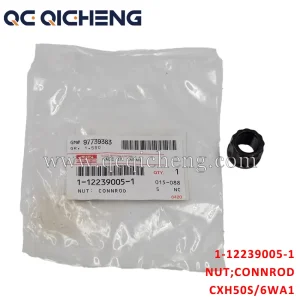
High-Quality 1-12239005-1 NUT CONNROD For ISUZU CXH50S 6WG1 6WF1 6WA1 Pricelist, Quotes
Request Quote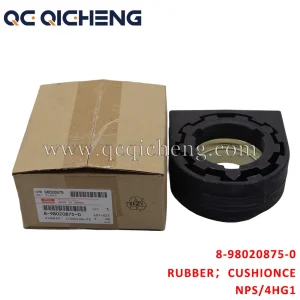
High-Quality 8-98020875-0 RUBBER CUSHIONCE CENTER BRG 1ST For ISUZU NPS 4HG1 Supplier, Quotes
Request Quote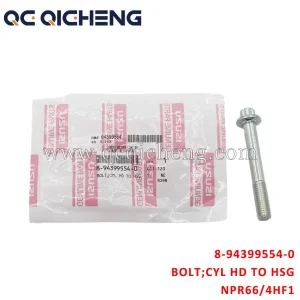
High-Quality 8-94399554-0 BOLT CYL HD TO HSG For ISUZU NPR66 4HF1 4HK1 6HK1 Supplier, Quotes
Request Quote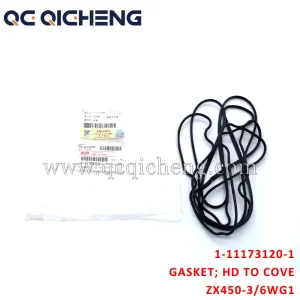
Wholesale 1-11173120-1 GASKET HD TO COVE For ISUZU ZX450-3 6WG1 Suppliers, Supplier
Request Quote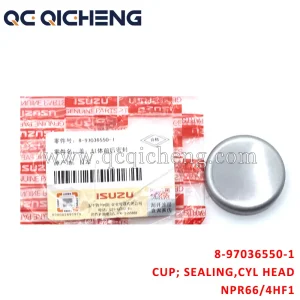
High-Quality 8-97036550-1 CUP SEALING CYL HEAD For ISUZU NPR66 4HF1 Suppliers, Quotes
Request Quote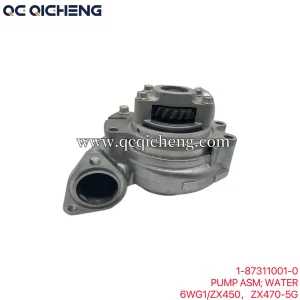
High-Quality 1-87311001-0 1873110010 Water Pump for Isuzu 6WG1 ZX450 ZX470-5G Suppliers, Quotes
Request Quote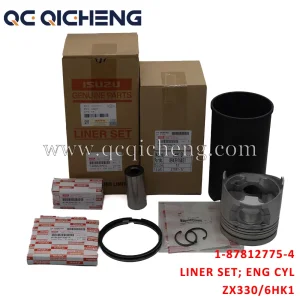
High-Quality 1-87812775-4 LINER SET ENG CYL For ISUZU ZX330 6HK1 Supplier, Quotes
Request Quote