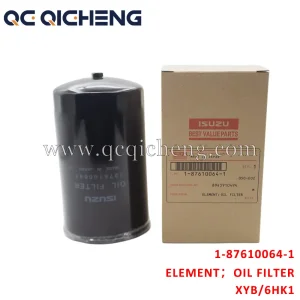
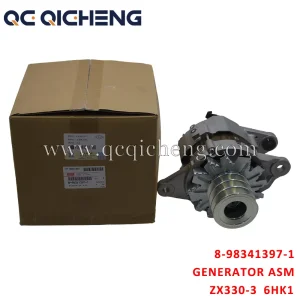
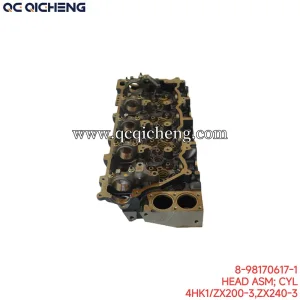
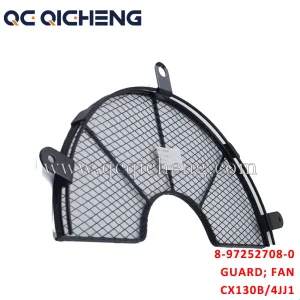
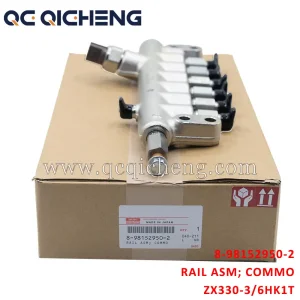
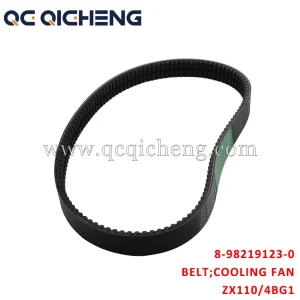
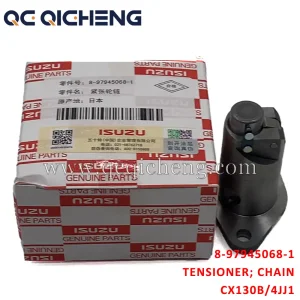
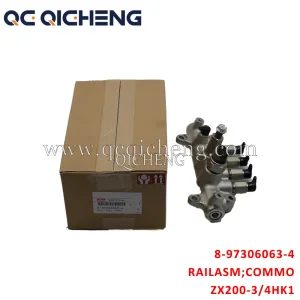
Featured Industrial & Fleet Assemblies (Series I)
Certified OEM parts and heavy-duty assemblies inspected and cross-referenced by part number, duty cycle tolerance, and application specification.
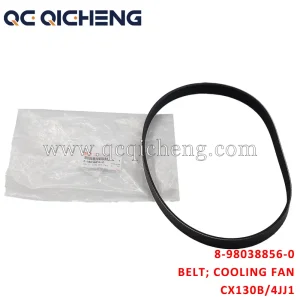
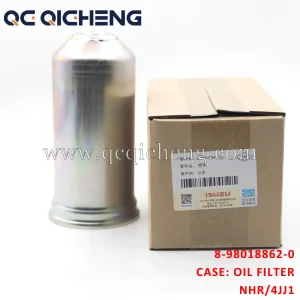
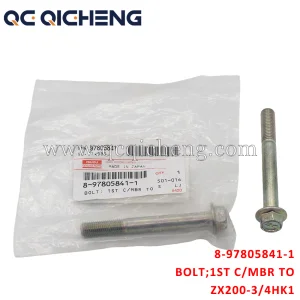
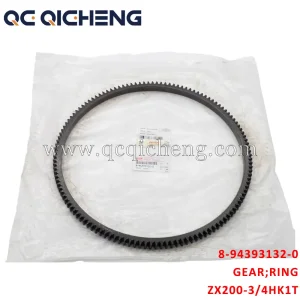
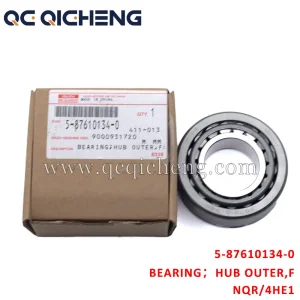
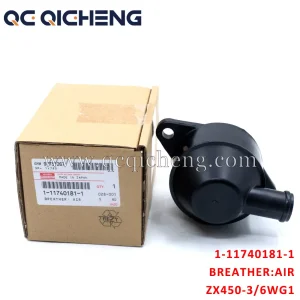
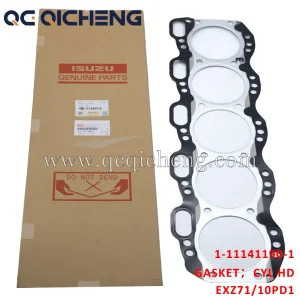
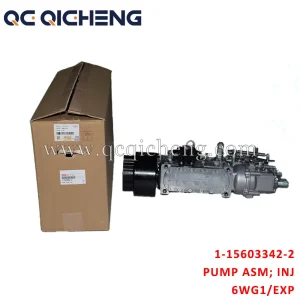
The Global Commercial Footprint of the Isuzu 4HF1 Platform
A rigorous examination into the mechanical architecture, supply chain stability, and heavy-duty longevity across commercial transit, civil earthmoving, and decentralized power applications.
Global Fleet Economics & Longevity
The Isuzu 4HF1 engine has consolidated its status as an immortal powertrain baseline within light-to-medium commercial vehicles, notably the Isuzu ELF NPR, NQR, and NKR series. Operating globally across Latin America, Southeast Asia, Sub-Saharan Africa, and the Middle East, its market persistence stems from a purely mechanical direct-injection fuel system combined with an oversized structural crankcase.
- Elimination of sensitive ECU architecture resistant to regional voltage fluctuations.
- Tolerant to high-sulfur diesel (500–5,000 ppm) common in developing logistics arteries.
- Low initial acquisition capital coupled with unrivaled ease of field re-sleeving.
Civil Engineering & Plant Duty Cycles
Beyond over-the-road freight, the 4HF1 architecture provides structural mechanical drive for static and mobile industrial assets: compact hydraulic excavators, concrete pumps, high-volume irrigation pumps, and continuous 40kVA generator packages. Its direct gear-driven timing train ensures rock-solid synchronization under severe cyclic shock loading.
- Continuous operating torque plateau between 1,400 RPM and 2,000 RPM.
- Deep-skirt cast-iron cylinder block absorbing rotational torsional harmonics.
- High parts interchangeability across the broader Isuzu 4H lineage (4HG1, 4HE1, 4HK1).
Supply Chain Realities & Rebuild TCO
Procuring from dedicated suppliers like Qicheng Machinery bridges the critical gap between obsolete dealer catalogs and inconsistent aftermarket knockoffs. With an active stock exceeding $15M, fleet directors achieve minimum mean-time-to-repair (MTTR) by sourcing factory-matched long blocks, crankshafts, and fuel injection assemblies directly from audited production lines.
- Immediate dispatch for complete overhaul rebuild kits and individual bare blocks.
- Pre-shipment laser micrometer dimensional validation and pressure testing.
- Logistical integration with international freight corridors serving over 120 nations.
Engineering Intelligence Note: 4HF1 vs. 4HK1 Common-Rail Transition
While modern environmental policies enforce high-pressure common rail (HPCR) engines like the Isuzu 4HK1 in Tier 4 / Stage V territories, the naturally aspirated mechanical 4HF1 remains the undisputed commercial workhorse in remote off-highway operations. Its absence of piezoelectric injectors and complex exhaust aftertreatments (DPF/SCR) eliminates downtime induced by ad-blue quality failures and delicate particulate sensor errors.
Isuzu 4HF1 Master Engineering Blueprint
Factory-authorized mechanical limits, structural metrics, and rebuild guidelines for certified workshop engineers and procurement authorities.
| Engine Parameter | OEM Standard Specification | Service Limit / Wear Rebuild Threshold | Material / Assembly Classification |
|---|---|---|---|
| Displacement & Configuration | 4,334 cm³ (4.3 Liters) / Inline 4-Cylinder | Displacement Constant | Water-Cooled 4-Stroke Diesel |
| Bore × Stroke | 112.0 mm × 110.0 mm | Max Cylinder Bore Out-of-Round: 0.05 mm | Chromium-Plated Dry Cylinder Liners |
| Compression Ratio | 19.0 : 1 | Min Pressure: 2.2 MPa (22 kg/cm²) @ 200 RPM | Direct Injection Toroidal Bowl Piston |
| Max Rated Power Output | 85 kW (116 PS) @ 3,200 RPM | ± 5% Dynamometer Tolerance | Naturally Aspirated Industrial Curve |
| Peak Torque Production | 285 Nm (29.0 kg-m) @ 1,800 RPM | Operational Range: 1,400 – 2,200 RPM | Heavy-Duty Low-End Calibrated |
| Valve Train Configuration | Single Overhead Camshaft (SOHC), 8 Valves | Camshaft Runout Limit: 0.05 mm | Gear-Driven Direct Helical Gear Train |
| Crankshaft Journal Diameter | 82.00 mm (Standard Grade) | Undersize Refinish: 0.25 mm / 0.50 mm | Forged Micro-Alloy Steel with Nitriding |
| Piston Pin & Bushing Clearance | 0.008 mm – 0.016 mm | Maximum Service Limit: 0.040 mm | High-Tin Phosphor Bronze Bushing |
| Fuel Injection System | Bosch / Zexel In-Line 'A' or 'PE' Type Pump | Opening Pressure: 18.1 – 19.1 MPa | Mechanical Governor Control |
Localized Application Scenarios & Field Operations
How the 4HF1 and its auxiliary components perform across contrasting climatic boundaries, severe industrial topologies, and rigorous duty profiles.
Arid & High-Ambient Temperatures
Deployed across desert extraction corridors in the Middle East and North Africa, continuous ambient heat exceeding 48°C exerts immense thermal stress on water pumps, viscous fan couplings, and cylinder heads. The 4HF1 excels here due to wide internal coolant passages and massive cast-iron cylinder heads that resist distortion under severe thermocycling, provided high-capacity radiator cores and OEM multi-blade fan assemblies are maintained.
Tropical High-Humidity & Coastal Mining
In Southeast Asian mining camps and equatorial forestry sites (Indonesia, Malaysia, Papua New Guinea), humidity levels trigger rapid corrosion across peripheral alternator windings and intake breathers. The 4HF1 mechanical layout isolates core internal combustion processes from electronic short circuits, while dual-element oil filtration and positive-crankcase breathing systems prevent heavy moisture condensation inside the oil pan.
High-Altitude Andean Haulage
Operating in altitude regimes between 2,800m and 4,500m across the South American Andes (Peru, Bolivia, Colombia), naturally aspirated engines encounter significant air density loss. Experienced fleet operators optimize the mechanical fuel injection pump delivery timing by 2° to 3° advance, pairing the engine with high-efficiency multi-cyclone intake filtration to prevent excessive unburned soot build-up on piston crowns.
Evolutionary Technology Path: Mechanical to Common-Rail
Navigating the complex mechanical lineage of the Isuzu 4H Series to preserve legacy assets while methodically adopting high-efficiency electronic injection platforms.
Phase 1: Pure Mechanical Benchmark (4HF1 / 4HG1)
Characterized by complete independence from electronic sensors. Fuel delivery relies on cam-driven plunger elements. Overhaul procedures can be performed in field shelters with standard mechanical gauges. This phase provides the baseline reliability footprint prized in decentralized and rugged operating environments.
Phase 2: Turbocharged Electronic Transition (4HE1-T / 4HK1)
Introduction of variable geometry turbochargers and Denso common-rail high-pressure architecture (up to 1,800 bar). Fuel economy improves by 18-24%, alongside drastic particulate emissions reduction. Requires precise clean-room filtration standards (2-micron fuel water separators) and genuine electronic control relays.
Phase 3: Hybridized Fleet Support & Closed-Loop Circularity
Modern fleet managers operate hybrid fleets: deploying ultra-reliable mechanical 4HF1 long-blocks in extreme remote territories while operating 4HK1, 6HK1, and 6WG1 excavators in urban and regulated sectors. Qicheng unifies this mixed ecosystem with synchronized parts inventories covering both legacy mechanical gears and common-rail injection rails.
Macro Supply Chain Solutions for Fleet Operators
Systemic procurement frameworks designed to drive down unplanned machine downtime and maximize lifecycle return on investment (ROI).
Zero-Variance OEM Cross-Referencing
Procurement errors in diesel fleet logistics carry catastrophic financial costs: delayed vessels, stalled excavators, and wasted air-freight tariffs. Every assembly supplied by Qicheng undergoes triple validation against machine chassis numbers, serial tags, and superseded parts bulletins to guarantee 100% plug-and-play fitment on site.
Strategic Emergency Buffer Stocking
Maintaining high-velocity overhaul kits—including nitrided crankshafts, matched connecting rod sets, cylinder liners, and gasket kits—allows our international clients to eliminate typical 8-week production backorders. We maintain $15 million in standing physical warehouse goods ready for dispatch within 24 to 48 hours.
Circular Economy & Precision Remanufacturing
Extending asset life requires remanufacturing frameworks that adhere to factory metallurgical standards. By supplying semi-finished cylinder liners, oversize main bearings (+0.25mm, +0.50mm), and high-grade valve seats, we empower certified rebuilding facilities to restore discarded engine blocks to original factory compression ratings.
Frequently Asked Questions: Isuzu 4HF1 & Industrial Powertrains
Comprehensive responses to critical engineering, procurement, and maintenance questions faced by international procurement managers.
What are the critical distinctions between the Isuzu 4HF1 and 4HG1 engines?
While both engines share the identical structural block casting architecture, the primary mechanical difference lies in the cylinder bore dimension and total swept volume. The 4HF1 features a 112.0 mm bore yielding 4,334 cc, whereas the 4HG1 features an enlarged 115.0 mm bore expanding displacement to 4,570 cc. While the timing gear trains, oil pans, and external brackets are widely interchangeable, pistons, rings, and cylinder liners must be ordered strictly according to the specific engine code to avoid severe cylinder bore scuffing.
How do I verify exact fitment before dispatching an engine or component overseas?
To ensure 100% fitment accuracy, our technical sales engineers require the OEM 10-digit part number (e.g., 8-98018862-0), the machine model designation (e.g., Isuzu NPR71 or Hitachi ZX200-3), and clear photographs of the engine serial stamping. Our internal parts database cross-verifies these parameters against historical superseded numbers and factory production runs, eliminating region-specific mismatches.
What causes premature camshaft and rocker arm wear in 4HF1 engines, and how is it prevented?
Premature wear across the overhead camshaft lobes and rocker contact faces is almost invariably caused by delayed oil change intervals, degraded oil viscosity, or sludge accumulation within the cylinder head oil galleries. In severe cases, the installation of inferior oil filters lacks an adequate bypass valve mechanism, starving the overhead valve train during cold starts. We strongly advise using high-efficiency OEM filter elements and multi-grade 15W-40 CI-4 or CJ-4 heavy-duty diesel engine oils.
Can a naturally aspirated 4HF1 be converted into a turbocharged 4HF1-T in the field?
While an external turbocharger manifold can physically bolt to the exhaust ports, direct bolt-on turbocharging without internal upgrades is strongly discouraged. Factory turbocharged variants (such as the 4HE1-T or 4HK1-T) incorporate reinforced forged pistons with specialized internal oil cooling galleries, lower static compression ratios (typically 17.5:1 vs. 19.0:1 on naturally aspirated 4HF1), high-volume oil pumps, and upgraded under-crown oil spray nozzles. Running forced induction on a stock naturally aspirated 4HF1 block regularly leads to thermal fatigue and cracked piston ring lands under high sustained loads.
What is the standard lead time and logistics packaging standard for complete engine blocks?
Standard standing inventory items (including complete long blocks, cylinder heads, crankshafts, and injection pumps) are processed and prepared for export dispatch within 24 to 48 hours from our central Guangzhou logistics center. Complete engine assemblies are treated with anti-corrosion VCI barrier wraps, drained of all fluids, and securely mounted inside fumigated solid-plywood export crates certified to ISPM-15 standards, ensuring complete protection during international ocean or air cargo transit.
Precision Engine & Hydraulic Components (Series II)
Original OEM inventory, structural cylinder heads, common-rail distribution assemblies, and rotating gearings ready for fast worldwide delivery.