
China Best Isuzu Commercial Vehicles for Global Buyers?
Choosing the China best Isuzu Commercial Vehicles for global buyers requires more than comparing online prices. The right vehicle must match its working environment, cargo demands, road conditions, and service expectations. A refrigerated truck serving coastal cities needs different equipment from a tipper working on remote construction routes. Fit matters.
This guide examines practical choices for distributors, fleet operators, contractors, and independent businesses. It considers payload ratings, engine performance, fuel use, cab comfort, body configuration, safety equipment, and available after-sales support. Buyers should also confirm the vehicle’s emissions standard, steering position, dimensions, and registration requirements with local authorities. A specification sheet is useful, but it cannot replace a physical inspection. Numbers can mislead.
Reliable purchasing depends on traceable information. Request the chassis number, production records, warranty terms, maintenance schedule, and complete export documentation. Ask whether genuine parts are available near the operating region, not only in the selling country. A lower initial price may become expensive when filters, tires, or specialized components are difficult to source. This is where experienced suppliers should provide clear evidence, not vague promises.
No single Isuzu model is best for every market. A light-duty N-Series truck may suit urban deliveries, while an F-Series vehicle can better support heavier daily loads. However, road quality, driver training, climate, and bodybuilder standards can change the final decision. Some recommendations may need revision after a route trial. That is not a weakness; it is responsible evaluation. The following overview helps global buyers compare capability, ownership risk, and long-term value with greater confidence.
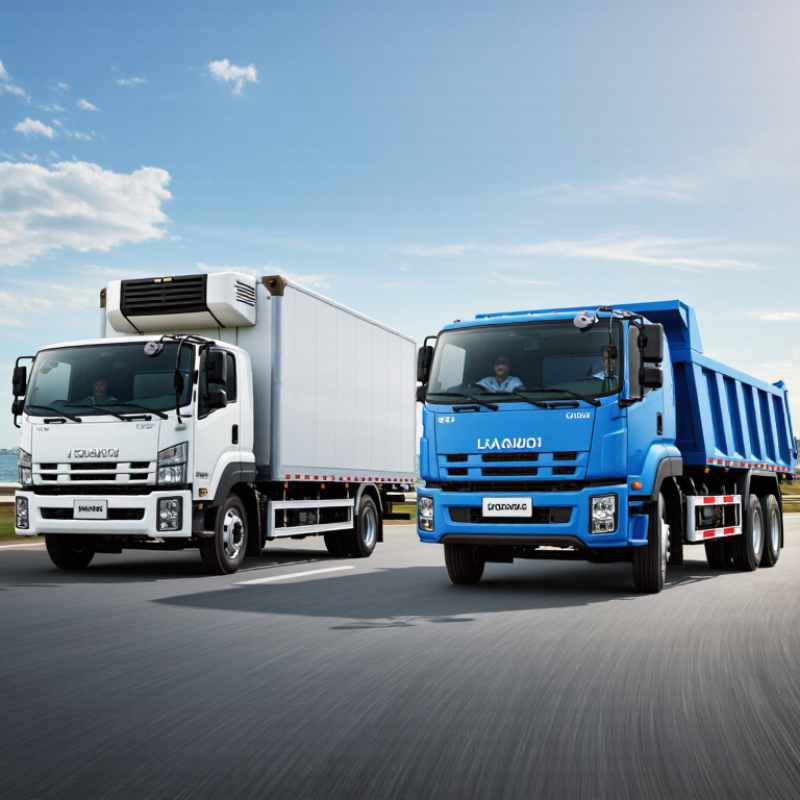
Isuzu Commercial Vehicle Manufacturing in China
China’s commercial vehicle manufacturing base is broad, export-oriented, and increasingly data-driven. The China Association of Automobile Manufacturers reported about 4.03 million commercial vehicles sold in 2023. This volume supports mature supplier networks for engines, axles, cabins, electronics, and body systems.
Production clusters often combine automated welding, paint lines, and strict end-of-line testing. In practical factory assessments, buyers should inspect torque records, quality traceability, and spare-parts procedures. These details matter more than polished showroom claims. The International Energy Agency reported in its Global EV Outlook 2024 that China represented over 60% of global electric vehicle sales in 2023. Electric commercial vehicle manufacturing is therefore gaining scale, although charging access and battery performance still vary by region.
A weakness remains.
Some factories may show strong output but limited overseas service experience. That gap deserves honest attention. Buyers should also question whether testing reflects hot climates, steep roads, heavy dust, or long idle periods. A laboratory result cannot fully represent daily fleet work.
Tips: Request production records, warranty data, and independent inspection reports. Check payload ratings, corrosion protection, local parts availability, and technician training. Compare total operating cost, not only the purchase price. Forecast conservatively; export conditions and component availability can change quickly.
FAQS
Light-duty trucks fit narrow streets, frequent stops, and loads below three tonnes. Test turning space and rear-door access. Small details matter.
Choose medium-duty trucks for regional distribution, construction materials, or refrigerated bodies. Their stronger frames handle heavier work. Measure the real cargo.
Heavy-duty tractors need suitable trailer capacity, fuel range, and stable highway performance. Check climbing ability on actual routes. Brochure figures may disappoint.
Check standing capacity, low-floor access, and durability during frequent stops. Inspect entry steps during crowded boarding. Passenger flow can expose weak design.
Coaches need comfortable seating, luggage space, and steady highway handling. Open every luggage compartment. A beautiful interior is not enough.
Not always. Charging access varies between regions, and steep routes can reduce operating confidence. Confirm charging locations, climate limits, and daily distance.
Test controls with local drivers and inspect visibility, door hinges, brakes, and frame protection. Simple controls may support productivity. I would still question optimistic claims.
Include tires, insurance, charging or fuel, maintenance, downtime, and resale value. Confirm parts availability and warranty response in writing. The decision may remain imperfect.
Conclusion
China-made Isuzu Commercial Vehicles offer global buyers a broad range of practical solutions, including light-duty trucks, medium- and heavy-duty vehicles, buses, and specialized transport models. Their suitability should be evaluated according to operating conditions, payload, passenger capacity, road quality, fuel efficiency, durability, maneuverability, and maintenance requirements. Buyers should also compare engine performance, transmission options, chassis design, safety equipment, cabin comfort, and the availability of configurations suited to local industries.
Before making a decision, importers should review export documentation, technical certifications, emissions requirements, vehicle dimensions, and market-specific compliance rules. Reliable after-sales support is equally important, including spare-parts availability, warranty terms, service training, and technical assistance. By matching vehicle type and performance with the intended application, climate, terrain, and budget, buyers can select a dependable China-made commercial vehicle that supports efficient operations and long-term ownership in their target market.
